
Best Time for Trekking in Kashmir
Best Time for Trekking in Kashmir- Month-by-Month Reality Check
| Trek | Opens | Peak Window | Closes | Notes |
|---|---|---|---|---|
| Thajwas Glacier (Day Trek) | April | May–October | November | Year-round possible via Z-Morh Tunnel |
| Khilanmarg, Gulmarg | May | June–September | October | Snow lingers at top into June |
| Tulian Lake Trek | Late June | July–August | Late September | Boulder section risky in early June snow |
| Nafran Valley Trek | June | July–September | October | — |
| Aru Valley / Lidderwat | May | June–September | October | Lower trail accessible earlier |
| Naranag–Gangabal Trek | Late June | July–September | Late September | Trunkhal Pass holds snow till mid-June |
| Kolahoi Glacier Trek | June | July–September | October | Glacier approach needs snow clearance |
| Gurez Valley Trek | Late June | July–September | Late September | Razdan Pass closes October–May |
| Vishansar Lake Trek | Late June | July–September | Late September | Nichnai Pass (4,100 m) holds snow into June |
| Tarsar Marsar Trek | Late June | July–August | Mid-September | High passes need full summer clearance |
| Kashmir Great Lakes Trek | Late June | July–early September | Early September | Most operators close by Sept 10 |
Table of Contents
ToggleThe Question Nobody Answers Honestly
“Best time to trek in Kashmir” returns the same answer on every website: July to September.
That is correct. It is also incomplete to the point of being unhelpful.
Because within that window and on either side of it , the experience varies enormously by trek, by altitude and by what you actually want from the mountains. A trekker who goes to Nichnai Pass in the first week of July and one who goes in the first week of September are walking through two completely different landscapes on the same route.
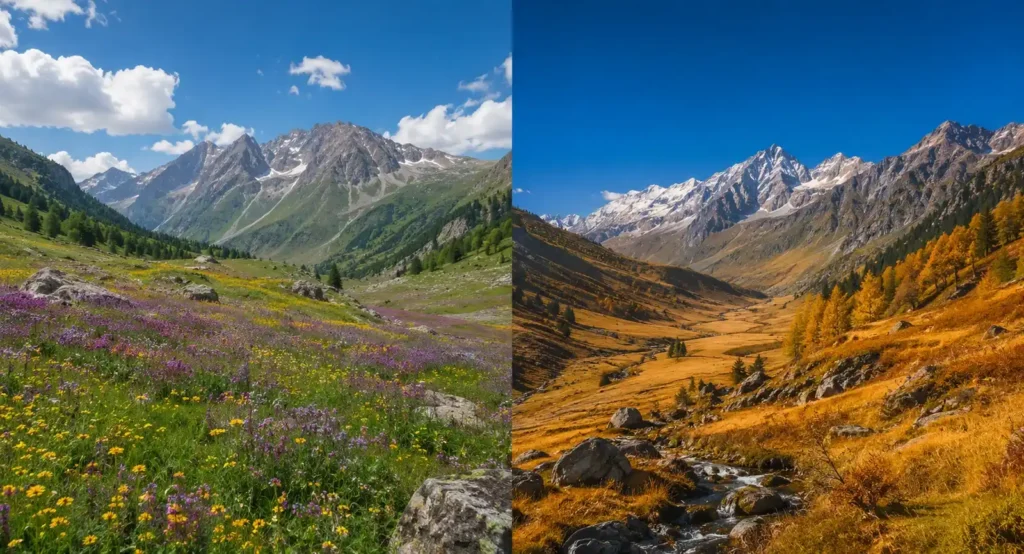
A trekker who goes in mid-June thinking the season has opened might reach the Tulian boulder section and find it under a foot of compressed snow. A trekker who dismisses late September as “end of season” will miss what experienced Himalayan walkers consider the finest light of the entire year.
This page breaks the question properly. Not just “when” but which month for which trek, why and what you actually gain and lose by choosing each window. Written from ground level experience running treks out of Srinagar across every month of the season, not assembled from other articles.
Before deciding when to trek, decide which trek. The complete Kashmir trekking guide covers all routes, difficulty levels and durations.
Why Kashmir's Trekking Season Is Different From Other Himalayan Regions
This matters for planning and most trekkers don’t know it before they arrive.
Kashmir sits in a partial rain shadow relative to the Indian monsoon. While Himachal Pradesh (Manali, Spiti) and Uttarakhand (Kedarnath, Valley of Flowers) receive heavy monsoon rainfall from July to September, Kashmir’s high trekking zones receive significantly less monsoon precipitation. The moisture-laden clouds from the Bay of Bengal weaken considerably before reaching the western Himalayan arc. What Kashmir gets in July and August is cloud build-up, occasional afternoon showers and brief rain not the sustained, heavy monsoon that shuts down trekking elsewhere. Want to know more the weather pattern or climate check our climate of Jammu and Kashmir post
This is why July is peak trekking season in Kashmir when it is a difficult month in much of the rest of the Indian Himalaya. The trails are clear of snow (by July), the meadows are at maximum greenness, the wildflowers are in full bloom and the crowds are manageable because most Indian trekkers assume monsoon means bad trekking conditions everywhere.
What Kashmir’s high trails do get is afternoon cloud, wind above 3,500 m and occasional brief storms. These are normal and manageable with proper gear. They are not the sustained monsoon shutdowns that affect other regions.
Month-by-Month: What Trekking in Kashmir Actually Looks Like
May — Lower Trails Only
The trekking season begins in May for lower altitude routes. Pahalgam, Aru Valley and the forest sections below 3,000 m are clear of snow and pleasant to walk. The Aru Valley to the lower Lidderwat approach, the forest sections of the Tulian Lake trail and the Gulmarg meadow walks are all possible.
Above 3,000 m, significant snow remains on passes and high approaches through most of May. The trail from Nichnai camp to Nichnai Pass (4,100 m) still has compacted snow and ice in May. The boulder section above Tulian Valley is snow-covered. The Razdan Pass road to Gurez opens sometime between mid-May and early June depending on that winter’s snowfall confirm with the local administration before planning a May Gurez departure.
May trekking: good for
Aru Valley day walks and the lower Lidderwat trail
Thajwas Glacier day walk from Sonamarg: the glacier itself has more snow cover than in summer, which some trekkers prefer
Khilanmarg meadow walk from Gulmarg: upper sections may still have snow, which adds to the experience
Baisaran meadow from Pahalgam (horse/walk, below 3,000 m)
May trekking: not suitable for
Any trek crossing a pass above 3,500 m (Nichnai, Gadsar, Trunkhal, Naranag)
Tulian Lake Trek (boulder approach is snow-covered)
Gurez Valley Trek (Razdan Pass road may not be open)
Kolahoi Glacier high approach
May temperature range at trail altitude:
Aru Valley (2,414 m): 12–22°C day, 5–10°C night
Lidderwat (2,800 m): 8–16°C day, 2–6°C night
Sonamarg (2,740 m): 10–18°C day, 3–8°C night
June — The Season Opens, But Read Carefully
June is when most multi day Kashmir treks become possible but the month has two distinct phases that most trekking articles collapse into one.
Early to mid-June (June 1–20): High passes are clearing but not reliably clear. The Nichnai Pass approach from Nichnai camp still has significant snow in the first two weeks of June most years. The boulder section above Tulian Valley may have patches of compacted snow. The Razdan Pass road to Gurez is usually open by early June but should be confirmed. Trekking in this window is possible for experienced trekkers with microspikes not recommended for first-timers.
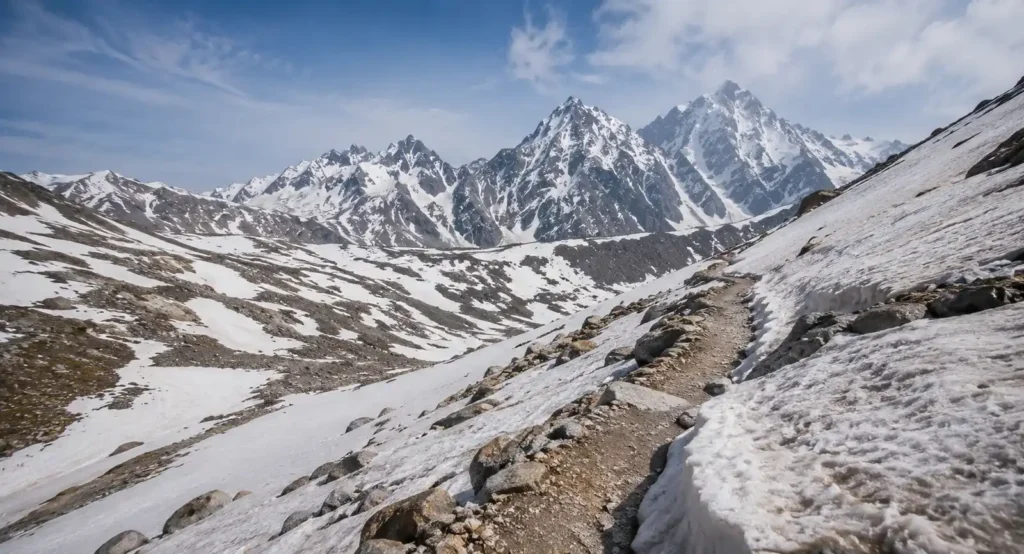
Late June (June 20–30): Most years, this is when the season properly opens. The Nichnai Pass is usually clear by the third week of June. The Tulian boulder approach is accessible without snow equipment. The Great Lakes trail is clear enough for most trekking operators to run their first departures.
What June gives you that July doesn’t:
Significantly fewer trekkers — the trail from Shitkadi to Nichnai in late June might have your group and nobody else
Residual snow patches on the approaches that create striking visual contrast with the green meadows below
Wildflowers at lower altitudes in full early-season bloom, species that have finished by August
Lower accommodation prices in Sonamarg and Pahalgam
What you trade for a June trek:
Higher risk of snow on upper sections so, always confirm current pass conditions with Travel My Kashmir Tour and Travel Agency before departing in June
Cold nights at altitude — Nichnai camp in late June is 0–5°C at night, Vishansar Lake is -2 to 2°C
Some pass sections require microspikes or careful footing — not casual
June trekking: good for
Aru Valley full trail to Lidderwat and beyond
Kolahoi Glacier Trek — lower approach clear, upper glacier sections need assessment
Naranag Gangabal Trek — from late June, Trunkhal Pass generally clear
Vishansar Lake Trek — from late June with microspikes in some years
Gurez Valley Trek — Razdan Pass open, trail to Patalwansar accessible with care
Kashmir Great Lakes Trek — first departures usually run from June 25 onward
June temperature range:
Aru Valley (2,414 m): 15–25°C day, 7–12°C night
Nichnai camp (3,505 m): 8–15°C day, 0–5°C night
Vishansar Lake (3,710 m): 5–12°C day, -2 to 2°C night
July — The Sweet Spot for Most Treks
July is peak trekking season in Kashmir and it earns that status.
Every trail is open. Every pass is clear of snow. The meadows between Aru and Lidderwat, the Shokdar plateau above Shitkadi, the Vishansar Valley below Nichnai Pass, the grasslands at Khaari above Dawar all of them are at maximum greenness and in full wildflower bloom simultaneously. This convergence of open trails, settled weather and landscape quality at its annual peak is what makes July the month most experienced Kashmir trekkers choose when they have the flexibility.
What July does to Kashmir’s trekking terrain:
The wildflower timing in July is specific and worth planning around. The meadows of the Vishansar Valley below Nichnai Pass , the section known locally as the medicinal plants corridor are at their most spectacular in mid-July. Species that are finished by early August are in full flower. Yarrow, gentian, Himalayan blue poppy (rare but present in the Gangabal basin), high-altitude primula and dozens of sedge and grass species create a layered, dense carpet of colour that photographs cannot fully capture.
The Kanimool campsite on the Tulian Lake Trek at 2,897 m faces north toward the Hodasarbal ridge in mid-July, that ridge has lingering snowfields above the green meadow and the contrast is one of the better campsite views on any Kashmir trail.
July weather reality:
Mornings: consistently clear, temperature at altitude cool to cold
Afternoons: cloud build up above 3,000 m from around 1–2 pm
Evening: brief showers possible above 3,000 m, heavier at times but rarely sustained
Kashmir’s rain shadow means even July showers are shorter and lighter than monsoon precipitation elsewhere
The afternoon cloud pattern has a practical implication: plan any pass crossing (Nichnai, Gadsar, Trunkhal) for morning completion. Be over the top by 11 am and descending before cloud closes in. This is the standard operating procedure for all Travel My Kashmir July departures.
July trekking: excellent for all Kashmir routes
Kashmir Great Lakes Trek — the gold standard month
Tarsar Marsar Trek — best wildflower conditions of the year
Vishansar Lake Trek — medicinal plant valley at peak
Gurez Valley Trek — Khaari meadow in full bloom
Tulian Lake Trek — all sections fully clear
All Pahalgam-region treks at best conditions
July temperature range:
Aru Valley / Lidderwat: 18–26°C day, 8–12°C night
Nichnai camp (3,505 m): 12–18°C day, 4–8°C night
Vishansar Lake (3,710 m): 8–14°C day, 2–6°C night
Gangabal Lake (3,969 m): 6–12°C day, 0–4°C night
Patalwansar Lakes, Gurez (3,900 m): 5–12°C day, 0–4°C night
Book by: April–May for July slots. July is the most competitive month for guide and camp availability.
August — High Season, Slightly Drier
August continues everything July offers with a few gradual shifts.
The wildflowers begin transitioning in August, the dense blanket of July meadow flowers has passed its peak and the palate shifts from riot-of-colour to the quieter greens and yellows of late summer grasses. At lower altitudes this is noticeable, above 3,500 m the change is less dramatic. Trekking in August is excellent, some trekkers actually prefer it to July because the trails feel slightly drier underfoot and the afternoon cloud, while still present, tends to produce less frequent rain.
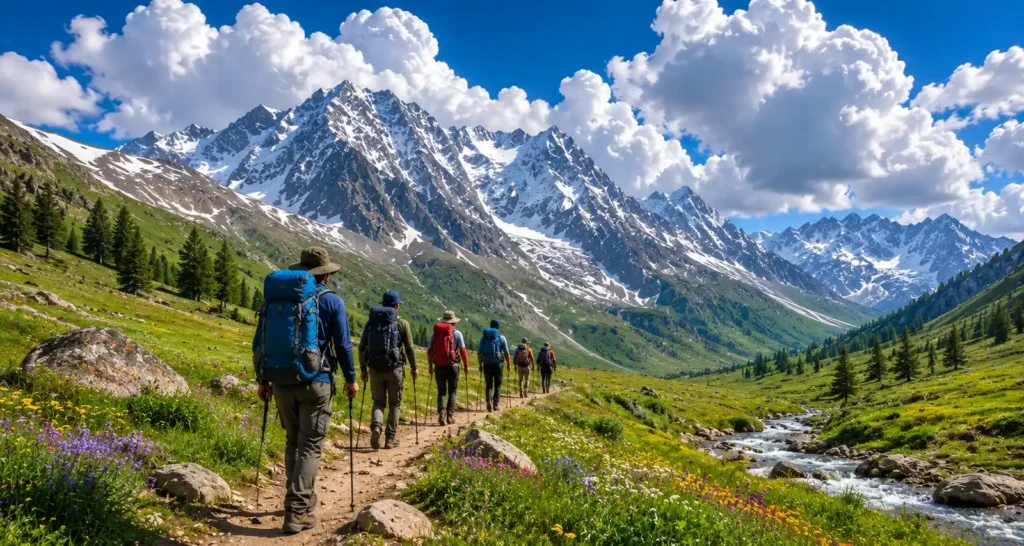
The Amarnath Yatra pilgrimage runs in July and August and while the pilgrimage trail itself is separate from most recreational trekking routes, the period brings significant traffic to Pahalgam and Baltal, which affects accommodation availability and road congestion in the Pahalgam belt. If your trek is Pahalgam based (Tulian, Tarsar Marsar, Aru/Kolahoi, Nafran), book accommodation in Pahalgam well in advance for August.
August specific notes by trek: The Gurez Valley Trek in August has one consideration worth knowing, the boulder section between Dison and Patalwansar Lakes is fully dry in August (no snow, no rain to create slick surfaces), making this the most stable conditions of the season for that specific technical section. August is arguably the best month for Gurez for this reason.
The Great Lakes Trek in August sees the highest number of departures and the most other trekkers on the trail particularly on the Shitkadi–Nichnai–Vishansar section. If you value solitude, go in July or September.
August temperature range:
Sonamarg / Shitkadi (2,740 m): 20–28°C day, 10–14°C night
Nichnai camp (3,505 m): 14–20°C day, 5–9°C night
Vishansar Lake (3,710 m): 10–16°C day, 3–7°C night
Gangabal Lake (3,969 m): 8–14°C day, 1–4°C night
August: good for all routes. Watch: Pahalgam accommodation booking well in advance; early morning pass crossings to avoid afternoon weather.
September — The Expert's Month
September is the month that experienced trekkers choose when they can and the month that most first time Kashmir visitors don’t know about.
The Indian monsoon begins withdrawing from the Kashmir region in September. As it retreats, it leaves behind a specific atmospheric quality that trekkers and photographers consistently describe as the best of the year: the air is washed clean, the sky deepens from summer haze to a saturated blue, the light has longer shadows and higher contrast and the mountains look sharper than at any other point in the season.
The meadows begin their transition to autumn. By early September the grass at Lidderwat and Khaari meadow is still green. By late September it’s yellowing and drying. The birch forests above Aru and on the Tulian Lake approach begin showing the first autumn colour pale gold against the dark pine. If you have any interest in landscape photography, late September in Kashmir’s high trails is the single best time of the year.
September trekking: what changes
Trail conditions are excellent in September typically drier than July or August, with less afternoon cloud and virtually no rain above 3,000 m after the first week. The passes are fully clear. The trails are settled and firm. What changes is the temperature.
Night temperatures at altitude drop significantly in September. The camping experience is different:
Lidderwat camp (2,800 m): 0–5°C at night by late September
Nichnai camp (3,505 m): -2 to 3°C at night
Vishansar Lake (3,710 m): -4 to 0°C at night — below freezing on clear nights
Gangabal Lake (3,969 m): -5 to -2°C at night
A sleeping bag rated to -10°C comfort is mandatory for September trekking above 3,500 m. This is the most common gear underestimate for September trekkers. See the Kashmir trekking packing list for sleeping bag guidance by trek and month.
When does September close?
Most operators including Travel My Kashmir close the Great Lakes Trek departures by the first week of September. This reflects the corporate operators’ conservative risk management, not the actual trail conditions. The trail is perfectly accessible and safe through mid-to-late September in most years.
Travel My Kashmir operates Great Lakes, Tarsar Marsar and Vishansar departures through late September with appropriate gear requirements. The Tulian Lake Trek and lower altitude routes run through early October in good years.
September trekking: excellent for
Every Kashmir trekking route — this is when the trail experience peaks
Photography — the light quality in September is the best of the year
Fishing — brown trout at Vishansar and Krishansar are most active in September
Anyone who values solitude — significantly fewer trekkers than July or August
September booking: Easier than July/August in terms of guide and camp availability. Still book 3–4 weeks in advance for preferred dates.
October — The Closing Window
October is when the season ends, but not all at once.
Lower altitude routes like Aru Valley to Lidderwat, the Thajwas day trek, Khilanmarg are accessible and beautiful in October. The autumn colour on the birch forests is at its peak in the first two weeks of October and the chinar trees in the valley are beginning to turn. Walking the Aru to Lidderwat trail in early October with golden birch canopy and frost on the meadow grass is one of the more specifically beautiful experiences available in Kashmir.
Above 3,500 m, October is unpredictable. The first significant snowfall at pass level can arrive at any point from early October. Nichnai Pass, Gadsar Pass and the Razdan Pass road to Gurez can close with minimal warning after significant snowfall. This doesn’t happen on a calendar schedule some years the passes stay clear until late October, some years the first major snowfall comes in the first week.
October rule: Do not plan any trek crossing a pass above 3,500 m in October without confirmed current trail conditions from a local operator. The risk is not the severity of conditions when they occur it’s the unpredictability. Travel My Kashmir monitors trail conditions through our local guide network and will advise honestly on October viability.
Safe in October:
Aru Valley day walks and Lidderwat overnight
Thajwas Glacier day trek from Sonamarg
Lower Pahalgam meadow walks
Khilanmarg from Gulmarg
Risk-assess before going in October:
Any trek crossing a pass above 3,500 m
Gurez Valley Trek — Razdan Pass closure
Vishansar, Great Lakes, Tarsar Marsar — high pass crossings
Trek-Specific Best Month: The Definitive Table
This is the table that doesn’t exist anywhere else not just “open or closed” but which month gives the best specific experience on each route and why.
| Trek / Destination | Best Month | Why This Month Works Best |
|---|---|---|
| Thajwas Glacier | May – June | Maximum snow presence, fewer crowds, dramatic glacier views |
| Khilanmarg | July | Peak alpine wildflowers with snow-capped ridgeline backdrop |
| Tulian Lake Trek | July | Trail fully clear, Kanimool meadows in bloom, stable weather |
| Nafran Valley Trek | July | Meadows at peak color, streams full, best overall scenery |
| Aru Valley / Lidderwat | Early September | Start of autumn colors, fewer trekkers, crisp clear light |
| Kolahoi Glacier | August | Glacier route fully accessible, stable late-summer conditions |
| Naranag – Gangabal | July | Wildflowers below Haramukh at peak bloom, ideal trekking conditions |
| Gurez Valley / Patalwansar | August | Boulder sections dry, routes safest, weather most reliable |
| Vishansar Lake Trek | Mid July | Alpine flora at peak, lake clarity and color at best |
| Tarsar Marsar Trek | July | Both lakes surrounded by lush wildflower meadows |
| Kashmir Great Lakes Trek | Early September | Clearest skies, sharpest views, fewer crowds, all passes open |
The Monsoon Misconception: Why Kashmir Bucks the Trend
This deserves its own section because it costs trekkers good seasons every year.
The wrong assumption: India has a monsoon July–September. Therefore trekking in India in July–September is difficult/impossible/wet.
The Kashmir reality: The Indian monsoon is a Bay of Bengal phenomenon that primarily affects northeastern and central India. By the time the moisture laden air reaches the western Himalaya, the range that shelters Kashmir, it has weakened significantly. Kashmir’s main trekking belt sits behind multiple mountain ranges that block the heaviest monsoon penetration.
What Kashmir’s high trails get in July and August:
Afternoon cloud formation above 3,000 m — normal and predictable
Occasional brief showers, usually lasting 30–60 minutes
Rare full-rain days, confined mostly to the valley (Srinagar, Pahalgam town)
Not: sustained monsoon rainfall, trail-closing floods, or the kind of continuous rain that shuts down Himalayan routes in Himachal or Uttarakhand
This rain-shadow advantage is one of the geographic reasons Kashmir’s trekking season is July-September while neighbouring regions are difficult. Manali–Leh might have three days of heavy rain in August. On the same days, Nichnai camp in Kashmir will have an afternoon cloud and a 45-minute shower.
The practical implication: Don’t let monsoon hesitation keep you away from a Kashmir trek in July or August. Come prepared for afternoon cloud and occasional rain, carry your waterproof shell where you can reach it quickly, and plan pass crossings for morning. That’s the full adaptation required.
What Type of Trekker Are You? Timing Recommendation by Profile
The wildflower photographer: Mid July is your window. The Vishansar Valley below Nichnai Pass and the meadows around Khaari in Gurez are at their most colourful. Pack a macro lens for the ground-level species and a wide angle for the landscape.
The first-time Himalayan trekker: July specifically the second half of July. All conditions are most forgiving: trails are clear, weather is most settled, guides are most experienced (they have done the first departures and know the season’s specific conditions). The Tulian Lake Trek or Naranag Gangabal Trek in this window.
The crowd-avoider: Late June (after the 20th) or September. Both windows have significantly fewer trekkers than August. Late June gives you early-season wildflowers and near-solitude. September gives you the best light and autumn colour beginning.
The experienced trekker wanting the best overall experience: First week of September. Every experienced Kashmir trekker we have spoken with names this as the best window clear trails, exceptional light, cold but manageable nights, and a solitude that doesn’t exist in peak summer.
The budget-conscious trekker: June or September. Hotel prices in Pahalgam and Sonamarg are 20–30% lower than July-August peak rates. Guide availability is easier. Same trails, same mountains, same experience for less.
The family with children: July. The most settled weather, warmest nights at lower campsites and no risk of early or late season weather complications. Keep altitude below 3,000 m if children are under 12 (Aru Valley to Lidderwat is ideal).
The fishing enthusiast: September. Brown trout at Vishansar and Krishansar Lakes are most active in September when water temperatures drop after summer. The Lidder River near Aru Valley is also best fished in September. Fishing permits from J&K Fisheries Department required arrange through Travel My Kashmir.
Contact Travel My Kashmir at +91 979-646-6052 to check availability for your preferred dates. For July and August, earlier is always better.
Frequently Asked Questions
What is the single best month for trekking in Kashmir?
If forced to pick one, the first week of September for experienced trekkers, mid-July for first-timers. September gives the best light, fewest crowds and most stable trail conditions. July gives the wildflower peak, most settled weather, and warmest nights the safer choice if you’re new to high-altitude camping.
Can I trek in Kashmir in October?
Lower altitude routes like Aru Valley, Lidderwat, Thajwas day trek are excellent in early October with autumn colour. Any trek crossing a pass above 3,500 m in October requires confirmed current trail conditions. High passes can receive significant snowfall from early October without warning. Do not plan pass-crossing treks in October without checking with Travel My Kashmir on current year conditions.
Is trekking possible in Kashmir during Ramadan?
Yes. Ramadan timing varies year to year. Trekking during Ramadan is possible with some logistical considerations Muslim guides and cook team members observe the fast, which affects meal timing and energy levels in the afternoon. Travel My Kashmir plans trek logistics accordingly during Ramadan and ensures trek quality is maintained. Discuss your timing with us directly if your dates overlap with Ramadan.
Does the Amarnath Yatra affect Kashmir trekking?
The Amarnath Yatra runs in July–August on the Pahalgam and Baltal routes. It does not directly affect most recreational trekking trails, but it significantly increases traffic and accommodation pressure in Pahalgam town and on the Pahalgam approach road. Book Pahalgam accommodation well in advance for July–August and use a local operator who knows how to route around pilgrimage traffic for trailhead drops.
Which Kashmir trek is best for monsoon season?
All Kashmir treks are relatively well-suited to the monsoon months (July–August) compared to treks in Himachal or Uttarakhand, precisely because Kashmir lies in a monsoon rain shadow. See the full explanation in the monsoon misconception section above. Of all Kashmir routes, the Gurez Valley Trek benefits most from the rain shadow effect Gurez sits deep in the northern mountains and receives less precipitation than even the standard Kashmir trekking routes.
What if my trek dates fall during bad weather?
Kashmir mountain weather is variable. Any multi-day trek in the Himalaya carries the possibility of a bad weather day. Travel My Kashmir monitors forecasts through our local network and builds flexibility into itineraries for weather holds where the route allows. We will not send groups across high passes in genuinely unsafe conditions. This is a core part of operating responsibly in mountain terrain.
Is September the right time for the Kashmir Great Lakes Trek specifically?
Yes, the first week of September is widely considered the best week of the entire Great Lakes season. The trail is at its clearest, the lakes reflect the autumn sky at its deepest blue and you share the route with far fewer other groups. Most corporate operators close their Great Lakes departures by early September due to operational risk management. Travel My Kashmir can run Great Lakes departures through mid-September with appropriate gear requirements in place. Contact us to check current departure windows.
Ready to plan your Kashmir trek? Once you know your month, choose your route on the complete Kashmir trekking guide, check the Kashmir trekking packing list for what to bring, get a cost estimate for trekking in Kashmir and call or WhatsApp Travel My Kashmir at +91 979-646-6052 to book your dates.