
Kashmir Trekking Packing List
Kashmir Trekking Packing List: What to Actually Carry (Trek-Specific, Not Generic)
| Trek Type | Highest Altitude | Nights Camping | Sleeping Bag Rating Needed |
|---|---|---|---|
| Short Day Treks (Thajwas, Khilanmarg) | Up to 3,500 m | 0 | Not required |
| Moderate Multi-Day (Tulian, Nafran) | 3,500–3,900 m | 3–5 | -5°C (comfort) |
| High-Altitude Treks (Vishansar, Gangabal, Tarsar Marsar) | 3,800–4,200 m | 5–7 | -10°C (comfort) |
| Extended Circuit (Kashmir Great Lakes) | Up to 4,200 m | 7+ | -10°C (comfort) |
Table of Contents
ToggleWhy This Page Exists (and Why the Generic Kashmir Packing Lists Don't Help Trekkers)
Search “Kashmir Trekking packing list” and you get the same article recycled across fifty websites: thermals, waterproof jacket, comfortable shoes, sunscreen, medications, cash. The list that would serve a family visiting Dal Lake on a houseboat.
That list will leave you genuinely underprepared for a multi-day Kashmir trek.
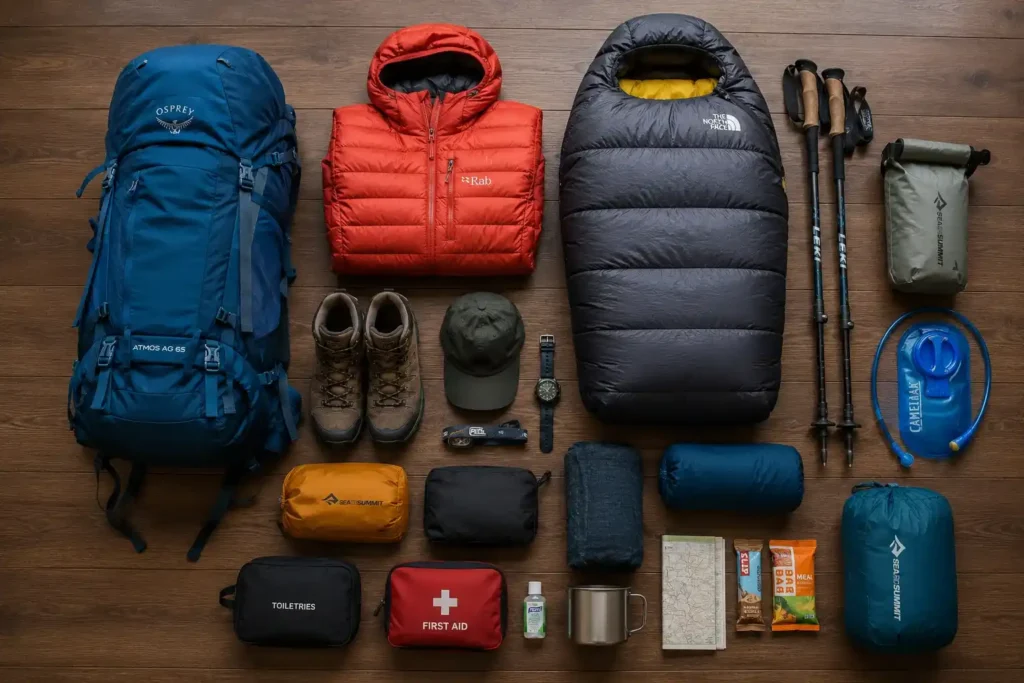
Trekking packing and tourist packing are different exercises. When you are on the trail, everything you need for five days in the mountains is on your back. There is no hotel room to return to for the jacket you forgot, no pharmacy up the valley if your blister kit runs out at 3,700 m, no way to buy dry socks when the only pair you brought gets wet on Day 2. The stakes of each packing decision are higher and the weight of each item you bring has a direct cost on the steep ascent to Nichnai Pass, on the boulder field above Tulian Valley, on Day 7 of the Great Lakes circuit.
This page is written specifically for people trekking in Kashmir, not visiting it. It is organised by category, honest about what actually matters and what you can leave behind and specific to the conditions you will encounter on Kashmir’s trails.
For a general Kashmir trip packing guide (if you’re not trekking), see our Kashmir trip packing list. If you are still deciding which trek is right for you, start with the complete Kashmir trekking guide.
The One Principle That Governs Everything Below
Every gram you add to your pack is paid for with effort on every uphill.
On the approach to Nichnai Pass (4,100 m), on the 840-metre ascent from Dawar to Khaari on the Gurez Valley Trek, on the boulder section above Tulian Valley extra weight is not abstract. It is felt in the legs, the knees, the breathing. Every item on this list has been included because it earns its place. Everything that hasn’t been included has been left out deliberately.
The target for personal pack weight on any Kashmir multi-day trek: 10–12 kg maximum. Group camping equipment (tents, cooking supplies, common food) is carried by ponies or porters in Travel My Kashmir trekking packages. Your pack carries what only you need.
1. The Backpack
What you need: A 40–50 litre hiking pack with a hip belt and adjustable shoulder harness. Not a travel bag. Not a school bag. Not a duffel.
The hip belt is the single most important feature. On a multi-day Kashmir trek, 60–70% of your pack weight should sit on your hips, not your shoulders. A pack without a proper hip belt transfers all weight to your shoulder joints and upper back, you will feel it by Day 2 and be miserable by Day 4.
Rain cover: Always. Kashmir’s trekking season (July–September) includes afternoon cloud and occasional rain above 3,000 m. Most quality packs come with a built-in rain cover stored in a bottom pouch. If yours doesn’t, buy a separate cover.
Dry bags inside: A few lightweight dry bags (one for clothing, one for electronics) inside your main pack provide a second layer of waterproofing for items that cannot get wet. This is especially important on the Tarsar Marsar Trek and Vishansar Trek where exposure to wind and rain at altitude is real.
What not to bring: Wheeled luggage, rigid-frame travel bags or oversized 70L+ expedition packs unless you are on the full Great Lakes circuit with significant personal camp gear. Oversized packs invite overpacking. Leave your main city bag at your Srinagar hotel.
2. Footwear — The Most Important Category
No other gear decision affects your trek as much as your shoes. This section gets its own extended treatment because getting it wrong is the most common and most painful mistake trekkers make.
Trekking boots (mandatory for all multi-day treks)
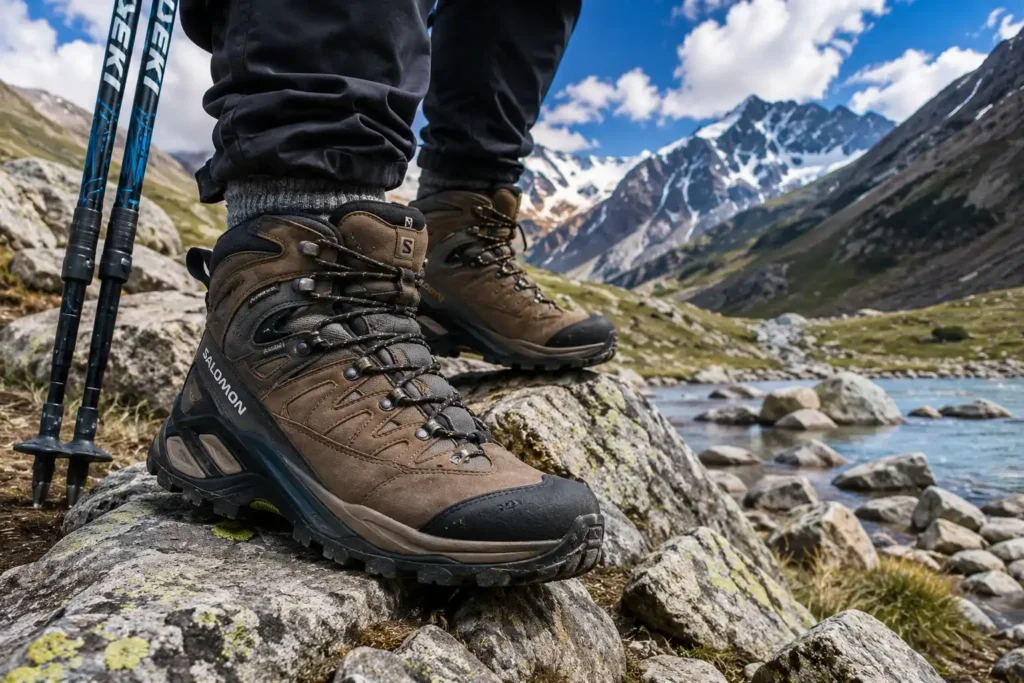
What to look for:
Ankle support — The single most important feature for Kashmir’s terrain. Boulder fields (Tulian, Gurez), loose scree (Vishansar descent) and muddy forest sections (Aru-Lidderwat) all create lateral ankle stress. A low cut trail runner gives you no protection on these surfaces.
Stiff midsole — Softsoled shoes “give” on boulder and rock, which means your foot is constantly micro adjusting on uneven terrain. A stiffer midsole provides a stable platform and reduces fatigue significantly.
Waterproof membrane (GTX or equivalent) — Not for swimming, but for the inevitable morning dew on grass, stream crossings and afternoon rain. Once a boot soaks through on Day 1, it rarely dries fully at camp altitude.
Rubber lugged sole — Significant grip on wet rock and muddy trail. Smooth soles are dangerous on wet Kashmir forest sections.
Break them in before you arrive. This is non negotiable. New boots out of the box on a multi day Kashmir trek will blister you by Day 2 regardless of quality. Wear your trekking boots for at least 8–10 walks of 5+ km each before departure. Your feet need to learn the boot, not the other way around.
Trail runners — when they work and when they don’t: On well maintained paths with minimal boulders and dry conditions, trail runners are lighter and more comfortable than heavy boots. They work acceptably on the lower Aru Valley trail to Lidderwat. They are a liability on the Tulian boulder section, the Vishansar Pass crossing in wet conditions, and any Kashmir trail above 3,500 m with loose rock. If you’re uncertain, bring boots.
Camp sandals or lightweight slip-ons (1 pair)
Your feet need recovery time out of boots at camp. After 6 hours in trekking boots, spending the evening in sandals or light shoes reduces blister development and improves circulation. Packable sandals or Crocs add minimal weight and pay significant comfort dividends.
Trekking socks — more important than most people realise
Minimum: 3 pairs of wool blend or synthetic trekking socks. Not cotton. Cotton retains moisture and moisture causes blisters. Wool or synthetic wicks moisture away from the skin.
Change your socks every day. Turn them inside out if you can’t wash them. The combination of fresh socks and dry feet is the single best blister prevention measure available to you.
3. Clothing — The Layering System
Kashmir’s trekking temperatures require three layers that work together. The mistake most trekkers make is buying expensive individual items without thinking about how they combine.
Base layer (worn next to skin)
Material: Merino wool or synthetic moisture wicking fabric. Never cotton for the layer next to your skin.
Why this matters: When you climb, you sweat. A cotton base layer absorbs sweat, stays wet and becomes cold the moment you stop moving. A wool or synthetic base layer moves sweat away from your skin and dries quickly. This is the difference between being comfortably warm at rest stops and being dangerously chilled.
How many: Carry Two, one to wear while trekking, one clean and dry for sleeping. Sleeping in a fresh base layer is both more comfortable and hygienically necessary for shared camp environments.
Mid layer (insulation)
What it does: Traps warm air against your body when you are not generating heat (at rest, at high altitude camp, during pass crossings with wind).
Best option for Kashmir treks: A lightweight down jacket (packable, 300–500g weight) or a mid-weight fleece. Down compresses better for packing. Fleece works better in damp conditions because it insulates even when wet. For July treks, packable down is usually right. For September, consider fleece or a heavier down jacket.
When you will actually use it: At Nichnai camp in the evening, at Vishansar Lake while standing by the water, at the summit of any pass where wind strips warmth fast and every morning before the day heats up. On day hike sections this layer lives in the top of your pack until you need it.
Outer layer (waterproof shell)
What it must do: Block wind completely, repel rain for at least 2–3 hours of sustained rainfall and breathe enough that you don’t overheat while climbing.
Weight note: A jacket that’s waterproof but doesn’t breathe will soak you in sweat on the Butsheri forest climb even while keeping external rain out. Look for Gore-Tex or an equivalent membrane, or a DWR-coated wind shell with taped seams.
Critical packing instruction: This layer must be accessible at the top of your pack or in a side pocket at all times. Afternoon weather in Kashmir builds fast above 3,000 m. You will need this jacket on short notice. If it’s buried under three days of clothing at the bottom of your bag, it’s useless.
Trekking trousers
Full-length trekking trousers, not shorts. Reasons specific to Kashmir:
Boulder sections involve hands and knees in places (Tulian Day 4, Gurez Days 3–4) — shorts mean scraped legs
UV exposure on open ridgelines above 3,500 m is high
Mosquitoes and vegetation in the lower forest sections (Geriwar, Butsheri) make bare legs uncomfortable
Temperature drops fast on descent trousers are warmer than shorts at camp altitude
Zip-off convertible trousers (the kind that convert to shorts) are a reasonable compromise for trekkers who want the option. Carry the full-leg version and convert if you want.
Thermal base layer (separate from trekking base layer)
For any trek with camps above 3,500 m — which includes Vishansar, Gangabal, Gurez, Tarsar Marsar and the Great Lakes carry a dedicated thermal layer for sleeping. This is separate from your trekking base layer. The purpose is warmth at night, not moisture management during the day. Lightweight merino thermal top and bottom in your sleeping bag system is the difference between good sleep and shivering sleep at altitude. Good sleep at altitude means better recovery. Better recovery means better performance on Day 4.
Head and hands
Sun hat with brim: For the open sections above treeline — Shokdar plateau, Nichnai meadow, the upper Aru Valley. Direct Himalayan sun at altitude causes headaches and burns exposed ears and necks fast.
Warm beanie: For evenings at camp and cold morning starts. Compact enough to weigh nothing in your pack.
Lightweight gloves: Useful at pass summits even in August. In September, proper warm gloves become important for morning starts.
Buff or neck gaiter: One of the most versatile items on any trek. Sun protection, dust cover, ear warmer, light head covering, balaclava substitute. Weighs 60 grams.
4. The Sleeping System
After footwear, this is the category where trekkers most commonly underspend and regret it.
Sleeping bag
Night temperatures across Kashmir trekking routes vary significantly by location and month, so choosing the right sleeping bag is critical. In Lidderwat (Aru Valley) during July–August, temperatures typically range between 5°C to 10°C, where a 0°C comfort sleeping bag is sufficient. Moving higher to Tulian Valley in the same months, expect colder nights between 3°C to 6°C, requiring at least a -5°C comfort rating.
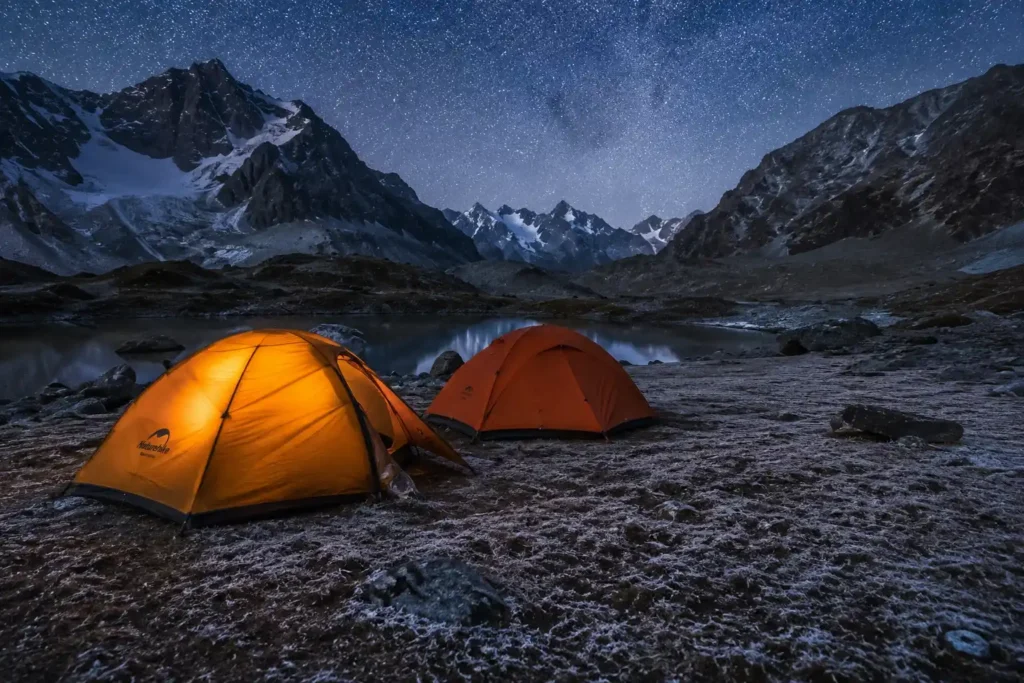
At Vishansar Lake in July–August, temperatures drop further to around 0°C to 4°C, making a -5°C comfort sleeping bag necessary, while in September, conditions become harsher with temperatures ranging from -2°C to 2°C, demanding a -10°C comfort rating. In the Nichnai Pass area during July–August, nights usually stay between 4°C to 8°C, where a -5°C comfort sleeping bag works well. At Gangabal Lake, temperatures hover between 2°C to 5°C in peak season, and a -10°C comfort sleeping bag is recommended for safety. For any campsite across Kashmir in September, temperatures generally fall 4°C to 6°C lower than peak summer averages, so upgrading your sleeping bag accordingly is strongly advised.
The rating system trap: Sleeping bag ratings have two numbers “comfort” and “lower limit.” The lower limit is the temperature at which a standard male in a compressed fetal position can survive without freezing. It is not the temperature at which you will sleep comfortably. Always buy to the comfort rating, not the lower limit. A bag rated “-5°C comfort” means you sleep normally at -5°C, not that you survive it.
Weight vs. warmth trade-off: Down sleeping bags offer the best warmth-to-weight ratio and compress smallest. Synthetic bags are heavier but perform better in damp conditions. For Kashmir’s trekking season, down is the right choice for most trekkers.
Travel My Kashmir provides sleeping bags for all guided packages. If you are on a Travel My Kashmir trek, confirm the bag rating included before departure and whether it matches the table above for your specific trek and month.
Sleeping mat / pad
Camp mats are provided in Travel My Kashmir packages. If trekking independently, a lightweight foam pad or inflatable sleeping mat is essential sleeping directly on tent floor loses significant body heat regardless of sleeping bag quality.
5. Trekking Poles
Not mandatory. But on every multi day Kashmir trek, trekkers who bring poles use them more than they expected and trekkers who leave them behind wish they hadn’t.
Where they earn their weight:
The 840 m descent from Khaari to Dawar on the Gurez Valley Trek return steep, rocky, sustained
The Day 5 descent from Tulian Valley to Ganesh Bal — 1,100 m downhill on a muddy forest section
The slippery forest section between Kanimool and Deno Valley on the Tulian Lake Trek
Any wet trail section — poles are brakes and balance on slick terrain
Anyone with previous knee issues — poles offload 15–20% of impact load from the knee joint on descents
What to buy: Adjustable aluminium poles in the ₹800–2,500 range are adequate. Carbon fibre poles are lighter and more expensive; they’re useful on longer treks where cumulative weight matters. Avoid fixed-length poles adjustability lets you shorten for ascent and lengthen for descent.
If you don’t own poles: Decent poles are available for rent in Pahalgam and Sonamarg bazaars. Confirm quality and adjustment mechanism before renting.
6. Hydration and Water
How much to carry
On a typical Kashmir trekking day, plan for 3–4 litres of water intake. The altitude, physical output and dry mountain air combine to dehydrate faster than most trekkers expect. Thirst is a lagging indicator at altitude by the time you feel thirsty, you are already mildly dehydrated.
Carry a minimum of 2 litres of water on your person at any time on the trail, refillable at streams along the route.
Water bottles
Two 1-litre bottles (or one 1-litre bottle plus a 1-litre hydration bladder) is the right setup. Wide-mouth bottles are easier to fill from streams. Insulated bottles keep water from freezing at high-altitude camps in September.
Water treatment — mandatory
Stream water in Kashmir’s high altitude trekking zones is glacially sourced and visually clean. But livestock grazing above the water source which is standard on every Kashmir trail means bacterial contamination is possible. Treat all trail water. Options:
Iodine tablets: Cheapest, lightest, effective. Wait 30 minutes after adding before drinking. Note: iodine-treated water tastes noticeably different. Carry neutraliser tablets if the taste bothers you.
Chlorine tablets (Aquatabs, Puritabs): Lighter aftertaste than iodine. Similar efficacy.
UV pen (Steripen): Fast (90 seconds per litre), no taste impact, effective. Requires batteries — carry spares.
Squeeze filter: Adds minimal weight, no chemicals, immediate. Sawyer Squeeze is the most commonly used on Indian mountain treks.
Your guide will point out the cleanest water sources at each camp. Treat it regardless.
7. The Medical Kit — Trail-Specific
A medical kit for a Kashmir trek is not the same as a travel pharmacy. You are going to remote terrain where the nearest medical facility may be 4–6 hours away. The kit needs to cover genuine trekking emergencies, not just headaches.
Altitude sickness (AMS) — the highest priority
Diamox (acetazolamide): The standard prophylactic for altitude sickness above 3,000 m. Consult your doctor before taking it, it’s a prescription medication in India. Common dosage is 125–250 mg twice daily, starting the evening before you gain significant altitude. Side effects include tingling in the extremities and increased urination (which helps hydration). Not suitable for people with sulfa drug allergies.
Recognise the symptoms: Headache, nausea, fatigue disproportionate to effort, difficulty sleeping, loss of appetite. Mild AMS is normal on Day 1 at altitude and typically resolves with rest. Moderate to severe AMS — confusion, loss of coordination, persistent vomiting, chest tightness requires immediate descent. Do not push through moderate or severe AMS.
HACE and HAPE: High Altitude Cerebral Oedema and High Altitude Pulmonary Oedema are life-threatening altitude conditions. These are rare on Kashmir’s recreational trekking altitudes (below 4,200 m) but possible. Know the symptoms (severe headache unresponsive to medication, difficulty walking straight, breathlessness at rest, persistent cough) and treat with immediate descent.
Blister kit — more important than most people pack for
On a 5–7 day trek, a blister that starts on Day 2 is a daily misery through Day 7. Pack:
Moleskin sheets (not just a few circles — full sheets you can cut to shape)
Second Skin / hydrocolloid gel pads (Compeed) for formed blisters
Surgical tape and gauze for wrapping
Small scissors
Apply moleskin at the first sign of “hot spots” friction points before the blister forms. Waiting until the blister appears costs you nothing but pain.
Full kit contents
Pain and fever:
Ibuprofen (for altitude headaches and anti-inflammatory on strained muscles do not use aspirin at altitude)
Paracetamol
Gastrointestinal:
ORS sachets (dehydration from GI illness at altitude compounds faster than at sea level)
Loperamide (antidiarrhoeal , a GI event on the trail without this is a bad day)
Antacid
Wound care:
Antiseptic solution (Betadine)
Adhesive bandages in multiple sizes
Sterile gauze pads
Medical tape
Triangular bandage (for sprain support)
Respiratory:
Cetirizine (antihistamine — dusty trails and high altitude can trigger allergic responses)
Nasal saline spray (dry mountain air desiccates nasal passages — this sounds minor until it becomes a daily discomfort)
Eye care:
Artificial tears eye drops — UV exposure and wind at altitude causes dry eye irritation
Basic eye wash
Diamox — as discussed above, if prescribed by your doctor
Personal medications: Carry a 2-day extra supply beyond what your itinerary requires. If the trek extends unexpectedly, you have cover.
Store the medical kit: In a waterproof pouch, inside your pack but accessible without unpacking everything. Know where it is without thinking about it.
8. Sun Protection — This Kills People's Trips
UV radiation increases approximately 4% for every 300 m of altitude gained above sea level. At 3,700 m standard Vishansar or Gangabal camp altitude UV intensity is roughly 40–50% higher than at Srinagar’s 1,600 m. At Nichnai Pass (4,100 m) it’s higher still. Snow and water reflection further amplifies exposure.
Sunscreen: SPF 50+ on all exposed skin, including ears, back of the neck and the underside of the chin (where sun reflects upward from bright terrain). Reapply every 2 hours during exposed sections. One 100ml tube is not enough for 7 days on trail ,carry two.
Lip balm with SPF: Lips crack and burn at altitude within 24 hours without protection. This is a small item that prevents a persistent discomfort. SPF 30+ lip balm.
Sunglasses with UV400 protection: Not fashion sunglasses — full UV400 blocking lenses. On snow-covered sections in June and early July, UV reflected from snow causes photokeratitis (effectively sunburn on the cornea) within hours of unprotected exposure. Even in peak summer, the combination of altitude and open ridgelines justifies quality sunglasses.
Full-sleeve trekking shirt: More effective sun protection than sunscreen for hours of exposed hiking. A lightweight long-sleeve synthetic or merino shirt is cooler than a t-shirt with sunscreen on some terrains because it prevents direct solar heating on the skin.
9. Navigation, Lighting, and Communication
Headlamp
Mandatory. Not a luxury. Power cuts happen at base camps, early alpine starts require hands-free light and the walk to the toilet facility at a high camp at 3 am requires a headlamp.
What to buy: A headlamp in the 150–300 lumen range with a red light mode (red light preserves night vision and doesn’t disturb tent-mates). Carry a full set of spare batteries regardless of headlamp type battery life drops significantly in cold.
Power bank
There is no electricity on any Kashmir trekking trail above the starting village. Your phone, camera and GPS device all run on batteries that deplete faster in cold weather.
Minimum: 10,000 mAh power bank. This will charge a smartphone roughly 3–4 times. On a 5–7 day trek, plan one full charge of your phone per day.
Note on solar chargers: Panels work well in sunny conditions but are weather-dependent and slow. They’re a useful supplement, not a replacement for a power bank.
Phone — navigation note
Download offline maps before leaving Srinagar. Google Maps offline mode, Maps.me, and OsmAnd all work without connectivity. Kashmir’s high trekking trails are reasonably well mapped on OpenStreetMap. Knowing your position on a downloaded map when you have no signal is a genuine safety asset.
Network reality on Kashmir treks: BSNL holds the best signal in remote valleys (including on the drive to Sonamarg and in Pahalgam town). Above 3,000 m on most trails, no network functions reliably. Complete no-signal zones include: above Khaari (Gurez), above Kanimool (Tulian), above Shokdar (Vishansar), above Lidderwat (Aru/Kolahoi).
10. Food and Nutrition on Trail
Travel My Kashmir trekking packages include all cooked meals on trail (breakfast, packed lunch, tea, dinner). The cook team handles this. What you manage personally:
Snacks for trail hours: Your cooked meals are at camp. The 5–7 hours of trekking between camps requires personal fuel. Trail snacks are your responsibility. Pack what works for you, not what sounds good at sea level:
Energy bars or chikkis (jaggery and peanut bars are excellent high-energy trail food and widely available in Pahalgam and Sonamarg markets)
Dry fruits and nuts — compact, calorie-dense, no refrigeration required
Glucose biscuits — simple carbohydrates for quick energy on long ascents
Dark chocolate — denser calories than milk chocolate, melts less in a pack
What to avoid on trail: High-fibre foods (dried fruit in large quantities, raw vegetables) if your GI system is sensitive. Altitude sometimes disrupts digestion and this is not the time to experiment.
Electrolytes: Sweat loss at altitude depletes sodium, potassium and magnesium. ORS sachets mixed into water work well. Glucose powder sachets are available in any Srinagar pharmacy and dissolve in your water bottle.
Altitude and appetite: Most trekkers lose appetite at altitude above 3,500 m, especially on Day 1–2 at a new camp altitude. Eat anyway. Caloric deficit at altitude slows recovery and impairs performance. Eat small amounts regularly rather than large meals.
11. Personal Hygiene and Sanitation
Hygiene on multi-day treks requires intentional planning, not improvisation.
Essentials:
Biodegradable soap and shampoo (non-biodegradable soap contaminates water sources wash well away from any stream or lake)
Quick-dry towel (microfibre, compact)
Toothbrush and toothpaste (travel size)
Toilet paper in a sealed zip-lock bag
Hand sanitiser — use before every meal, regardless of how clean your hands look
Trowel (if camping independently) — for cat holes in the absence of designated toilet facilities
For women: adequate menstrual hygiene supplies for the full trek duration plus 2 extra days. Altitude and physical stress can affect cycle timing. Carry a reusable zip-lock bag for used materials in areas without designated waste facilities.
Leave No Trace — this matters specifically in Kashmir: Kashmir’s high-altitude lakes and meadows are fragile ecosystems under increasing trekking pressure. Gangabal, Vishansar, Tarsar , these lakes have no wastewater treatment. Biodegradable soap used in or near them creates algal blooms. Toilet paper left above ground takes months to decompose at altitude. Carry all non-biodegradable waste out with you. Travel My Kashmir operates with strict Leave No Trace protocols on all treks.
12. Documents and Identification
Never underestimate this category on a Kashmir trek.
What to carry:
Original government photo ID — Aadhaar card is fine for Indian nationals. Passport for foreign nationals. Keep originals in a waterproof document pouch inside your pack.
3 photocopies of your ID — stored separately from the originals. Army checkpoints, forest checkposts and accommodation registers all require ID. Using a photocopy preserves the original.
Permit documentation (printed, not digital) — required for Gurez Valley ILP, forest entry permits for Overa-Aru sanctuary and any special trekking permits. Army checkpoints do not accept phone screen photos.
Travel My Kashmir booking confirmation — useful at checkpoints as a reference document for your group and guide name.
Emergency contacts list on paper — including Travel My Kashmir’s number (+91 979-646-6052), the nearest hospital in the base city and a contact person at home. Store separately from your phone.
Trek-Specific Packing Notes
Different Kashmir treks have specific packing considerations not covered by the general list above:
Gurez Valley Trek: Carry printed ILP permit copies at all times. BSNL SIM is the only network. Extra cash from Srinagar — no ATMs in Gurez.
Tulian Lake Trek: The Day 4 boulder section benefits from knee support braces if you have any prior knee issues. Gaiters are useful in June and September.
Vishansar Lake Trek: Microspikes for June departures — the Nichnai Pass approach may have compacted snow. Fishing permit if you plan to fish at the lakes.
Aru Valley and Kolahoi Trek: Wildlife awareness — the Overa-Aru Biosphere Reserve has Himalayan brown bear. Store food securely in camp and follow guide instructions on food odour management.
Kashmir Great Lakes Trek: The longest circuit demands the most rigorous weight management. Every gram of non-essential clothing becomes a compounding cost over 7 days. Pack to a strict 10 kg maximum personal weight.
Naranag Gangabal Trek: Gangabal Lake sits below Haramukh at 3,969 m — one of the higher camp altitudes in the Kashmir recreational trekking circuit. Sleeping bag to -10°C comfort rating required.
What to Leave at Your Srinagar Hotel
A principle worth naming explicitly: most Srinagar guesthouses and hotels will securely hold a bag for you during your trek. Use this.
Leave behind:
Smart clothing, dress shoes, heavy travel clothes
Valuables you won’t use on trail (jewellery, large amounts of cash beyond what you need)
Extra books, electronics, anything that has no trail function
Toiletries beyond travel sizes
Any clothing item not on this list
The discipline of leaving non-trail items at the hotel is what makes the 10–12 kg weight target achievable. Every trekker who arrives at camp with an 18 kg pack wonders, by Day 3, what exactly is in there that required all this weight.
Equipment Rental in Kashmir
If you are coming from outside India or don’t want to invest in full trekking gear for a single trip, equipment rental is available.
Srinagar: Trekking equipment rental shops operate near Lal Chowk and in the Residency Road area. Quality varies significantly inspect all rented gear carefully before accepting.
Sonamarg and Pahalgam: Both trekking base towns have rental options for poles, sleeping bags and basic rain gear. Availability of higher-quality items (Gore-Tex shells, -10°C sleeping bags) is inconsistent don’t rely on rental for critical items in peak season.
Travel My Kashmir rental: We provide sleeping bags, tents, cooking equipment and ponies/porters as part of trek packages. Contact us to confirm what’s included in your specific package and what you need to bring personally.
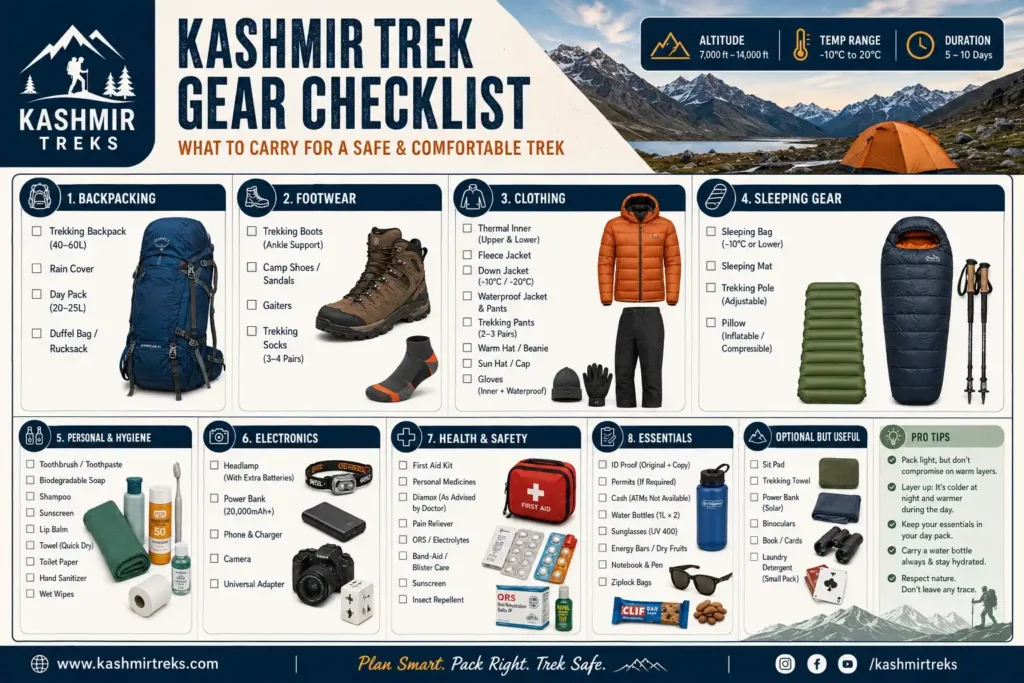
Master Packing Checklist (Print or Screenshot Before You Pack)
Backpack and carry system
- 40–50L trekking backpack with hip belt
- Rain cover (built-in or separate)
- 2–3 internal dry bags
Footwear
- Ankle-support waterproof trekking boots (broken in)
- Camp sandals or lightweight slip-ons
- 3+ pairs wool-blend trekking socks
Clothing
- 2× moisture-wicking base layer tops (not cotton)
- 1× thermal top for sleeping
- 2× base layer bottoms / 1× thermal bottom for sleeping
- 1× mid-layer fleece or packable down jacket
- 1× waterproof shell jacket (accessible at pack top)
- 2× full-length trekking trousers
- Sun hat with brim
- Warm beanie
- Lightweight gloves (warm gloves for September)
- Buff/neck gaiter
Sleeping system (if not provided by operator)
- Sleeping bag (rated to -5°C or -10°C depending on trek — see table at top)
- Sleeping mat/pad
Trekking gear
- Trekking poles (2)
- Headlamp + spare batteries
- 10,000 mAh+ power bank
Hydration
- 2× 1-litre water bottles (or bottle + bladder)
- Water treatment (tablets, UV pen, or filter)
Medical kit
- Diamox (if prescribed — confirm with doctor)
- Ibuprofen and paracetamol
- ORS sachets
- Loperamide
- Blister kit (moleskin sheets, Compeed, tape, scissors)
- Antiseptic and wound care
- Nasal saline spray
- Antihistamine
- Eye drops
- Personal medications + 2-day buffer
Sun protection
- SPF 50+ sunscreen (2× 100ml)
- SPF lip balm
- UV400 sunglasses
Food (personal snacks)
- Trail snacks for 6+ hours of trekking per day
- Electrolyte sachets
Hygiene
- Biodegradable soap and shampoo
- Quick-dry microfibre towel
- Hand sanitiser
- Toilet paper in sealed bag
- Toothbrush and toothpaste
- Personal hygiene supplies as needed
Documents
- Original photo ID
- 3× photocopies of ID (separate from original)
- Printed permit documents
- Emergency contacts list (paper)
- Trek booking confirmation
Navigation and communication
- Smartphone with offline maps downloaded
- BSNL SIM active (for best coverage in remote areas)
Frequently Asked Questions
Can I rent trekking gear in Kashmir instead of buying?
Yes poles, sleeping bags and basic rain gear are available for rent in Pahalgam and Sonamarg. Quality and availability vary, particularly in peak season (July–August). For sleeping bags, always inspect the claimed temperature rating before renting. Critical items like trekking boots should not be rented fit and break-in are too important to leave to chance.
What weight should my pack be?
Personal pack weight target for Kashmir multi-day treks is 10–12 kg. Group equipment (tents, cooking gear, common food) is carried by ponies or porters in Travel My Kashmir packages. Above 12 kg personal weight, every subsequent ascent becomes meaningfully harder.
Do I need crampons or microspikes for summer Kashmir treks?
For treks with departures in late June or for treks crossing high passes (Nichnai Pass on the Vishansar Trek, Gadsar Pass on the Great Lakes circuit), microspikes may be required if the pass approach retains compacted snow. July through September departures generally do not require microspikes. Confirm conditions with Travel My Kashmir before departure.
Is trekking equipment available to buy in Srinagar?
Yes — Lal Chowk and the Residency Road area in Srinagar have trekking equipment shops. Quality varies from imported brands to local alternatives. Decathlon-quality items are available but you may not find the same range as in Delhi or Bangalore. If you need specific items, bring them from home.
Do women need to pack differently for Kashmir treks?
The core packing list is the same. Additional considerations: carry adequate menstrual hygiene supplies for the full trek duration plus 2–3 extra days (altitude and physical stress can affect cycle timing). A lightweight trowel for waste disposal above the treeline. A whistle for solo hiking sections (applies to all solo trekkers). Wear whatever you are comfortable trekking in ,the trail is not a place for cultural dress codes.
What should I eat the night before the trek starts?
A proper carbohydrate-based meal (rice, roti, pasta) the evening before Day 1. Hydrate well. Avoid alcohol the night before it disrupts sleep, dehydrates and impairs altitude acclimatisation. Your first full day on trail will have more uphill than any subsequent day on most Kashmir routes; starting it rested and hydrated matters.
Packing done. Now plan the rest. Choose your trek from the complete Kashmir trekking guide, check what month works best for your dates and contact Travel My Kashmir to book your dates +91 979-646-6052.