
Aru valley Trek In Pahalgam Kashmir Highlights
- Location : Aru Village, 12 km from Pahalgam, Anantnag district
- Altitude of Aru Village: 2,414 m / 7,920 ft
- Trek type: Base camp village + multiple trail options
- Difficulty range: Easy (day hikes) to Moderate-Hard (multi-day)
- Best time: May to October
- Drive from Srinagar: 2.5–3 hours (approx. 110 km via Pahalgam)
- Permit required: Forest permit for trails beyond Aru (arranged locally)
- Key treks starting here: Kolahoi Glacier, Tarsar Marsar, Lidderwat, Harnag Lake
- Nearest town: Pahalgam (12 km)
Table of Contents
ToggleAru Valley Trek: An Honest Local Guide to the Routes, Costs & What to Actually Expect
Most pages will tell you Aru Valley is “the base camp for famous treks.” That’s true and it’s also where the useful information usually stops. So let’s start with the one thing that will save you the most confusion:
“Aru Valley trek” is not a single trek. Aru is a trailhead a small village at the end of the road, about 12 km past Pahalgam, where several different trails fan out. When people search for the “Aru Valley trek,” they almost always mean one of these:
- A half-day climb to Green Top or Kotpathri above the village (a few hours, no overnight).
- The Aru → Lidderwat walk — the classic, the one most first-timers actually want done as a long day or an easy overnight camp.
- A multi-day expedition that begins at Aru — Tarsar–Marsar, Kolahoi Glacier or the long crossing toward Sonamarg.
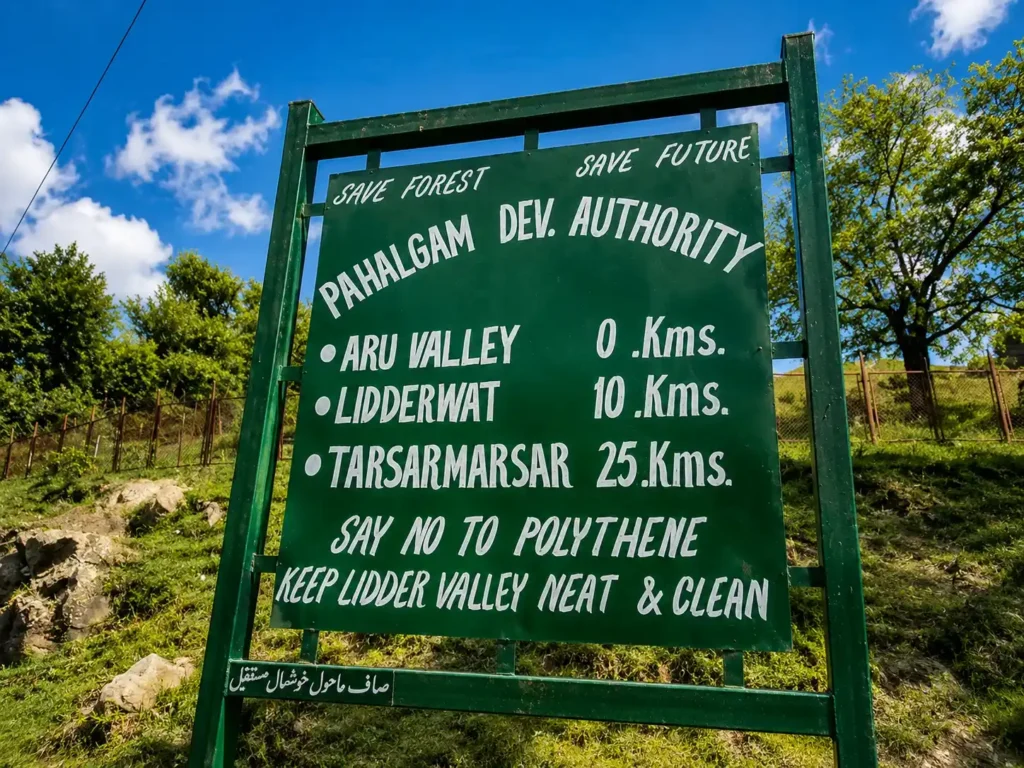
Aru is not famous the way Gulmarg or Sonamarg is famous. There’s no gondola, no film set, no Instagram backdrop that every visitor recreates. What it has instead is function, it is the single most important trekking base in the Pahalgam belt, the starting point for the Kolahoi Glacier Trek, the Tarsar Marsar Trek, the Lidderwat valley trail and the Harnag Lake route all launching from the same muddy village square.
This page covers the Aru Valley trek experience in full such as what trekking from here actually looks like across the different routes, what the village is like to spend a night in, what the Gujjar-Bakarwal community means for the cultural texture of this trek and how to arrive prepared for what is genuinely one of Kashmir’s best multi-day trekking regions.
For a broader overview of all trekking options in the region, see the Kashmir trekking guide.
Quick Comparison: The Main Treks From Aru
| Trek Route | One-way Distance | Max Altitude | Difficulty | Time Needed | Best For |
|---|---|---|---|---|---|
| Green Top | ~6–8 km | ~3,300 m | Easy–Moderate (steep finish) | Half day | Short on time, good viewpoint |
| Kotpathri / Nafran Ridge | ~6–8 km | ~3,000 m | Moderate | Full day | Forest + meadow without camping |
| Aru → Lidderwat | ~10–13 km | ~3,000–3,400 m | Easy–Moderate | 1 long day or overnight | First-timers, families, the “real” Aru trek |
| Lidderwat → Tarsar (Extension) | +2–3 days | ~3,800 m+ | Moderate–Hard | 4–6 days total | Alpine lakes, experienced trekkers |
| Kolahoi Glacier (Extension) | +2 days | ~3,600 m+ | Hard | 4–5 days total | Glacier views, fit trekkers |
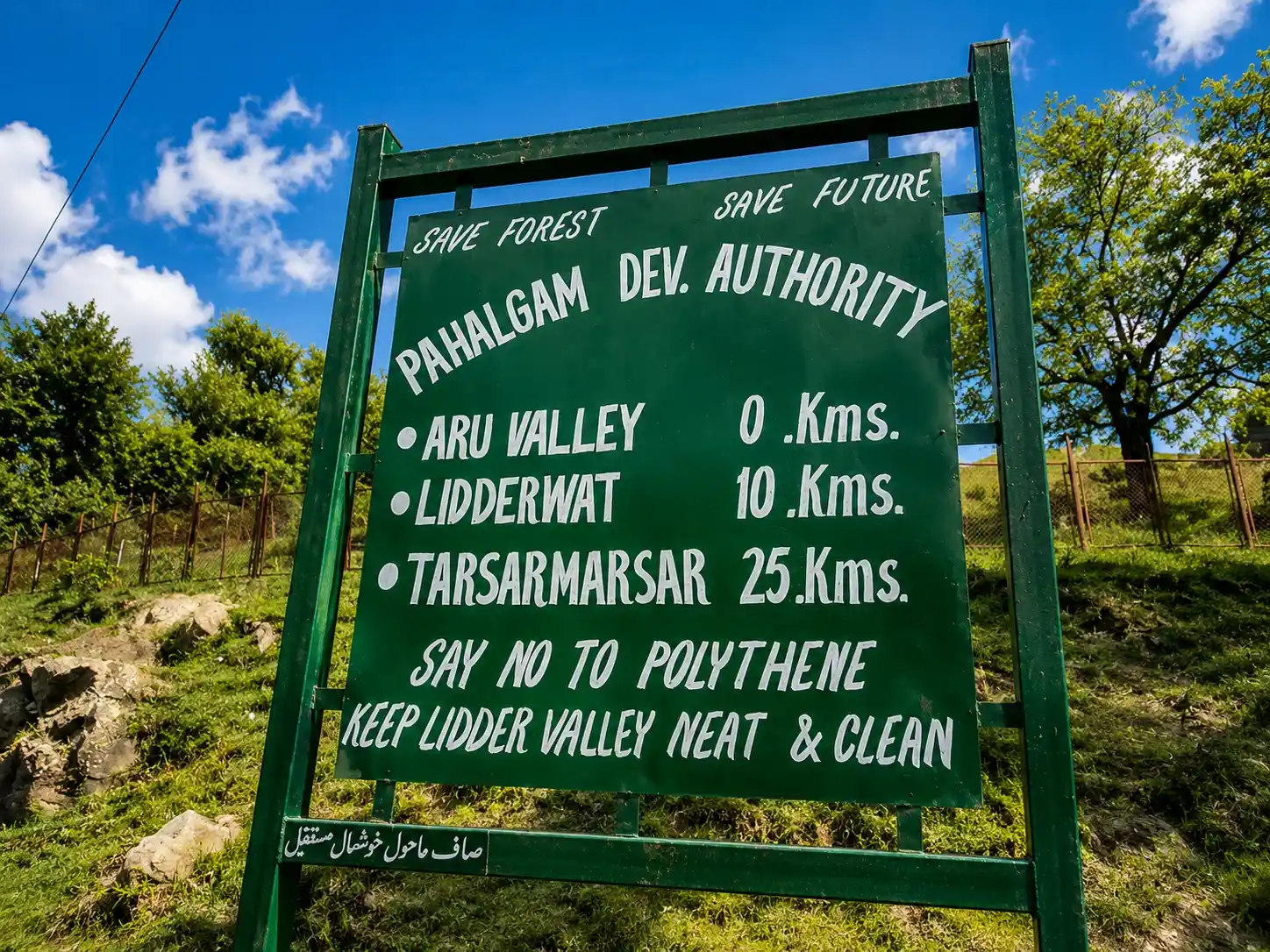
The distance to Lidderwat is quoted between 10 and 13 km depending on the source. The honest answer: it’s roughly a 5–6 hour walk at a relaxed pace and the number on the signboard matters far less than the fact that it climbs gently almost the whole way.
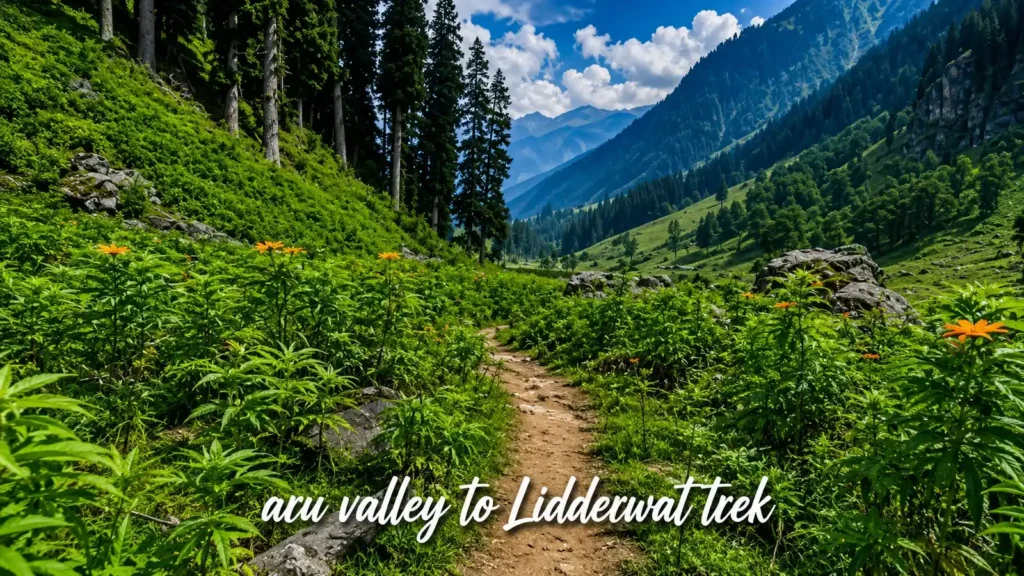
Understanding Aru Valley as a Trekking Hub
Most trekking destinations in Kashmir have one primary trail. Aru has five or six, depending on how you count, running in different directions from the same valley floor. This makes it structurally different from a single-trail trek and worth understanding before you plan.
The Lidder River splits above Aru into two branches, the West Lidder and the East Lidder and the trekking routes follow each branch into separate terrain. This is the geography that makes Aru unusually rich:
East Lidder corridor — the main river channel heading upstream toward Lidderwat, Kolahoi Glacier and eventually Satlunjan. This is the most trekked route from Aru and the one described in most Kolahoi trek itineraries.
West Lidder / Geriwar valley — a shorter, narrower valley to the west of the main Aru basin. Dense pine forest, barely visited, good for half day walks and trout fishing. The sun barely penetrates the canopy here even in July.
Arampatri valley — westward from Aru, leading to Arampatri meadows and eventually Harnag Lake. A 4–5 hour trek to reach the meadows and a full day commitment to the lake. Very few trekkers take this route, which makes it exceptional.
Gashran — a nomadic hamlet in the foothills of the Kolahoi massif, two hours from Aru. A good half-day option for people who want altitude and forest without committing to a multi-day itinerary.
Kootpathri and Poshpathri viewpoints — accessible on foot or by pony from Aru village, these ridgeline viewpoints look back down the Lidder Valley toward Pahalgam. The views are panoramic and the walks are well within reach of casual walkers.
The Core Route: Aru to Lidderwat (the one most people mean)
If you only do one thing from Aru, do this. It’s the trek that gives you the full Kashmir alpine experience — pine forest, the Lidder River, open meadows, Gujjar shepherd huts without needing serious fitness or a multi-day plan.
The trail, honestly described:
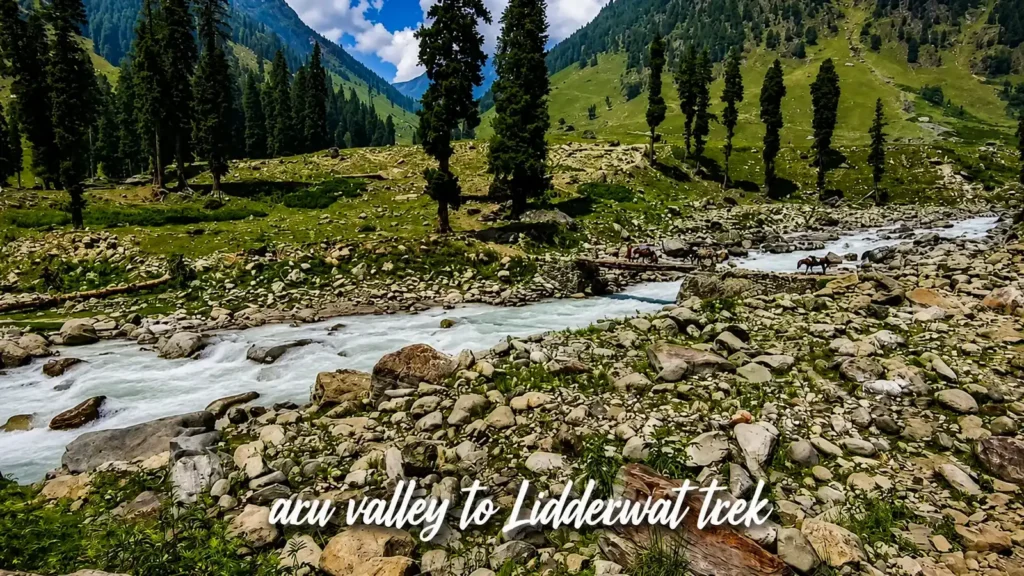
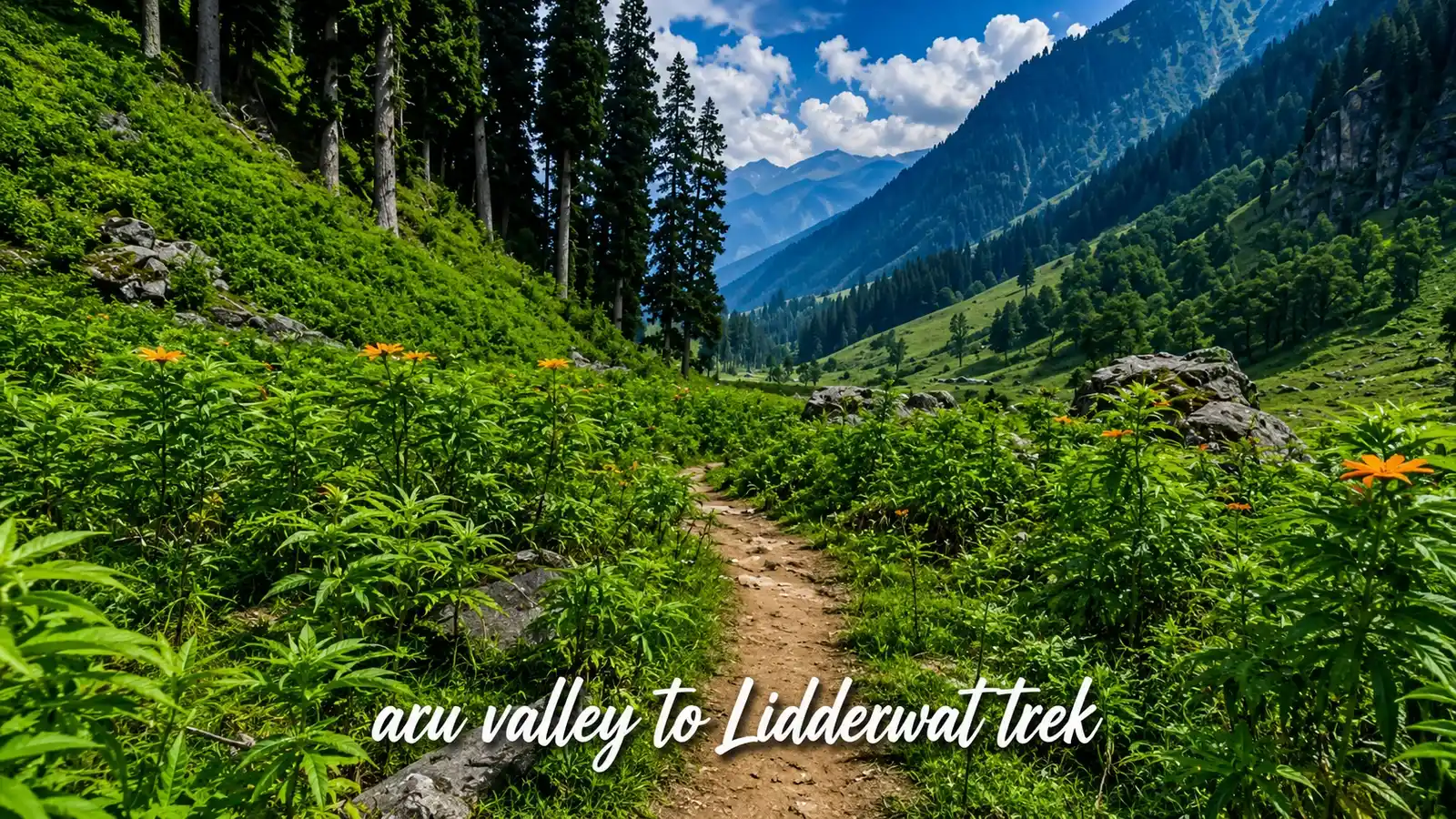
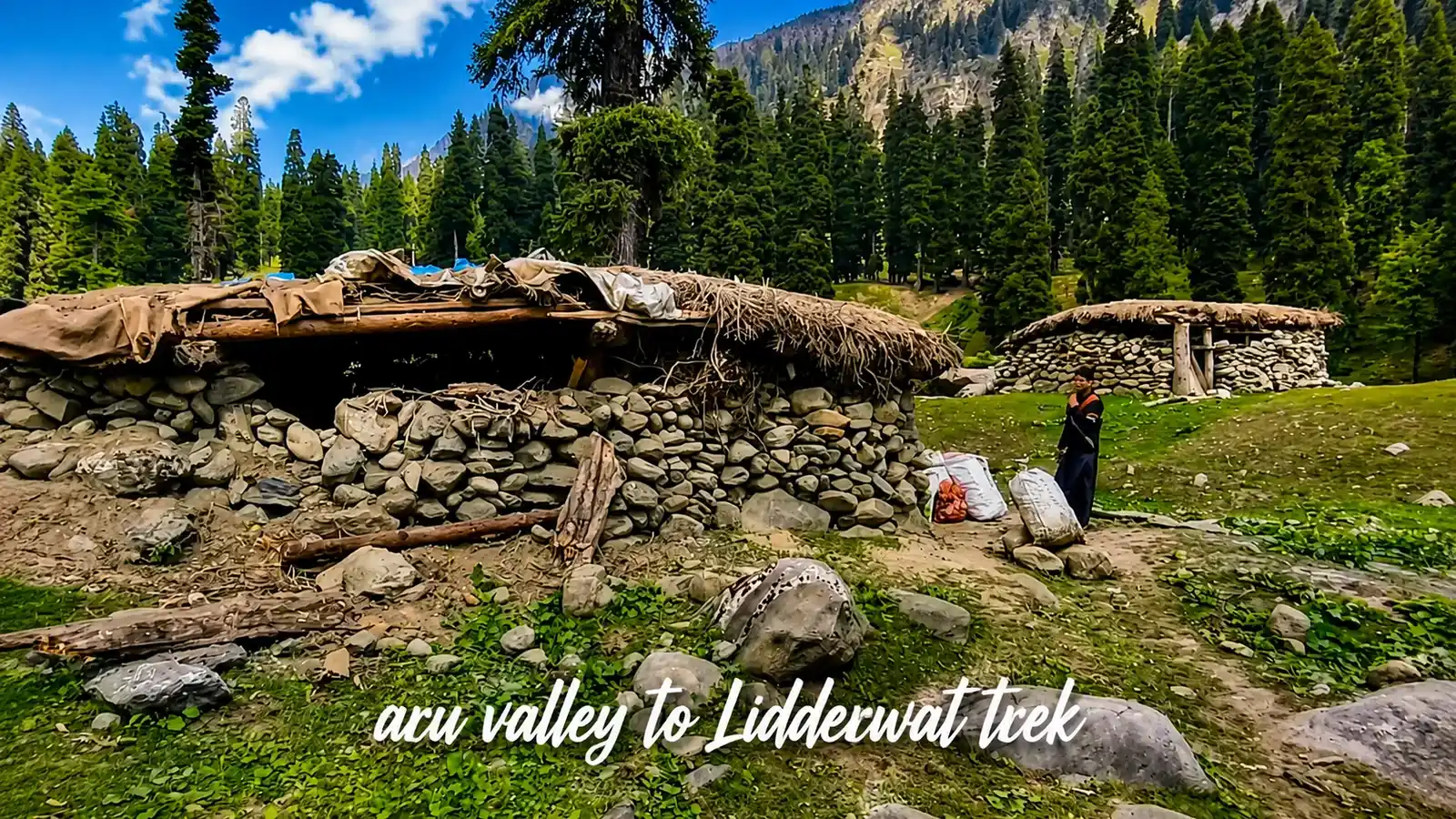
The path climbs straight out of Aru village, past the agricultural department fencing and almost immediately you are following the Lidder River upstream. The first stretch is a gentle, steady gain through fir and pine not flat, but never punishing. About half an hour in, the forest opens at a clearing near Gujjar huts (locally called Dalla) and and then continue toward Nandkei, a Gujjar settlement area where families are present with their livestock throughout the summer and from here it settles into a rolling walk rather than a climb.
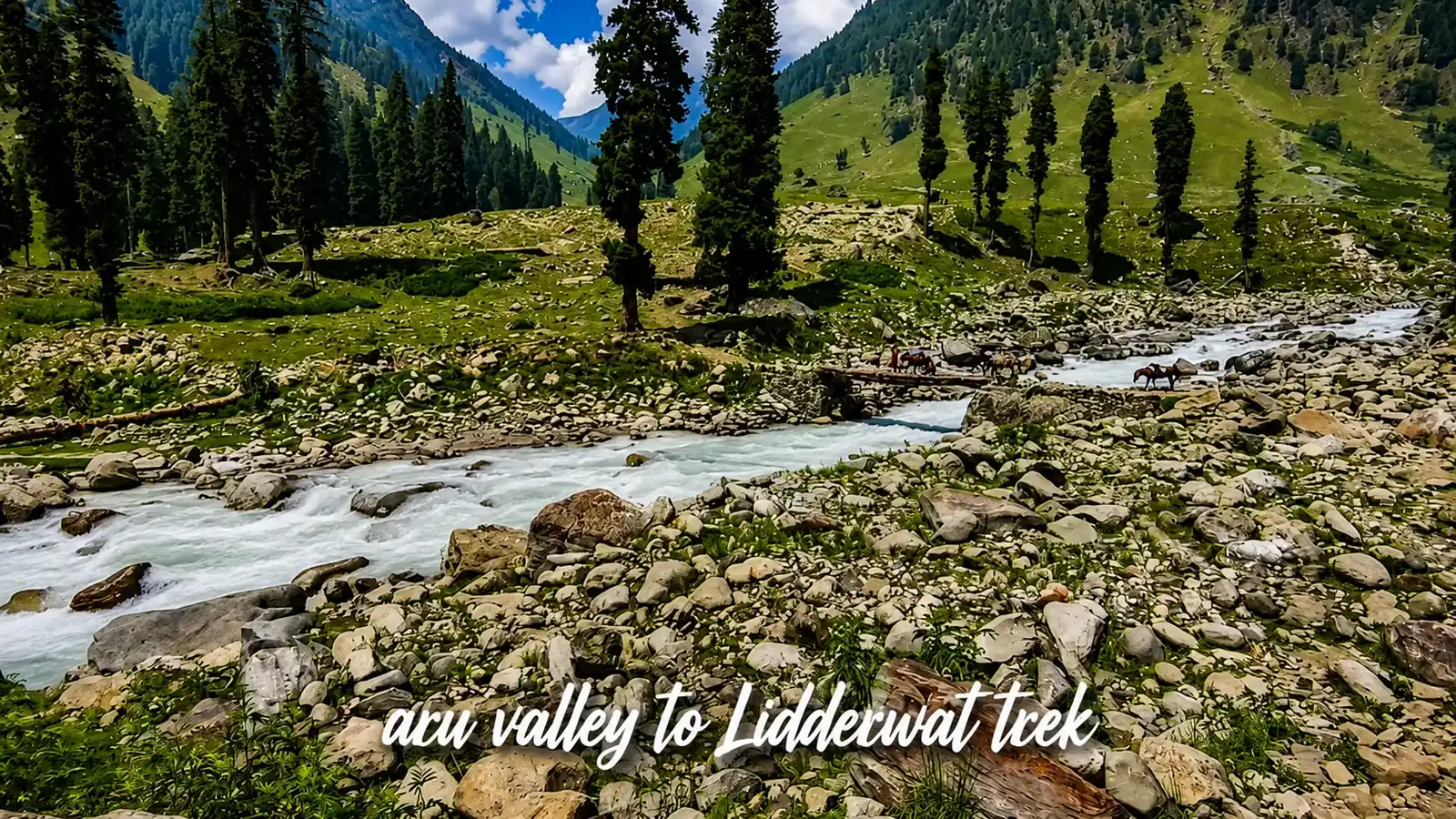
The best section comes when the trail drops to meet the river at the valley floor, where the Lidder spreads out over grassy glades and springs before tightening again around the firs. You will cross small wooden bridges and in early season, patches of old snow. There is no habitation between Aru and Lidderwat except shepherd huts and a single seasonal tea stall near the meadow, so this is not a route where you will find shops or buy lunch. Carry your own.
Lidderwat itself is a wide green meadow where two rivers meet one from the Tarsar side, one from the Kolahoi/Satlanjan side which is exactly why it works as a base camp for the bigger treks. It’s also one of the better stargazing spots in the region on a clear night
Day-wise (overnight version)
Day 1 — Aru → Lidderwat (~10–13 km, 5–6 hrs)
Day 2 — Lidderwat → Aru (3–4 hrs, descent)
Same trail back, downhill and quicker. You will notice views you missed on the way up. Most groups are back in Aru by early afternoon, with time to drive to Pahalgam or Srinagar.
The Kolahoi Glacier Extension: Days 2 and Beyond
Most people who trek from Aru continue to Lidderwat and then proceed toward the Kolahoi Glacier over the following days. This is covered in full detail on the dedicated Kolahoi page, but the key facts for planning:
Lidderwat to Kolahoi Base Camp is approximately 8 km and another 550 m of altitude gain
The glacier itself sits at around 4,200 m and is a 17 sq km ice mass, the largest glacier in the Kashmir Valley and the primary source of the Lidder River
The round trip from Aru to the glacier and back typically takes 4–5 days
Kolahoi Peak (5,425 m), visible above the glacier, is known locally as the “Goddess of Light” — the earliest rays of sun hit its summit pyramid each morning before reaching any of the valley below
If you are combining Aru as a base with the glacier approach, the standard itinerary is: Day 1 Aru → Lidderwat, Day 2 Lidderwat → Kolahoi Base Camp, Day 3 Base Camp → Glacier and return to Lidderwat, Day 4 Lidderwat → Aru.
The Tarsar Marsar Route from Aru
The Tarsar Marsar Trek also begins from Aru and is the more demanding of the two major routes. From Lidderwat, the Tarsar trail branches off the Kolahoi route and heads upward toward Shekwas meadow and then the twin alpine lakes at 3,800–3,960 m.
This is a 7-day trek when done fully (Srinagar to Srinagar), with Aru as the overnight base on Day 1 and the return point on Day 7. The contrast between Aru at 2,414 m and Marsar Lake at 3,960 m captures the full range of Kashmir’s trekking terrain in a single itinerary.
The Harnag Lake Route: The One Nobody Talks About
The Arampatri valley west of Aru eventually leads to Harnag Lake, a high altitude alpine lake that sits in relative obscurity compared to Tarsar, Marsar or Gangabal. That obscurity is its recommendation. The route goes west from Aru through the Arampatri meadows one of the largest and least-visited high meadows in this section of the Lidder Valley and climbs to the lake over 4–5 hours from the meadow. Total commitment from Aru is 2 days minimum.
This is the route for people who have done Kolahoi and Tarsar Marsar and want something genuinely off the main circuit. Ask Travel My Kashmir Travel Agency specifically about this route , it requires a local guide who knows the Arampatri track, as trail markers are minimal.
Day Treks and Short Walks from Aru
Green Top viewpoint walk
A half day circular route from Aru village that climbs to a ridgeline viewpoint above the valley. The ascent is moderate, the views extend down the Lidder Valley toward Pahalgam and you can be back at camp in time for lunch. This is the best introduction to Aru’s terrain for anyone arriving the day before a longer trek.
Geriwar valley walk
West of Aru, following the West Lidder branch into the narrow Geriwar valley. Two hours in, two hours back. No facilities, no markers, extremely dense pine forest. The Geriwar is good for trout fishing (permit required arrange through Travel My Kashmir), birding and solitude. Himalayan monal pheasant is regularly spotted here in the morning.
Gashran hamlet walk
Terrain Reality (what your legs will actually feel)
Forest: The first third is shaded pine and fir. Roots, occasional mud and after rain the trail holds water grippy shoes matter more than fancy boots.
River: You walk alongside and across the Lidder repeatedly. Wooden bridges handle most crossings, but in early season (snowmelt) the water is high, cold and fast. Don’t improvise crossings, use the bridges.
Meadows: The open stretches near Lidderwat are soft, gentle and deceptively tiring underfoot because the ground is uneven.
Snow: Until mid-June you will likely hit lingering snow patches, especially in shaded sections. Not technical, but slippery.
This is a forest-and-meadow trek, not a high-pass trek (unless you extend). No ropes, no scrambling. The difficulty is endurance and footing, not technique.
The Gujjar-Bakarwal Presence: What It Means for Trekkers
No trekking guide to Aru Valley is complete without this context and most guides especially from national operators skip it entirely.
The Gujjar and Bakarwal communities are semi-nomadic pastoralists who have spent their summers in these high valleys for centuries. Every summer, families move their herds of buffalo, sheep and goats from the lower valleys up into the high meadows a pattern of vertical migration called transhumance. They set up in the same locations year after year: Nandkei, Gashran, the upper Arampatri meadows, Lidderwat.
Their presence on the trek trail is visible and consistent. The huts you see scattered across meadows are not abandoned they are occupied by different families at different points in the summer. The horses that pass you loaded with supplies on the Lidderwat trail belong to Gujjar families resupplying their high altitude camps. The fires you see at dusk from Lidderwat campsite are theirs.
This matters to trekkers for practical and cultural reasons. Practically: the trail from Aru to Lidderwat is also their working road and you will share it with horses and cattle. Move to the uphill side and stop when they pass. Culturally: if you are trekking with a local guide from Travel My Kashmir (which we strongly recommend), there’s real potential for interaction tea at a Gujjar hut, a conversation about the season’s grazing conditions, an understanding of how the landscape you are walking through is actually used by the people who know it best. These moments don’t happen on guided group treks from Bangalore. They happen when you are with someone from the valley.
Best Time to Visit Aru Valley for Trekking
May to October — the Aru valley is accessible year-round by road, but trekking conditions vary significantly.
May: Snow still sits on higher trails but the valley meadows are green and the wildflower season begins in earnest by mid-May. Upper trails (Kolahoi, Tarsar) may have significant snowpack confirm conditions before proceeding above Lidderwat.
June: The best month for wildflowers at altitude. The meadows around Lidderwat and Arampatri are at their most colourful. Fewer tourists than July or August. Upper trails are mostly clear of snow by mid-June.
July–August: Peak trekking season. All trails are fully open, weather is warm and stable in the mornings, with afternoon cloud common above 3,000 m. Aru village gets busier, but above Lidderwat the crowds thin sharply. Daytime temperatures in the village run 18–25°C, nights at Lidderwat camp drop to 5–10°C.
September: Excellent trekking conditions. The light is cleaner, the air crisper and the tourist pressure lower. Nights become cold quickly Lidderwat and above will drop to 2–5°C. A quality sleeping bag rated to -5°C is necessary for September camping.
October: The trails are still accessible but the season is ending. First snowfall can arrive at altitude any time from late October. Not recommended for multi-day trekking beyond Lidderwat.
November to April: Aru village is accessible but upper trails are snowbound and hazardous. Winter activities (skiing, snowshoeing) are possible in the valley for experienced visitors.
Weather: Day vs Night
People consistently underestimate the night. During the day in summer, Aru and the lower trail can feel pleasant, even warm in direct sun a T-shirt is fine while walking. But the moment the sun drops behind the ridge, the temperature falls sharply. Nights at Lidderwat in summer are cold enough that a light jacket is not optional and in spring or autumn it’s near or below freezing.
Afternoon rain is common in peak summer clouds build through the day and break by mid-afternoon. This is the practical reason to start early: you want to be at camp or back down before the weather turns, not crossing a swollen river in the rain at 4 PM.
How to Reach Aru Valley
From Srinagar (most common route): Srinagar → Anantnag → Pahalgam → Aru Valley. Total distance approximately 110 km, taking 2.5–3 hours by road. The drive through the Lidder Valley from Pahalgam to Aru (12 km) is one of the more scenic approach drives in Kashmir with pine forest on both sides, the river running alongside the road, peaks appearing in gaps between the trees.
Travel My Kashmir provides direct cab service from Srinagar to Aru Valley as part of trekking packages, or as a standalone transfer. Book in advance Pahalgam-area union taxis have fixed rates and availability in peak season is competitive.
Union taxi from Pahalgam to Aru: If you are already in Pahalgam, local union taxis run the 12 km to Aru. The fare is regulated by the union and runs approximately ₹700–900 for the vehicle one-way. Your guesthouse in Pahalgam can arrange this.
By air: Fly into Srinagar (SXR). From the airport to Aru is approximately 3–3.5 hours total. Airport cab service to Pahalgam and Aru is bookable in advance.
Phone signal note: Pahalgam has reliable coverage across networks. Aru village itself has patchy Jio/Airtel and reasonable BSNL. Above Aru on the trails Lidderwat and beyond expect no signal at all. Sort out any essential communications before leaving Aru.
Permits and Forest Entry
Trekking beyond Aru village specifically on the trails toward Lidderwat, Kolahoi and the side valleys falls within the Overa-Aru Wildlife Sanctuary jurisdiction. Trekkers are required to register at the forest checkpost and pay the sanctuary entry fee. This is collected at the checkpost on the trail out of Aru, not in advance.
Carry your government-issued photo ID. Travel My Kashmir handles all permit logistics for guided trek packages. Independent trekkers should confirm current entry fees and requirements at the Pahalgam Wildlife Warden office before departing.
No special inner line permit is required for Aru Valley or the trails beyond (unlike the Gurez Valley Trek, which requires an ILP). Standard Indian tourist documentation applies.
Who Should NOT Do This Trek
We’d rather you skip it than have a bad day, so honestly:
- If you have a serious heart/respiratory condition and haven’t cleared altitude activity with a doctor the extensions in particular climb above 3,500 m.
- If you can’t manage 5–6 hours of walking with elevation gain, do Green Top or a pony ride instead of forcing Lidderwat.
- If you want guaranteed comfort and facilities — there are no hotels, toilets or shops on the trail. Lidderwat camping is basic by design.
- If you’re set on going solo past Lidderwat without a guide or navigation experience this is the one we’ll push back on hardest. Don’t.
- If you’re visiting in deep winter expecting a full trek — most of it is snow-shut; you’ll get a short snow walk at best.
If none of that applies, the Aru→Lidderwat walk is one of the most rewarding easy-to-moderate treks in Kashmir, and a perfect first multi-day if you are building up to Tarsar–Marsar or Kolahoi.
What to Pack for Aru Valley Trekking
The packing list for Aru-based trekking depends entirely on which trail you’re doing. Here’s how it breaks down honestly:
For day hikes and the Lidderwat route only: Light layers are sufficient. The altitude gain from Aru to Lidderwat (386 m) doesn’t demand serious cold-weather gear, but mornings start cold even in July. A fleece mid-layer, light rain shell and solid walking shoes (not sandals, the Lidderwat trail gets muddy in places) are the essentials.
For multi-day Kolahoi or Tarsar Marsar routes from Aru: This becomes a proper mountain packing exercise. See the dedicated Kolahoi Glacier Trek and Tarsar Marsar Trek pages for detailed packing lists specific to those altitude ranges.
For any Aru Valley visit:
Cash — there are no ATMs in Aru. The nearest ATM is in Pahalgam. Carry enough for your full stay and any activities.
A physical printed copy of your ID — forest checkposts accept ID, but digital copies on a phone screen are not always accepted.
Insect repellent — the lower Geriwar valley is in dense forest and mosquitoes are active at dusk in summer.
Trekking poles — useful from Day 1 on the Lidderwat trail, the descent on the return is on a muddy forest path in places.
Photos of Aru valley Trek
Frequently asked questions
Is Aru Valley a trek or a destination?
Both. Aru Valley is a village and destination that you can visit for a day or stay overnight. It is also the trailhead and base camp for multiple significant trekking routes in the Pahalgam region. Many visitors do both spend a relaxed afternoon in the valley and then use it as their overnight base before heading on the trail the next morning.
What is the difference between Aru Valley and Pahalgam?
Pahalgam is a developed tourist town 12 km downriver from Aru. It has hotels, restaurants, markets and ATMs. Aru is a quieter village with basic guesthouses and homestays, a more pastoral character and direct access to the upper trekking trails. Most serious trekkers prefer Aru as a base because it saves 12 km of trail walking each day.
Is the Aru Valley trek difficult?
The popular Aru→Lidderwat walk is easy-to-moderate — gentle, steady climbing over 5–6 hours, suitable for fit beginners and families with older kids. It only becomes difficult if you extend toward Tarsar–Marsar or Kolahoi Glacier, which involve real altitude and multi-day commitment.
How long is the Aru to Lidderwat trek?
Roughly 10–13 km one way (sources vary), which works out to about 5–6 hours at a relaxed pace. You can do it as a long single day return or as a one-night camp at Lidderwat.
Do I need a guide?
For Aru→Lidderwat, a guide is helpful but the trail is hard to lose. For anything beyond Lidderwat — Tarsar, Kolahoi or the Sonamarg crossing a guide is essential, both for navigation and safety.
What's the best time to do the Aru velley trek?
Late June to early September for warm days and full meadows, especially if extending. Late September offers clear skies, autumn colour and fewer people — but cold nights. Avoid deep winter for trekking.
Can I reach Lidderwat by pony instead of walking?
Yes. Ponies run the Aru→Lidderwat route and it’s a common choice for those who don’t want to walk the full distance. Agree the route and price at the pony stand before starting.
Is there phone signal or shops on the trek?
No reliable signal beyond Aru and no shops past the village except one seasonal tea stall near Lidderwat. Carry your own food and water and share your plan before you lose signal.
Is Aru Valley open and safe in 2026?
Yes — Aru Valley has reopened for trekking and sightseeing with increased security following the 2025 closures. Conditions can change, so confirm the current status for your specific route before travelling.
What is the best trek to do from Aru if I only have 2 days?
The Aru to Lidderwat trail and back is ideal for a 2-day commitment one night at Lidderwat camp, return the next day. It gives you a genuine alpine camping experience, altitude around 2,800 m and access to the confluence of the Tarsar and Kolahoi streams. It’s an excellent standalone experience even if you never continue to the glacier or the lakes.
Planning a Kashmir trek based from Aru Valley? Whether it’s a day walk to Lidderwat or a full 7-day Tarsar Marsar expedition, Travel My Kashmir handles the logistics including guide, permits, camp, transport from Srinagar. Call or WhatsApp us at +91 979-646-6052 to plan your dates.
Also in the region: Explore Aru Valley’s full attractions and activities including camping, horse riding, and the Overa-Aru Biosphere Reserve. If you want to see the valley from above before you trek it, our paragliding in Aru Valley experience is one of the best ways to start.