
Gurez Valley Trek Full Information
- Trek Name: Gurez Valley Trek (also called Patalwan Lakes Trek)
- Trek Duration: 5 trekking days + 1 travel day each side
- Distance : 36 km on trail
- Highest Altitude: 3,900 m / 12,795 ft (Patalwansar II Lake)
- Permit required: Yes — Inner Line Permit (ILP) mandatory
- Location: Kashmir
- Suitable for: 12- 60 years
- Trek Difficulty: Moderate
- Base camp: Dawar, Gurez (Bandipora district)
- Best Time: July to September
- Railway station: Srinagar Railway station
- Airport: Srinagar (sheikh ul-alam international)
- PickUp point: Srinagar
- Drop-off point: Srinagar
- Drive from Srinagar: 5–6 hours (approx. 140 km)
Table of Contents
ToggleWhat Makes Gurez Different From Every Other Kashmir Trek
Gurez valley Trek Route Overview
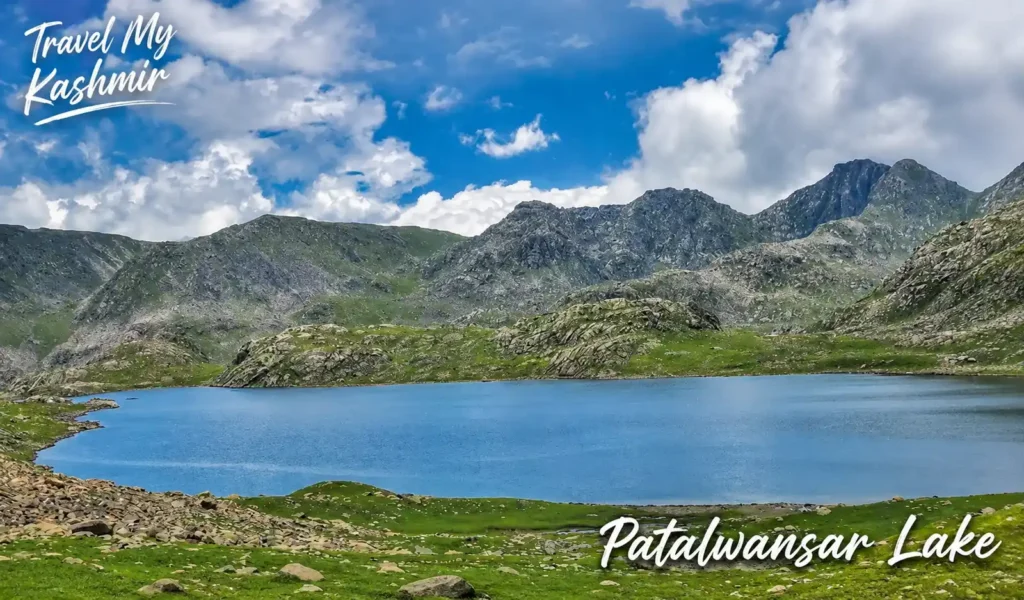
The trek goes by two names the first one is the Gurez Valley Trek and the Patalwan Lakes Trek, because the destination is a pair of alpine lakes called Patalwansar I and Patalwansar II, sitting at around 3,830 m and 3,900 m respectively. The trail starts from Dawar, the main town in Gurez, climbs through forests and meadows to the highland village of Khaari, continues through increasingly rugged terrain to the lakes and returns the same way.
The route is not a loop. You go in and come back on largely the same trail, though Day 5 offers a direct descent variant that cuts through Dison without revisiting Khaari.
Gurez Valley Trek Day-by-Day Itinerary
The trek involves some steep ascents and descents, as well as navigating through rocky terrain and occasional streams. This detailed itinerary provides a comprehensive, day-by-day guide to help you plan and prepare your Kolhai Glacier Trek in Kashmir with confidence. From daily activities and highlights to essential tips, you will have Know everything you need to make the most of your experience.
Day 0 — Srinagar to Dawar (Drive, 5–6 hours)
Leave Srinagar early ideally by 6 am. The road takes you north through Bandipora, then climbs to Razdan Pass and descends sharply into the Gurez Valley. The drive through Razdan is one of the better mountain roads in the state and gives you your first clear signal that you are entering something different. Arrive in Dawar by early afternoon, check in to your guesthouse or camp, sort out your permits at the local army checkpoint and walk around Dawar village in the evening. The Kishanganga River runs through the valley with a clarity that will stop you mid-step. Sleep early.
Altitude: ~2,400 m
Stay: Guesthouse or camp in Dawar
Day 1 — Dawar to Khaari (Trek begins)
Distance: 7 km
Altitude gain: 840 m in 6.5 km
Time: 5–6 hours
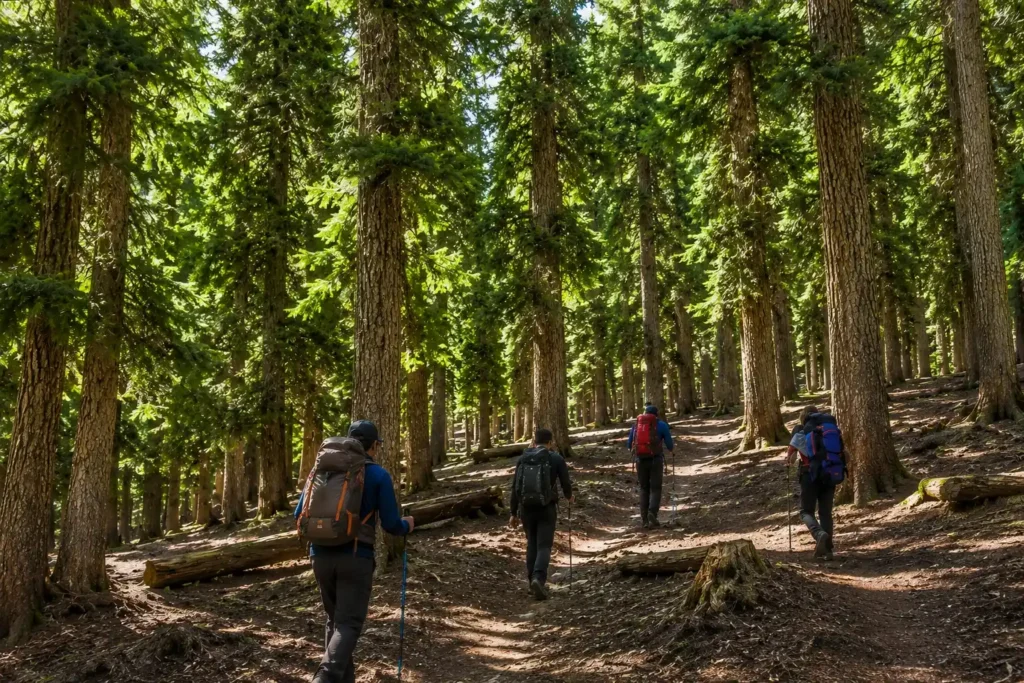
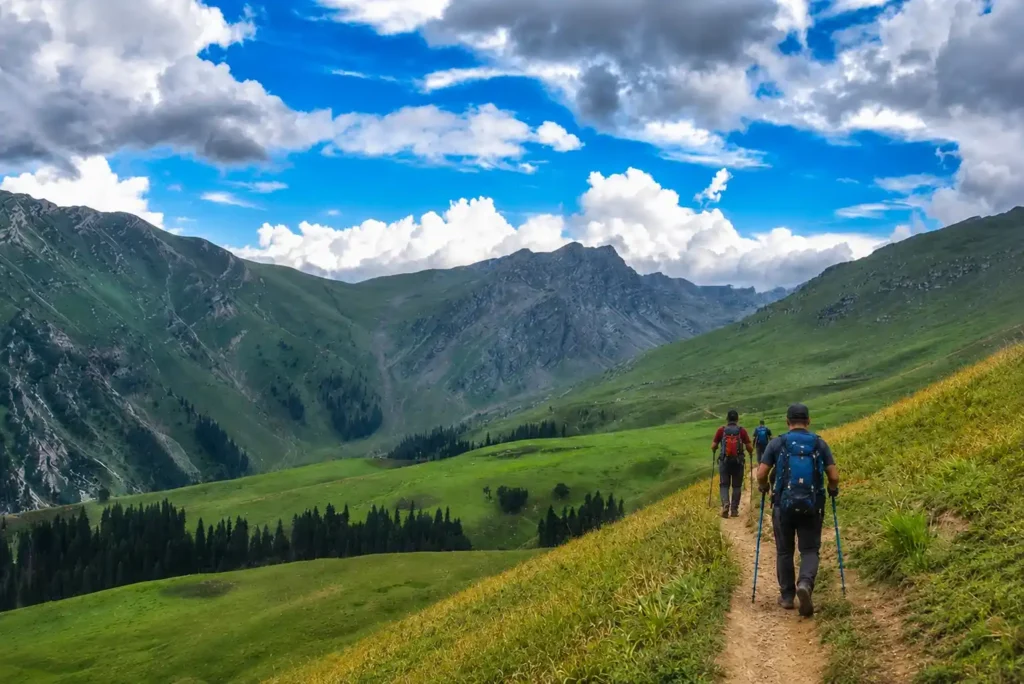
This is the day that separates people who prepared from people who didn’t. The ascent from Dawar to Khaari is steep, you gain 840 metres of altitude in about 6.5 kilometres and most of that gain happens in the first three hours. The trail climbs through pine forest, then opens into a wide highland meadow as you approach Khaari at 3,245 m. The views from the ridge before Khaari are the first proper panoramic moment of the trek, you can see back down into the Gurez Valley and on a clear day, across to peaks that cross into Pakistan.
Khaari itself is a seasonal settlement a handful of families who bring their livestock up for the summer. There’s a small tea stall that may or may not be open depending on the season and the family. Don’t count on it. Your camp here is in the open meadow just above the village.
Tip from the ground: The first hour out of Dawar has little shade and the sun can be strong in July and August. Start no later than 7 am. By the time you hit the steepest section, you want cloud cover, not direct sun.
Altitude: 3,245 m (Khaari)
Stay: Camp
Day 2 — Khaari to Gadol/Dison Camp
Distance: 6 km
Altitude gain/loss: Gradual ascent with some descent
Time: 4–5 hours
A more forgiving day after Day 1. The trail moves through open grasslands and follows a ridge before dropping into the Dison area, a broader valley section with a stream running through it. This is good acclimatisation territory, the altitude is building steadily but the terrain is easier and you have time to notice the landscape changing. The birchwood forests here are unlike anything in the lower Kashmir Valley. By afternoon, camp near the stream at Dison (approximately 3,150 m).
Altitude: 3,150 m (Dison camp)
Stay: Camp
Day 3 — Dison to Patalwansar II Lake
Distance: 5 km
Altitude gain: 750 m
Time: 5–6 hours
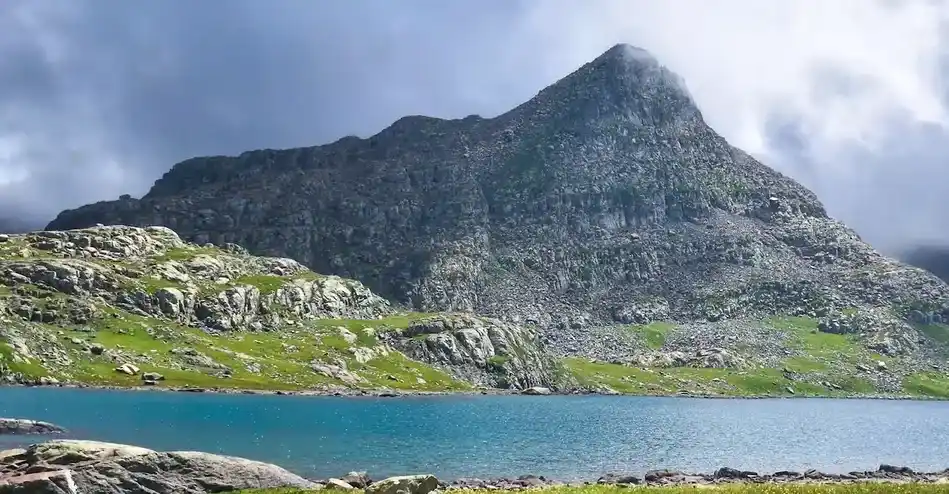
The boulder section starts here. As you leave the Dison camp and gain altitude toward the lakes, the trail becomes increasingly rocky large, loose boulders that require careful footwork and slow you down considerably. This is not technical climbing, but it is physically demanding and mentally tiring. Take your time, especially if you have a loaded pack. The boulder field eventually opens onto a high ridge and from there you get your first view of Patalwansar II a wide, calm lake at 3,900 m surrounded by grey rock and residual snowfields even in August. It hits differently from every other Himalayan lake you have seen precisely because there’s nothing else up here. No trees, no grass. Just water, rock and sky.
Camp here for the night.
Altitude: 3,900 m (Patalwansar II)
Stay: Camp beside the lake
Day 4 — Patalwansar II to Patalwansar I (and back to Dison)
Distance: 6 km round trip to Patalwansar I, then descent to Dison
Time: 6–7 hours
The two Patalwansar lakes share a name but look completely different. Patalwansar II (where you camped) is wide and open. Patalwansar I, reached by crossing a steep rocky ridgeline, is longer and narrower with a more dramatic feel the walls rise sharper around it. The crossing between the two is the most technical section of the entire trek. It’s not a climbing route, but the footing is loose and requires attention. Go slowly and move one careful step at a time.
After exploring both lakes, descend back toward Dison for the night. The descent from the boulder section goes faster going down but demands just as much attention as the climb loose boulders going downhill are where most injuries happen on this trek.
Altitude: Return to 3,150 m (Dison)
Stay: Camp
Day 5 — Dison to Dawar (Descent)
Distance: 7 km
Time: 5–6 hours
A long descent day. Most groups bypass Khaari on the return and drop directly from the Dison area into Dawar via an alternate ridge path slightly different terrain but similar total distance. The first section is steep and along a narrow rocky ledge, so again, go steady. Once you are through that initial descent, the trail opens up and you can move faster. Arrive in Dawar by early afternoon, shower, eat a proper meal (the local trout at a Dawar dhaba is genuinely worth it) and rest.
Altitude: Return to 2,400 m (Dawar)
Stay: Guesthouse in Dawar
Day 6 — Dawar to Srinagar (Drive back)
Difficulty Level and Who This Trek Is For
The Gurez Valley Trek is rated moderate, but that rating needs context. Day 1 would be rated moderate-to-hard on its own an 840-metre ascent in 6.5 km is not casual. The boulder section on Days 3–4 is physically tiring and requires focus. At 3,900 m, altitude effects are real and worth preparing for.
That said, this is not a technical trek. There is no glacier crossing, no high pass above 4,000 m, and no rope work required. People with good baseline fitness who train consistently for 4–6 weeks before the trek find it entirely manageable.
This trek is well-suited for:
Trekkers who have completed at least one 5–6 day mountain trek before
People comfortable with camping in remote, facility-free environments
Anyone who genuinely wants an off-the-beaten-path experience in Kashmir
Solo trekkers comfortable navigating with a local guide
Think twice if:
You have no prior overnight trekking experience
You have a known sensitivity to altitude (above 3,500 m)
You are looking for a trek with tea house support along the route (there is none after Khaari)
You need reliable mobile connectivity during the trek
If you are newer to trekking, consider starting with the Thajwas Glacier Trek from Sonamarg or the Khilanmarg Trek in Gulmarg to build your trail legs before committing to Gurez.
Inclusions and Exclusions
Inclusions
- Meals: Vegetarian and egg-based meals provided from Day 1 evening to Day 8 lunch.
- Permits and Fees: All necessary permits and fees (equivalent to Indian nationals) covered.
- Camping Equipment: Twin-share tents, sleeping bags, and mattresses provided.
- Safety Equipment: Static rescue rope, seat harness, carabiners, and pulleys included.
- Trek Leadership: Certified mountaineering trek leader with first aid and rescue training.
- Local Support: Experienced local guide, cook, and helpers included.
- Luggage Transport: Porters or mules for carrying shared luggage.
- Medical Kit: Exhaustive first aid kit with portable oxygen cylinder.
Exclusions
- Meals: Participants are responsible for meals during road journeys.
- Insurance: Any type of insurance is not covered.
- Personal Expenses: All personal expenses are to be borne by the participant.
- Additional Costs: Any expenses not explicitly mentioned in the package inclusions are not covered.
- Luggage: Participants are responsible for carrying their personal backpacks.
- Transportation: Transportation to and from Srinagar is not included.
Best Time to Do the Gurez Valley Trek
July to September — this is your window and it’s non negotiable.
The Razdan Pass connecting Bandipora to Gurez closes under heavy snowfall every year, typically from late October or November through April. The valley itself is snowbound and inaccessible in winter. The road reopens once snowfall clears, usually in May or June depending on the year, but the trekking trails at altitude are often still snow covered and unsafe until late June or early July.
Month-by-month breakdown
June (late): Trail becomes accessible but higher sections may still have residual snow. Cooler temperatures, fewer trekkers. Possible if you confirm trail conditions in advance.
July: The sweet spot. Temperature at altitude sits around 12–18°C during the day, dropping to 4–8°C at night. Wildflowers are in full bloom in the meadows around Khaari. The boulder sections are dry and the lakes are at their clearest.
August: Still excellent. Slightly warmer at lower elevations. Occasional afternoon clouds and brief rain are normal but rarely disruptive , Gurez sits in a rainshadow zone that shields it from the heavy monsoon that hits Himachal Pradesh and Uttarakhand.
September: Excellent for photography. The light changes quality in September with cleaner, colder, more contrast. Nights drop sharply (2–5°C at the lakes) so sleeping gear quality becomes important. The meadows start yellowing. Fewer trekkers than August.
October onward: Do not plan this. The Razdan Pass closes and conditions become unpredictable rapidly.
Permits and Restrictions — The Reality
Gurez Valley is a Protected/Restricted Area due to its proximity to the Line of Control. Every visitor — Indian nationals included — needs an Inner Line Permit (ILP) to enter.
How to get it:
The ILP is issued by the Bandipora District Collector (DC) office. Trekkers visiting with a registered local operator like Travel My Kashmir Tour operator have their permits arranged in advance this is the easiest route. If you are going independently, you need to apply in person at the DC office in Bandipora with the following:
Original government-issued photo ID (Aadhaar card, passport, or driving licence)
Three photocopies of the same ID
Passport-size photographs (carry at least 4)
A completed application form (available at the DC office)
Permits are typically processed in 2–3 working days. Carry printed copies — digital copies on your phone are not accepted at army checkpoints along the route.
At army checkpoints: There are multiple checkpoints between Bandipora and Dawar and occasionally on the trail itself. Be cooperative and patient. Carry your permit and ID at all times. Photography near military installations is prohibited, the army personnel will tell you clearly where you cannot point a camera and following that instruction matters.
Foreign nationals: The permit process for foreign passport holders is more involved and takes longer. Start the process at least 2 weeks before your planned trek date. Travel My Kashmir can guide you through this process directly.
How to Reach the Starting Point
Starting point: Dawar town, Gurez tehsil, Bandipora district, J&K
From Srinagar (most common): Srinagar to Dawar is approximately 140 km by road and takes 5–6 hours depending on road conditions. The route goes: Srinagar → Sopore → Bandipora → Razdan Pass → Dawar.
The stretch from Bandipora to Dawar via Razdan Pass (the last 70 km) is a mountain road with sharp bends and sections that narrow significantly. It is not suitable for large vehicles. A Sumo, Bolero or similar high clearance vehicle is the standard choice. Travel My Kashmir arranges direct cab service from Srinagar to Dawar as part of trekking packages book your Srinagar to gurez taxi here.
By air: Fly into Srinagar (SXR) — Sheikh-ul-Alam International Airport. From the airport, it’s roughly 6.5–7.5 hours total travel time to Dawar.
By train: The nearest railhead is Srinagar Railway Station. Cab service from Srinagar Railway Station to Dawar is available with prior booking.
There is no direct public bus service from Srinagar to Dawar. Local shared cabs run from Bandipora to Gurez but timings are irregular and space is not guaranteed. For a trek of this nature, private cab is strongly recommended.
What to Pack — Practical, Not Generic
This is a remote trek with no resupply points and no guesthouses after Dawar. Everything you need for the mountains goes in your pack on Day 1.
Clothing (what actually works here)
- Merino wool or synthetic base layer, one for day trekking, one for sleeping. Cotton kills warmth when wet; don’t bring cotton baselayers.
- Mid-layer fleece or down jacket — nights at Patalwansar are genuinely cold even in August. A thin packable down jacket is worth its weight.
- Waterproof shell jacket, afternoon clouds build in August and September. Even in Gurez’s rainshadow, you will get at least one wet hour.
- Full-length trekking pants not shorts. The boulder sections scratch and sun on bare legs at 3,900 m is intense.
- Sun hat and warm beanie ,you will need both on the same day.
- Gloves — thin liner gloves are enough in July/August; proper warm gloves for September.
- Three pairs of trekking socks (wool blend). Change every day. Wet socks become blisters.
Essentials most people forget
- Trekking poles — not mandatory but genuinely useful on the steep Day 1 ascent and the boulder descent
- Lip balm with SPF — altitude sun destroys lips and most people don’t pack this
- Moleskin or blister pads — once a blister starts at altitude, the trek becomes a different experience
- A small head torch with extra batteries — pack it where you can reach it, not at the bottom of your bag
- Personal water purification (tablets or a filter) — stream water is clean but get in the habit of treating it
- A light dry bag inside your main pack — if it rains on the boulder section, wet gear at camp is miserable
Footwear
Ankle-support trekking boots with a stiff sole. The boulder section on Day 3–4 is unforgiving on trail runners or soft-soled shoes.
This is not a place to learn whether your footwear can handle rocks.
Camp sandals or light shoes for evenings at camp.
Leave at the hotel in Srinagar
Cash: Carry sufficient cash from Srinagar. There are no ATMs in Gurez. The nearest ATM is in Bandipora.
Phone: BSNL SIM works in Dawar and occasionally in the lower valley. Above Khaari, expect no signal. If you use Airtel, Jio or Vi, you will have zero connectivity from Bandipora onward.
Ground Reality — Things Other Trek Guides Won't Tell You
The army presence is constant but normal. Gurez is a border valley and the military presence is visible throughout the checkpoints, vehicles, installations. Don’t let this unnerve you. It’s part of the landscape here and the reality of trekking in a border area. The personnel are generally courteous and the process at checkpoints is quick once you have your permits in order.
Dawar is a real, functioning small town. It’s not a tourist village. There’s a market, a few small restaurants, government offices and local life happening around you. Spend an evening walking around rather than sitting in your guesthouse the Kishanganga riverbank is genuinely beautiful at sunset and the trout fishing here is legendary (with a permit). Get more details about Dawar Village here.
The boulder section is genuinely tiring. If you have read other trek guides describing this as “a slight challenge,” they are being generous. The transition from the meadow trail to the boulder field on Day 3 is abrupt and lasts longer than you expect. Set your expectations correctly: it’s slow, it requires full concentration and you will be tired by the time you reach Patalwansar. The reward is worth it, but don’t rush it.
The Dard-Shina people of Gurez are ethnically and linguistically distinct from the rest of Kashmir. If you trek with a local guide from the valley (which Travel My Kashmir arranges), you get a completely different level of cultural context they can translate, explain local customs and open doors (sometimes literally) that would otherwise stay closed to outside visitors.
Weather can shift fast above 3,500 m. A perfectly clear morning at Khaari can turn into a grey, rainy afternoon at the lakes. Pack your rain layer where you can reach it without unpacking your entire bag.
How This Trek Connects to Other Kashmir Treks
Gurez is the right level of challenge between shorter day treks and the more demanding high-altitude routes:
- Looking for something shorter and easier first? Try the Naranag Gangabal Trek or Tarsar Marsar Trek both offer alpine lakes without the same remoteness factor.
- Already done Gurez and want more? The Kashmir Great Lakes Trek covers more ground, more lakes and higher passes over 7 days.
- Combining trips? Many trekkers pair Gurez with a couple of days in Sonmarg and a visit to Thajwas Glacier trek as a warmup leg before heading north.
For a full overview of what’s available across difficulty levels, see our complete trekking in Kashmir guide.
Book Gurez Valley Trek Now
Frequently asked questions
Is the Gurez Valley Trek safe?
Yes. Despite its proximity to the Line of Control, the trekking trail itself is entirely within Indian territory and has a strong military presence. The area has no history of incidents involving trekkers. Apply for permits through a registered local operator and follow the standard protocols at checkpoints.
Do Indian nationals need a permit for Gurez?
Yes. Every visitor to Gurez Indian or foreign requires an Inner Line Permit from the Bandipora DC office. There are no exceptions and checkpoints enforce this strictly.
Can I trek Gurez without a guide?
Technically possible for experienced trekkers, but not advisable. The trail is not well marked, the boulder sections can be confusing in poor visibility and having a local guide significantly streamlines the permit process and army checkpoint interactions. Travel My Kashmir provides experienced local guides who know this specific route.
What is the cost of the Gurez Valley Trek?
Costs depend on group size, inclusions and accommodation preferences. Contact Travel My Kashmir directly for a customised quote costs typically include permits, transport from Srinagar, guide, camping equipment and meals on trail.
Is there accommodation in Gurez beyond camping?
In Dawar town there are basic guesthouses and homestays. On the trail, it’s camping only. There are no tea houses or permanent structures between Khaari and the lakes.
What network works in Gurez?
BSNL SIM is the only network with any coverage in Gurez. Above Khaari, even BSNL signal disappears. Inform family of your itinerary before you leave Dawar.
Can I combine the Gurez Valley Trek with a Srinagar tour?
Absolutely. Most trekkers spend 2–3 days in Srinagar before heading to Gurez. Travel My Kashmir can put together a combined itinerary that includes city sightseeing, a Dal Lake houseboat stay, and the trek. Get in touch to plan your trip.