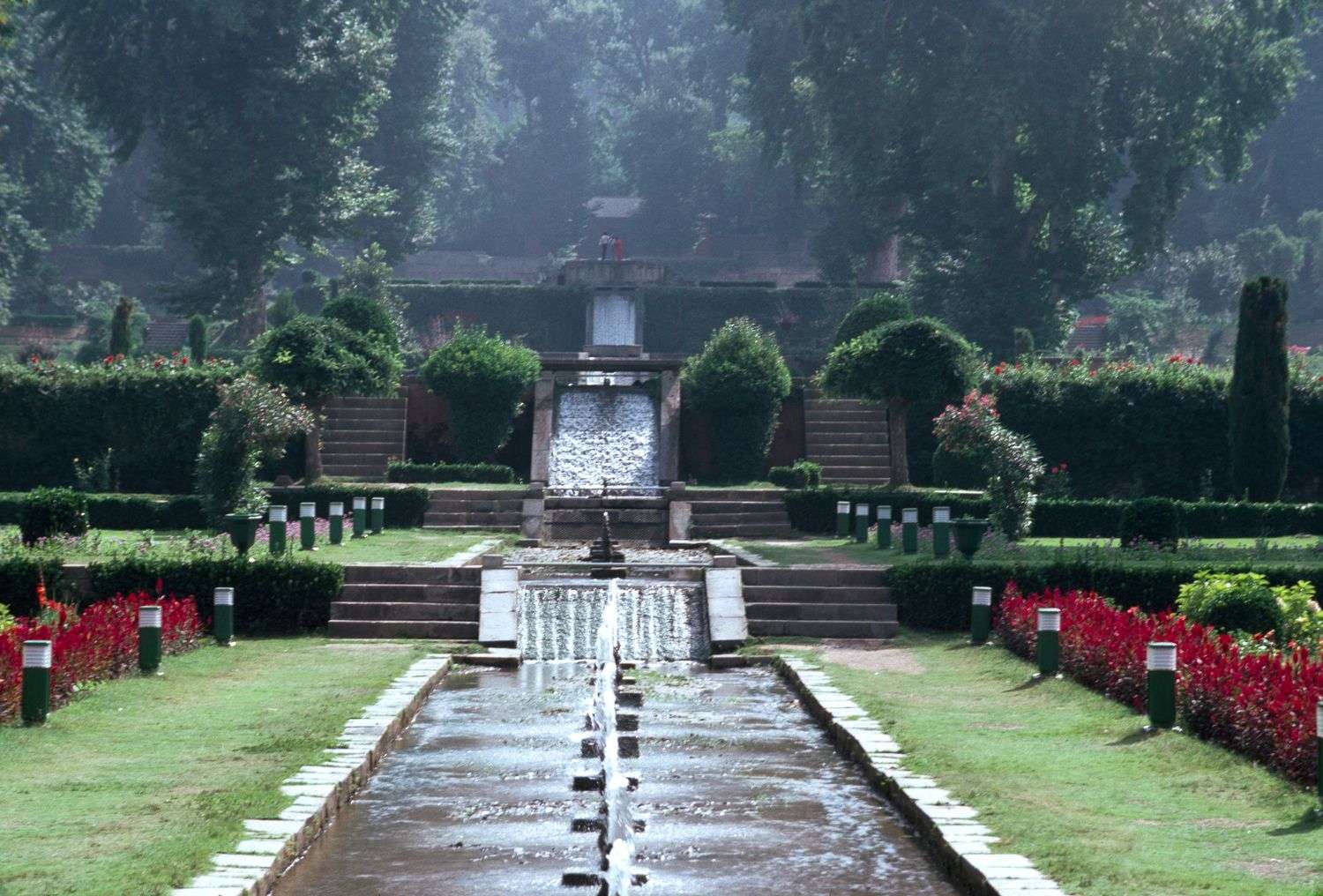
 Right on the shore
Nishat Bagh
A grand Mughal garden built directly on the lake's edge, with a central water channel running down to it.
Travel My Kashmir Travel Agency | Kashmir Cab Service & Tour Packages

Every image you have ever seen of Kashmir probably started here. Dal Lake is not just Srinagar’s biggest attraction, It is a living neighbourhood, a working market, a transport route , floating gardens, lotus channels and lake villages where thousands of people are born, farm, trade and live entirely on water and one of the most photogenic places in Kashmir.
For first time travelers to Kashmir, visiting Dal Lake can feel surprisingly complex. With dozens of entry points along Boulevard Road, hundreds of shikaras and conflicting advice online about timing and costs, it is easy to make simple planning mistakes.
This guide focuses on the practical side of visiting Dal Lake Srinagar including what you can experience on the lake, how to plan your visit, what to expect from a shikara ride and houseboat stay and the common mistakes worth avoiding. It is written from our experience helping travellers plan and travel around Srinagar rather than as a generic description of the lake.
Dal Lake sits on the eastern edge of Srinagar, the summer capital of Jammu & Kashmir at an elevation of roughly 1,580 metres. It’s not one uniform body of water it’s a wetland made up of four connected basins (Gagribal, Lokut Dal, Bod Dal and Nigeen) separated by causeways, covering somewhere between 18 and 22 square kilometres depending on the season and how the floating gardens are counted.
Those floating gardens are called Rad locally patches of soil and vegetation that literally float on the lake, used by local families to grow vegetables and covered in lotus blooms through July and August. The lake also holds two islands, Char Chinar (Rup Lank) and Sona Lank and it’s ringed by a string of Mughal-era gardens that make it as much a cultural landmark as a natural one.
What makes Dal Lake different from “just another lake” is that people actually live on it. Houseboats, floating vegetable sellers and shikara boatmen aren’t a tourist set piece but they are a functioning neighbourhood on water which is part of what makes a visit here feel different from any other lake destination in India.
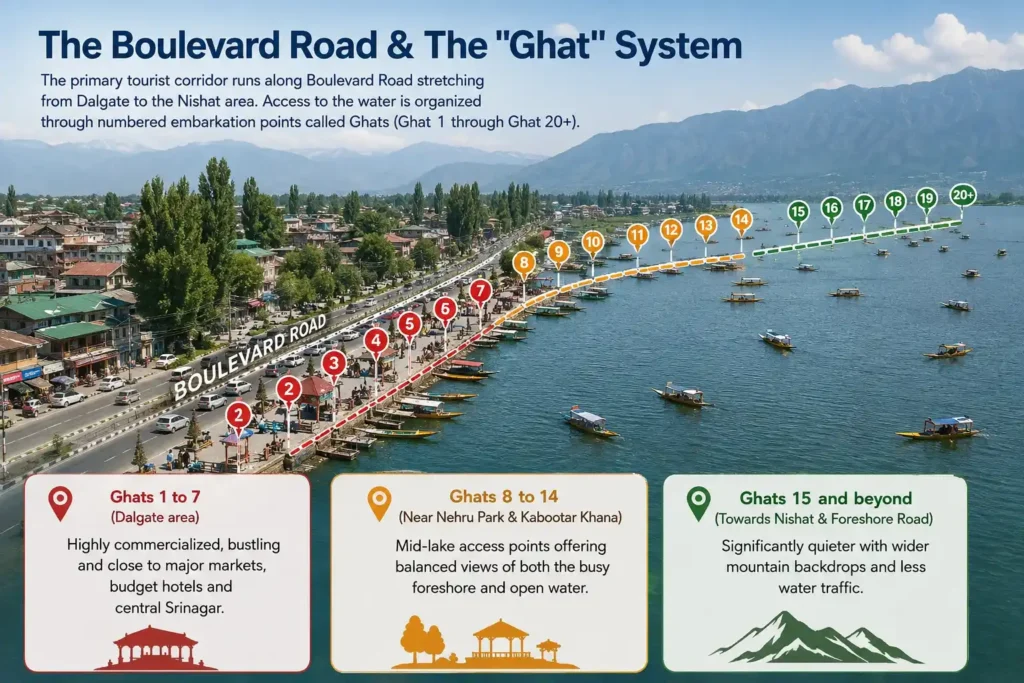
The Boulevard Road & The “Ghat” System
The primary tourist corridor runs along Boulevard Road stretching from Dalgate to the Nishat area. Access to the water is organized through numbered embarkation points called Ghats (Ghat 1 through Ghat 20+).
Dal Lake is not one uniform water body. It is usually described in three main parts: Gagribal, Lokut Dal and Bod Dal. There is also Nigeen Lake, which is often grouped with Dal by visitors but is actually a separate lake connected to the Dal system.
Boulevard Road side (southwestern shore): This is the most tourist-facing part with many shikara ghats, houseboats, hotels and restaurants. It is convenient but also the busiest and most commercial.
Gagribal and Hazratbal side: Quieter, more residential and closer to the Hazratbal shrine. You will see fewer tourists and more everyday lake life.
Nishat and Shalimar side (northeastern edge): This side is near the Mughal gardens and offers some of the calmest water in the early morning, but access is less straightforward by shikara from the main tourist ghats.
Nigeen Lake: Often preferred by travellers who want a quieter houseboat stay. It is connected to Dal Lake but has a different character and less tourist traffic.
You do not need to memorise the geography but it helps to know that “going to Dal Lake” can mean very different things depending on where you start. If you only stay around the Boulevard Road ghats, you are seeing the busiest slice.
Many people assume Dal Lake is a single, calm lake surrounded by mountains. In reality, it is a large, interconnected lake system with residential areas, floating gardens, small canals and several distinct basins. Locals use shikaras the way people in other cities use scooters or buses. Farmers grow vegetables on floating rafts. Children go to school by boat. Houseboats line the edges but so do ordinary family homes.
This is why Dal Lake feels different from a typical tourist lake. It is not a controlled resort area. It is a real ecosystem and a working part of Srinagar. The more you treat it that way, the better your visit will be.
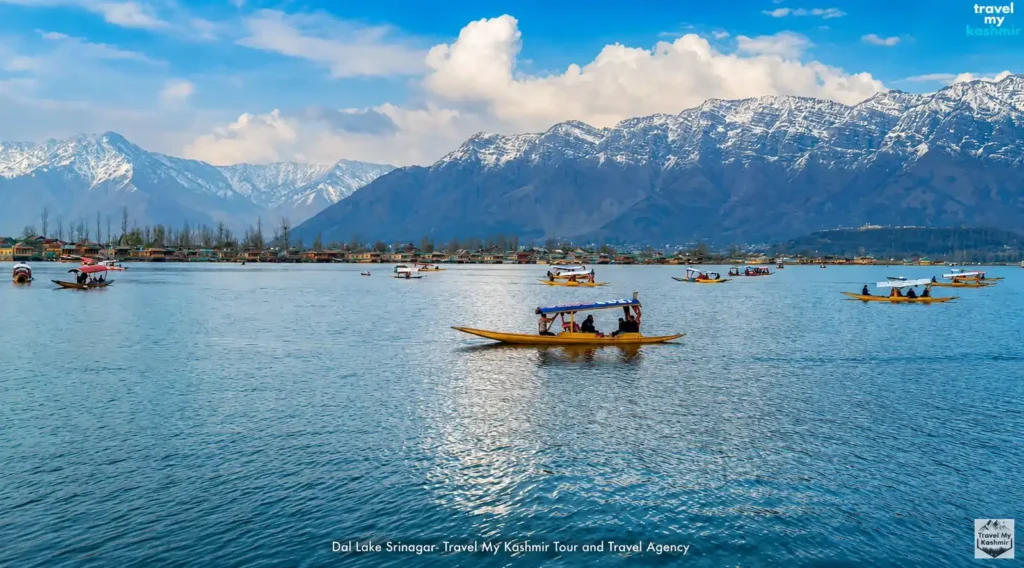
A visit to Dal Lake can be as simple as taking a shikara for an hour or as involved as spending a night on a houseboat and exploring the quieter channels. These are the main experiences worth considering:
Shikara rides: The most popular way to experience Dal Lake. Depending on your timing and route you can pass houseboats, floating gardens, quieter water channels and landmarks such as Char Chinar. For current rates and booking information see our Srinagar shikara booking guide.
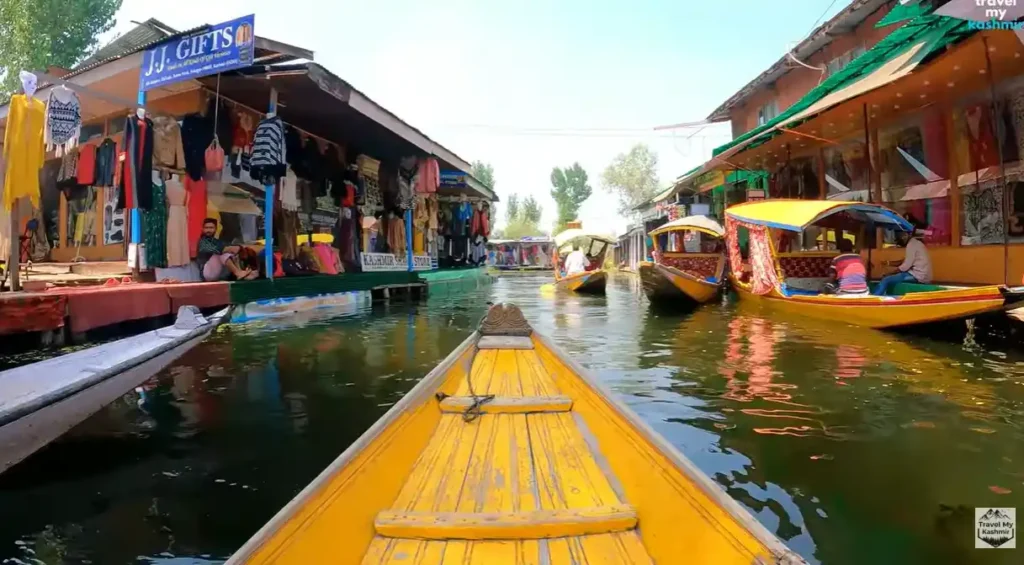
The floating vegetable market(Guder): An early morning experience around 5–5:30 AM where local vendors and farmers trade vegetables and flowers from boats. It starts very early, so it is best suited to travellers willing to begin their day before sunrise.
Houseboat stays: Staying on a traditional houseboat lets you experience Dal Lake beyond a short sightseeing ride. The experience varies considerably between houseboats so it is worth understanding the different categories before booking.
The tradition of Houseboats born in the 19th century when the Dogra rulers barred outsiders from owning land, so the British built homes on water instead read the full history and our booking guide of Houseboats.
The lake villages: Explore Srinagar’s floating communities where floating schools, shops, a post office, bakeries (Kandur shops) and mosques sit along the quiet waterways behind the houseboat lines. These unique lake villages can be seen on longer Shikara rides through Dal Lake’s inner channels.
The floating gardens (raad): Farmers grow tomatoes, cucumbers and melons on woven beds of reeds and lake soil that literally float, one of the world’s rare aquatic agriculture systems.
Photography: Early morning is particularly good for reflections, quieter water and local activity while late afternoon and sunset offer a different view of the lake and surrounding mountains.
Char Chinar: A scenic four-Chinar island in the middle of Dal Lake accessible by Shikara and a popular stop for visitors. For more details visit our Chaar chinar Travel guide
Nehru Park and Boulevard Ghats: Popular Shikara boarding points along Srinagar’s scenic Dal Lake waterfront, offering easy access to the lake’s main attractions.
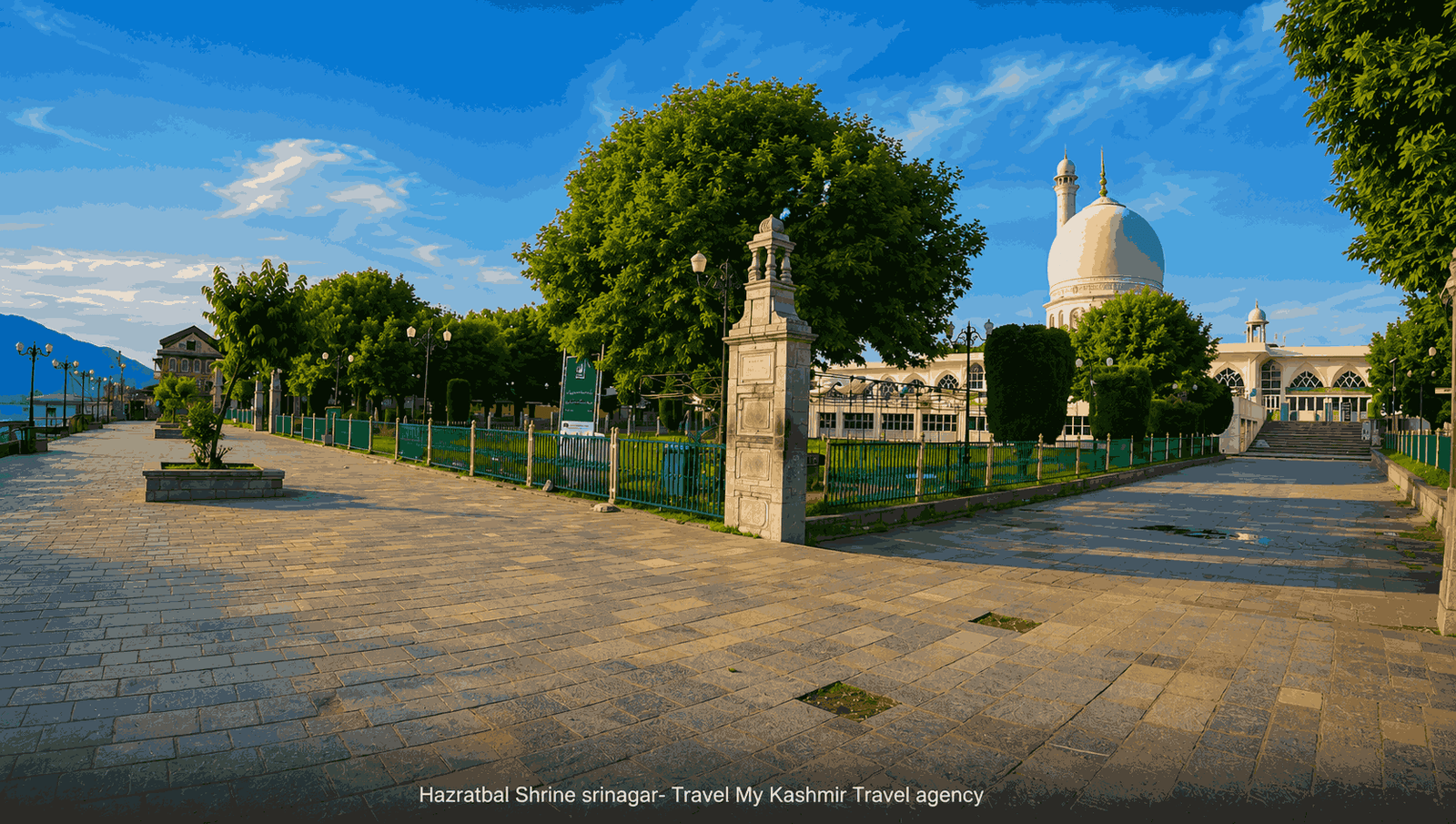
Hazratbal Shrine: A beautiful white-marble shrine on Dal Lake’s northwestern shore offering a striking view from the water.
Mughal gardens around the lake: Nishat Bagh, Shalimar Bagh and Chashme Shahi are close to Dal Lake and are best treated as separate stops rather than lake activities. You can combine them with your Dal Lake visit if you are planning a full day around Srinagar.
Newer activities: In recent years, the tourism department has added jet-skiing and banana boat rides in parts of the lake alongside the traditional shikara. These are seasonal and location-specific, so treat them as a bonus rather than something to plan your day around. For booking and planning check our adventure activities in Dal lake
For a broader list of experiences across the city see our Things to Do in Srinagar guide. For Srinagar’s major attractions see our Places to Visit in Srinagar guide.
A few things that don’t come up in most “top attractions” lists but genuinely change how your visit goes:
You don’t just “arrive” at Dal Lake but you arrive at a ghat. The lake has multiple boarding points (Nehru Park, Ghat No. 1 near the Boulevard Road and others near Nigeen). Which one you use depends on where your hotel or houseboat is and which part of the lake you want to see. If you are being picked up as part of a tour this is handled for you and if you are going independently, confirm the ghat in advance so youare not wandering the Boulevard looking for your boat.
Shikara rates are fixed by the Tourism Department not negotiable but confusion still happens. Rates are set per hour per boat (not per person), which catches first-timers off guard when a price seems to change based on how many people are in the group. It’s worth booking through a known operator or checking current rates directly rather than relying on whatever the first boatman on the ghat quotes you.
The lake is large and you will not see all of it in one ride. A standard one-hour shikara ride covers a specific loop (often Char Chinar, the floating market area and Nehru Park) not the entire lake. If you want to see Nigeen Lake as well that’s effectively a separate, quieter water body connected to Dal and it’s worth treating as a distinct add-on rather than assuming one ride covers everything.
Photos look best from water level not just the shore. If your main goal is the classic Dal Lake shot including houseboats, shikara, mountains you will get a noticeably better result from inside a shikara than from the Boulevard footpath.
It’s not always warm. Kashmir’s houseboats and shikaras are open to the elements. Even in summer evenings on the water can be cool and in winter the lake partially freezes in its shallower sections. Dress for the season not just for “Kashmir is mountains so it must be cold” assumptions summer afternoons here are genuinely warm.
Dal Lake can be visited throughout the year but the experience changes considerably with the season. The best time depends on whether you care most about pleasant weather, flowers, fewer crowds or winter scenery.
One of the most comfortable periods for sightseeing around Dal Lake. The Mughal gardens are in bloom, the weather is generally pleasant and the lake is lively with visitors. June is warmer and busier than early spring.
The lake and surrounding valley are at their greenest and lotus flowers can be seen in parts of the lake during the summer bloom. Rain is possible, so keep some flexibility in your sightseeing plans.
A good period for travellers who prefer cooler weather and fewer crowds than the peak summer months. By October, the Chinar trees around Srinagar begin showing their autumn colours, creating some of the most distinctive views around the lake.
Dal Lake becomes quieter as winter sets in. December and January can be cold and during particularly severe cold spells some sections of the lake may develop ice. Houseboat stays can be especially atmospheric in winter, although outdoor activities may be more limited.
Early spring is a quieter transition period, with the valley beginning to turn green and temperatures gradually becoming more comfortable. It can be a good choice if you prefer fewer visitors.
Dal Lake is within Srinagar city so you do not need a separate trip to reach it. The lake stretches along the eastern side of the city with Boulevard Road, houseboats and several shikara boarding points forming the main visitor area.
Dal Lake is within Srinagar city so you do not need a separate trip to reach it. The lake stretches along the eastern side of the city with Boulevard Road, houseboats and several shikara boarding points forming the main visitor area.
From Srinagar Airport
Srinagar International Airport is roughly 12–15 km from the main Dal Lake and Boulevard Road area although the exact distance depends on where you are staying or boarding your shikara. By taxi the journey usually takes around 30–45 minutes depending on traffic.
If you are arriving by air and need a private transfer, see our Srinagar Airport Cab Service guide.
From Srinagar Railway Station
The railway station at Nowgam is connected to Dal Lake by road. A taxi is generally the easiest option with the journey taking roughly 30–45 minutes depending on traffic and your exact destination around the lake.
Getting Around Dal Lake
Once you are staying near Boulevard Road many of the main Srinagar attractions can be reached by taxi. Nishat Bagh, Shalimar Bagh, Chashme Shahi and Pari Mahal can be combined with a Dal Lake visit as part of a wider Srinagar sightseeing day.
If you are visiting Dal Lake as part of a larger Kashmir trip our Kashmir Cab Service guide explains the different local transport options. You can also consider a Srinagar Tour Package if you want your accommodation, sightseeing and transport arranged together.
Is one day enough to see Dal Lake?
For a shikara ride, the floating market and one or two shoreline gardens, yes, a half day to a full day works well. If you are staying overnight on a houseboat, plan for at least one night to get the sunrise and sunset experience, not just a midday visit.
How much time should I spend at Dal Lake?
To get a full experience allocate at least 2 hours for a thorough boat exploration of the inner canals and open points. If your schedule allows, spending a full evening plus an overnight stay on a houseboat gives you a complete perspective of life on the water.
Is Dal Lake safe for families and solo travelers?
Yes, Dal Lake is one of the safest and most heavily visited tourist zones in Jammu & Kashmir. Boatmen are accustomed to hosting families, solo travelers and large groups. Standard water safety measures apply always use provided life jackets during your ride.
What is the difference between Dal Lake and Nigeen Lake?
Dal Lake is larger, much busier and lined by Boulevard Road with easy access to markets and restaurants. Nigeen Lake is smaller, quieter, heavily shaded by willow and poplar trees and generally offers a more tranquil environment.
Can I visit Dal Lake during winter?
Yes, Dal Lake remains open throughout the winter months. While early mornings can be foggy and cold, clear winter afternoons offer views of the surrounding snow-covered mountains. During severe cold spells, portions of the water surface freeze over.
Can I swim in Dal Lake?
Swimming is not a common tourist activity in Dal Lake. The water is used for transport, fishing, and daily life, and it is not managed as a swimming area. It is better to enjoy the lake from a shikara.
Is Dal Lake safe for solo travelers?
Yes, Dal lake is safe for solo travellers and Females as it remains busy with tourist and locals.
What is the best side of Dal Lake for first-time visitors?
The Boulevard Road side is the easiest for first time visitors because it has clear access, shikara ghats, houseboats and services. But if you want a quieter experience, ask about Gagribal, Hazratbal or Nigeen Lake.
Near Dal Lake
Almost everything worth seeing in Srinagar sits on or around Dal Lake's shores and the hills overlooking it.
Right on the shore
A grand Mughal garden built directly on the lake's edge, with a central water channel running down to it.
 ~2–3 km away
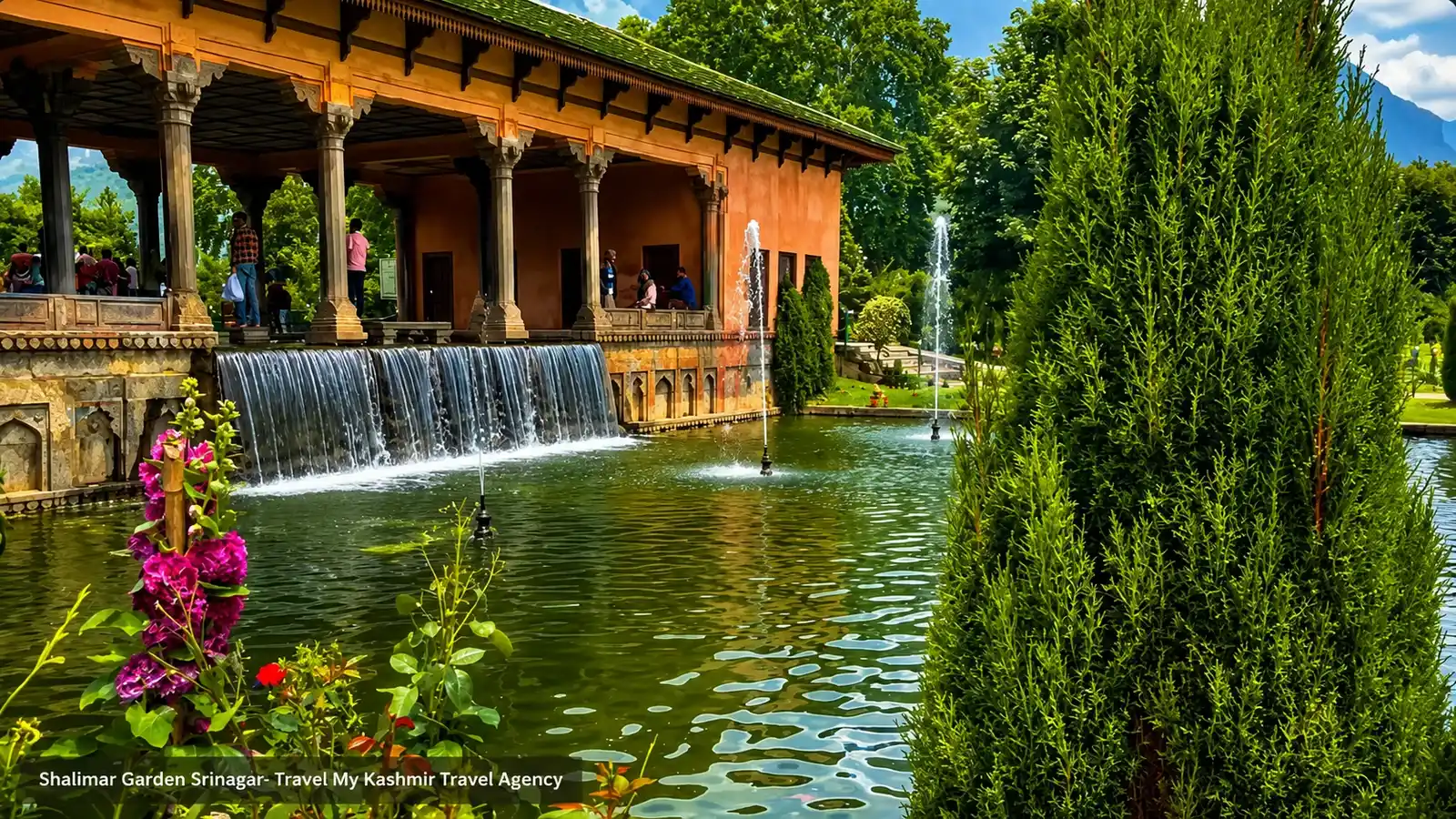
Built for Empress Nur Jahan, and the grandest of the valley's Mughal gardens — just around the shore from Nishat.
 ~3–4 km away
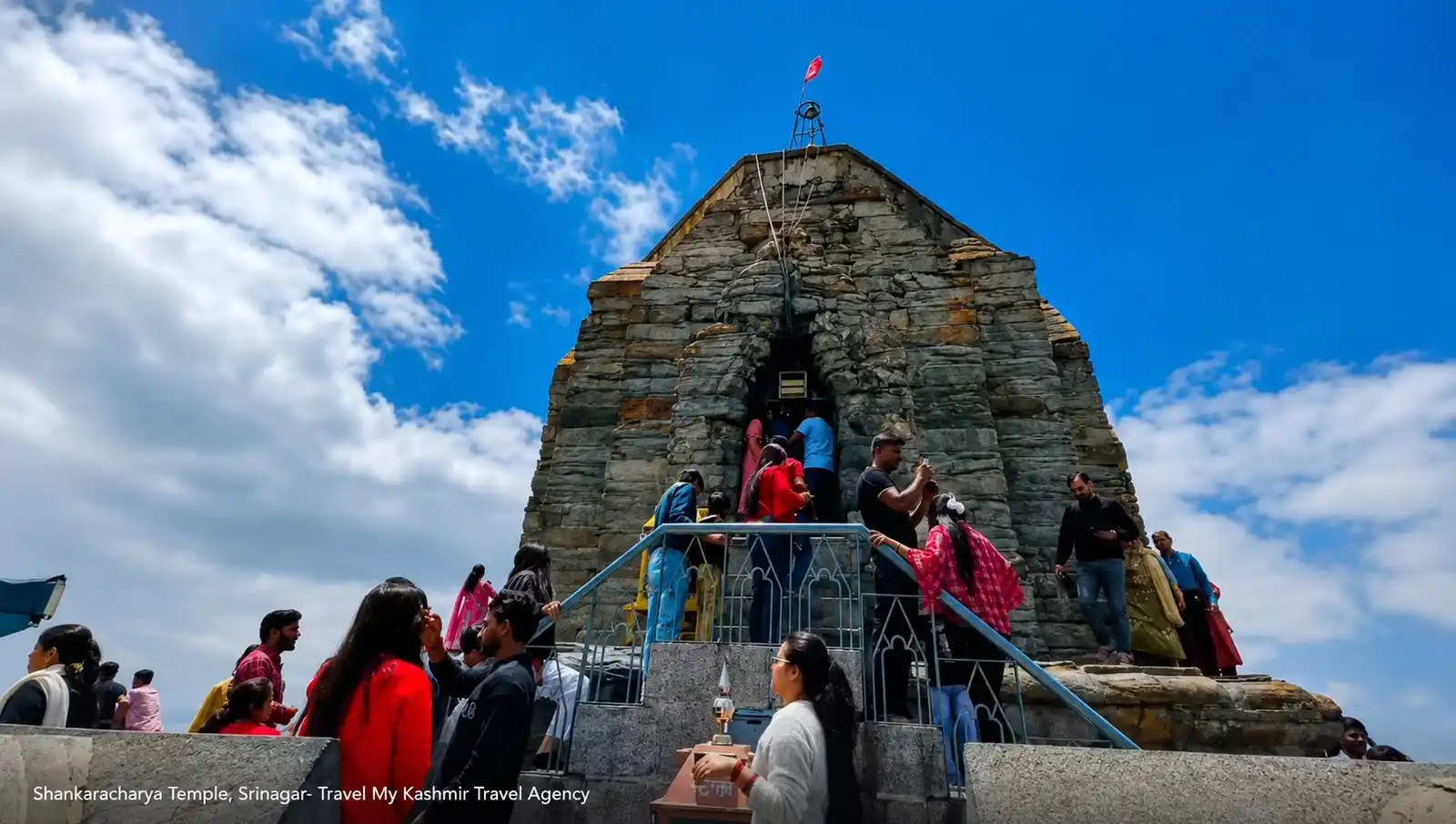
A hilltop viewpoint with much of Dal Lake spread out directly below it — worth the climb for the perspective.
 Right on the shore
Srinagar's most revered mosque, set on the lake's northern shore with its own marble waterfront.
 ~5–6 km away
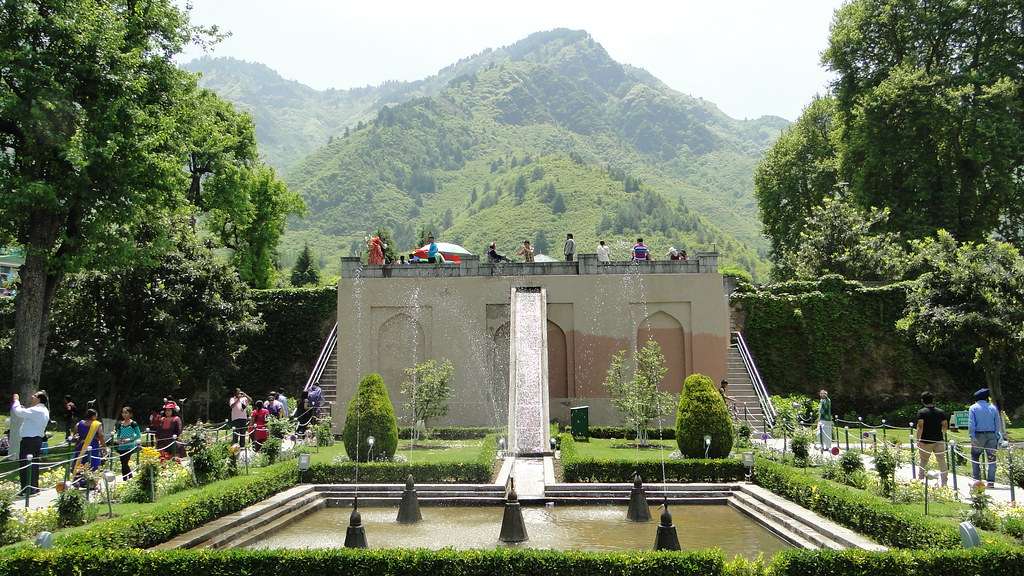
A small, spring-fed Mughal garden on the hillside above the lake, easy to combine with Pari Mahal.
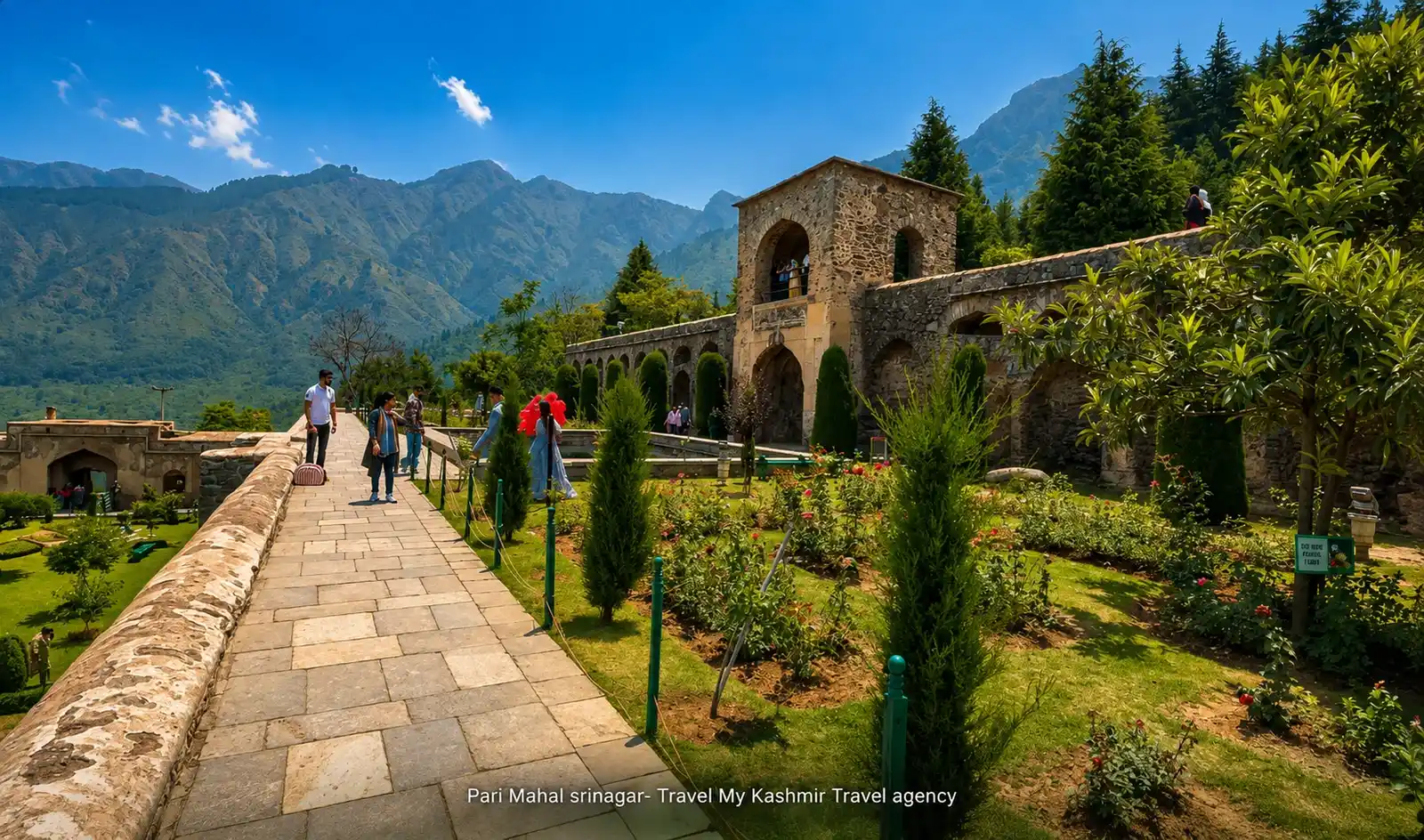 ~5–6 km away
A seven-terraced hillside garden with the best sunset view over the lake — the view you get from the top looking down.
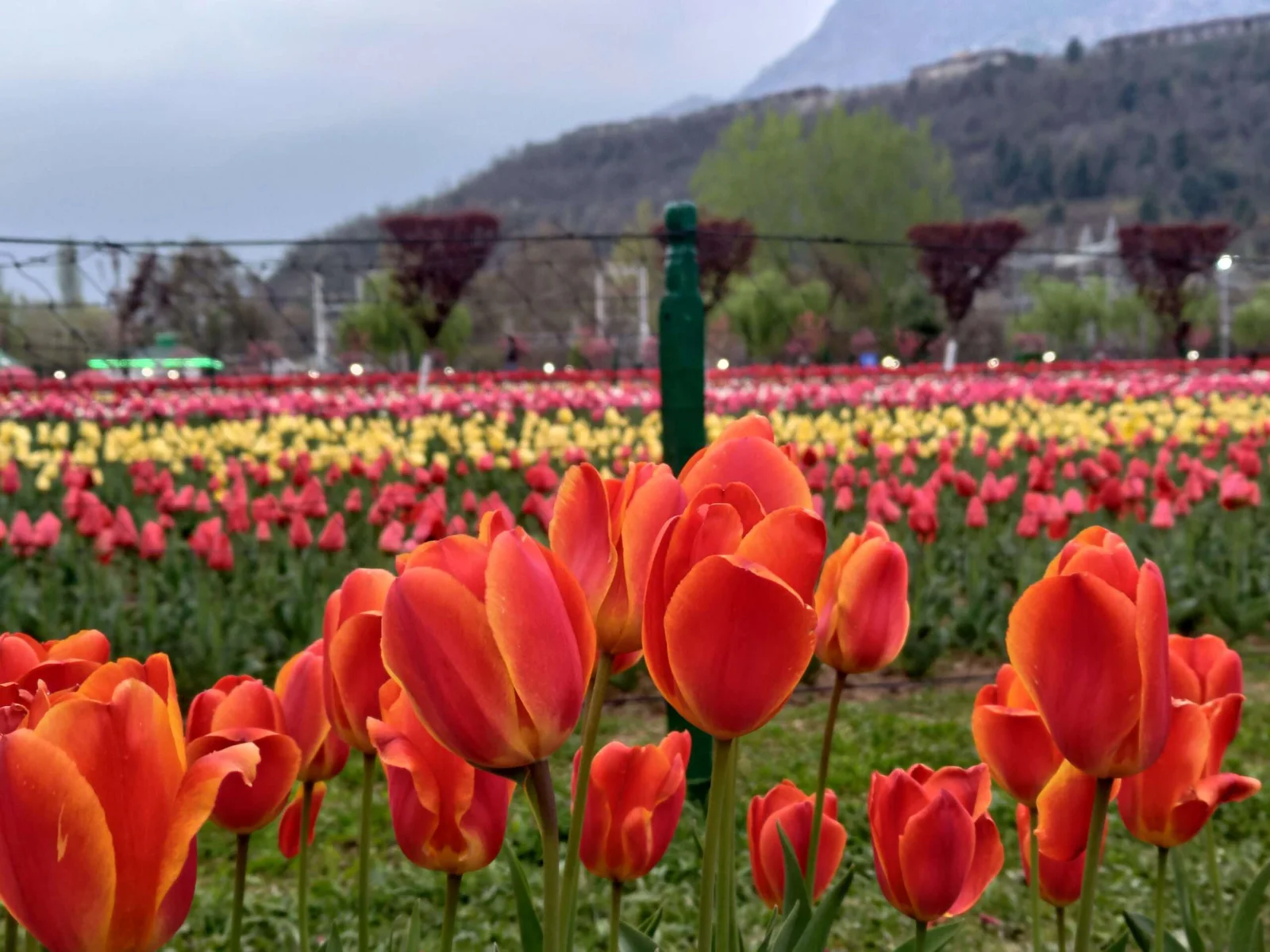 Seasonal · Mar–Apr
Asia's largest tulip garden, right beside the lake and in bloom for a short window each spring.
WhatsApp!