~3–4 km away
Dal Lake
The closest major landmark to the temple — much of the view from the hilltop looks straight down onto it.
Travel My Kashmir Travel Agency | Kashmir Cab Service & Tour Packages

The Shankaracharya Temple Srinagar is located on the top of Shankaracharya Hill (also known as Takht-e-Suleiman or Gopadri Hill) overlooking Dal Lake, is one of the most important religious and historic landmarks in Kashmir. Dedicated to Lord Shiva, the temple is also known as Shankaracharya Temple and Jyoteshwar Temple. Its hilltop location offers panoramic views of Srinagar and Dal Lake making it both a popular pilgrimage site and one of the notable places to visit in Srinagar.
The history of Shankaracharya Hill is believed to date back more than two thousand years. Tradition associates the hill with Raja Gopaditya, who is said to have established a temple here around 200 BCE. The present stone temple, however has undergone rebuilding and changes over different periods, making its exact architectural history more complex.
The temple is closely associated with Adi Shankaracharya, the 8th-century philosopher and Hindu theologian. According to tradition, he visited Kashmir and meditated on this hill which later became known as Shankaracharya Hill. The hill is also known by the Persian-era name Takht-e-Suleiman, meaning the “Throne of Solomon.”
Today, the temple remains an active Lord Shiva temple and pilgrimage site. Its elevated position also makes it one of the best places to enjoy panoramic views of Srinagar and Dal Lake.
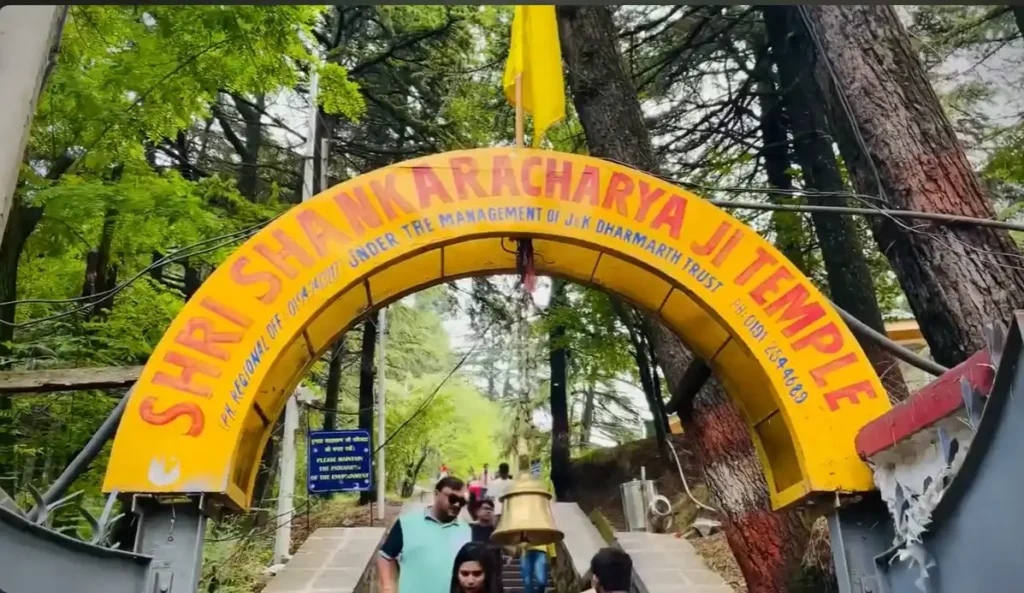
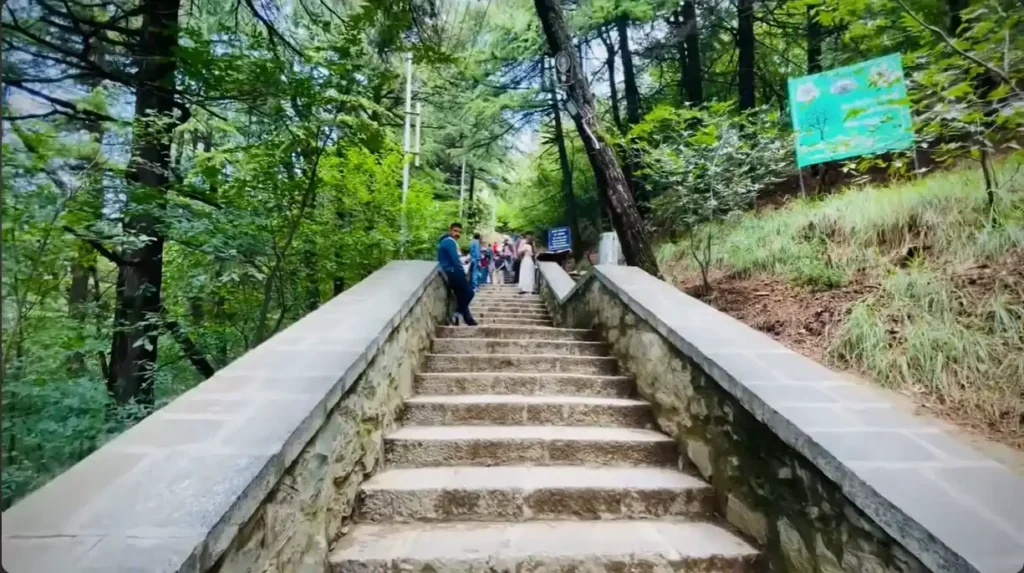
A road leads up Shankaracharya Hill to a parking area near the temple from where visitors continue on foot up a steep flight of stone steps to reach the shrine. The climb can be tiring, particularly for elderly visitors so take your time and carry water during the warmer months.
The reward is one of the finest Srinagar viewpoints. From the hilltop, you can see the wide expanse of Dal Lake, parts of the old city, the Jhelum River and the surrounding mountains. On a clear day, the elevated position provides a beautiful view across much of Srinagar.

The view can also be compared with nearby Pari Mahal. Shankaracharya Temple offers a higher and more expansive view across Srinagar and Dal Lake, while Pari Mahal is particularly popular for its views toward the city and sunset.

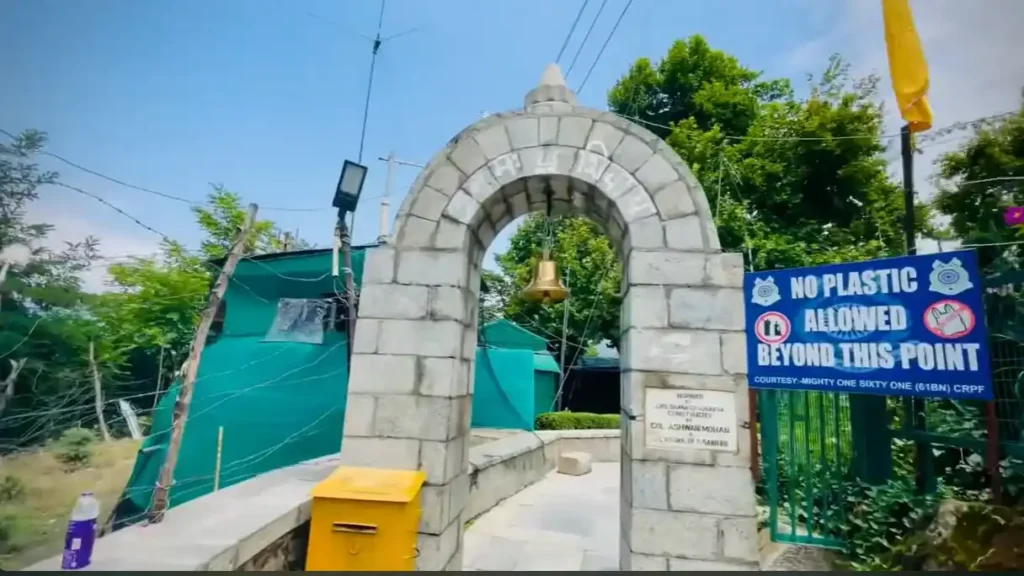
Shankaracharya Temple is located in a high-security zone, so visitors should be prepared for stricter security restrictions than at many other attractions in Srinagar.
Mobile phones and cameras: Mobile phones and cameras are not permitted at the temple because of the security restrictions. JKTDC specifically confirms that these devices are not allowed at the top. Do not rely on a locker or deposit facility being available so it is safer to leave electronic devices in your hotel or vehicle before going up.
Bags: Avoid carrying large bags or unnecessary belongings. Security checks are conducted before visitors proceed to the temple.
ID: Carry a valid photo ID, as security personnel may ask for identification.
Dress: Wear modest clothing and follow normal temple etiquette. Shoes should be removed before entering the sanctum.
Timings: Current published timings can vary. It usually open from 06 AM to 08 PM daily. Check the latest timings before visiting.
Entry: There is no general entry fee listed for visiting the temple.
Time needed: Allow around 1.5 to 2 hours for the drive, security checks, climb and time at the temple especially if you are travelling with elderly visitors.
Season: Shankaracharya Temple can be visited throughout the year, but spring, summer and autumn generally offer comfortable conditions for the climb and clear views of Srinagar. October and November can be particularly pleasant for photography and panoramic views while winter can bring cold temperatures and occasional snow.
Time of day: Early morning is a good time to visit if you prefer cooler weather, fewer visitors and a peaceful atmosphere. Late afternoon can also offer beautiful views across Srinagar and Dal Lake but check the current closing time before planning an evening visit.
If you are visiting during winter or after snowfall, check the latest local conditions and access arrangements before travelling.

Shankaracharya Temple is located on Shankaracharya Hill in Srinagar, overlooking Dal Lake. The approach road branches from the Boulevard area and visitors can travel by private car or taxi to the parking area near the top. From there, you need to continue on foot and climb the stone steps to reach the temple.
The temple is around 15–20 minutes by car from the Dal Lake area, depending on traffic and the exact starting point. There is no regular public bus service directly to the temple so a taxi or private vehicle is the most convenient option.
If you are exploring Srinagar’s major attractions, Shankaracharya Temple can be combined with Chashma Shahi, Nishat Garden, Pari Mahal and other attractions around the Dal Lake area. For a convenient local transfer you can book a cab in Kashmir.
For more religious and cultural attractions, see our guide to Hindu temples in Kashmir. You can also explore our Kashmir + Vaishno Devi combined itinerary for a pilgrimage-focused trip.
Vehicle Entry and Security Gate
Taxis and private cars are allowed to drive up Shankaracharya Hill from 7:00 AM. The security gate for ascending vehicles closes at 5:00 PM. Visitors arriving by car after 5:00 PM may need to leave their vehicle at the lower point and continue on foot, even though the temple itself may remain open to pedestrians.
Why is Shankaracharya Temple famous?
It is regarded as the oldest shrine in Kashmir an active Shiva temple with roughly two thousand years of history and offers the highest panoramic view over Srinagar and Dal Lake.
How many steps are there to Shankaracharya Temple?
There are 243 steps from the parking area to the sanctum after a motorable road covers most of the hill.
Are phones and cameras allowed at Shankaracharya Temple?
No, mobile phones, cameras and electronics are not permitted past the security check. Deposit facilities operate at the base.
What are Shankaracharya Temple’s timings?
Generally open daily from morning to evening (around 6 AM–8 PM), subject to seasonal and security-related variation. Always verify before visiting.
Is Shankaracharya Temple difficult to climb?
The 243 steps are steep but well-made and most visitors manage them with a couple of rest stops. Elderly visitors should take it slowly and avoid the midday sun in summer.
Can non-Hindus visit Shankaracharya Temple?
Yes, visitors of all faiths are welcome, following normal temple etiquette and modest dress.
Travel My Kashmir Tour and Travel Agency includes Shankaracharya on all our Srinagar city circuits, timed for morning climbs and clear views. J&K Tourism-registered, Srinagar-based since 2000. Call +91-9796466052.
Near Shankar
From this hilltop above the city, the rest of Srinagar's lakes, Mughal gardens, and viewpoints are all a short drive away.
~3–4 km away
The closest major landmark to the temple — much of the view from the hilltop looks straight down onto it.
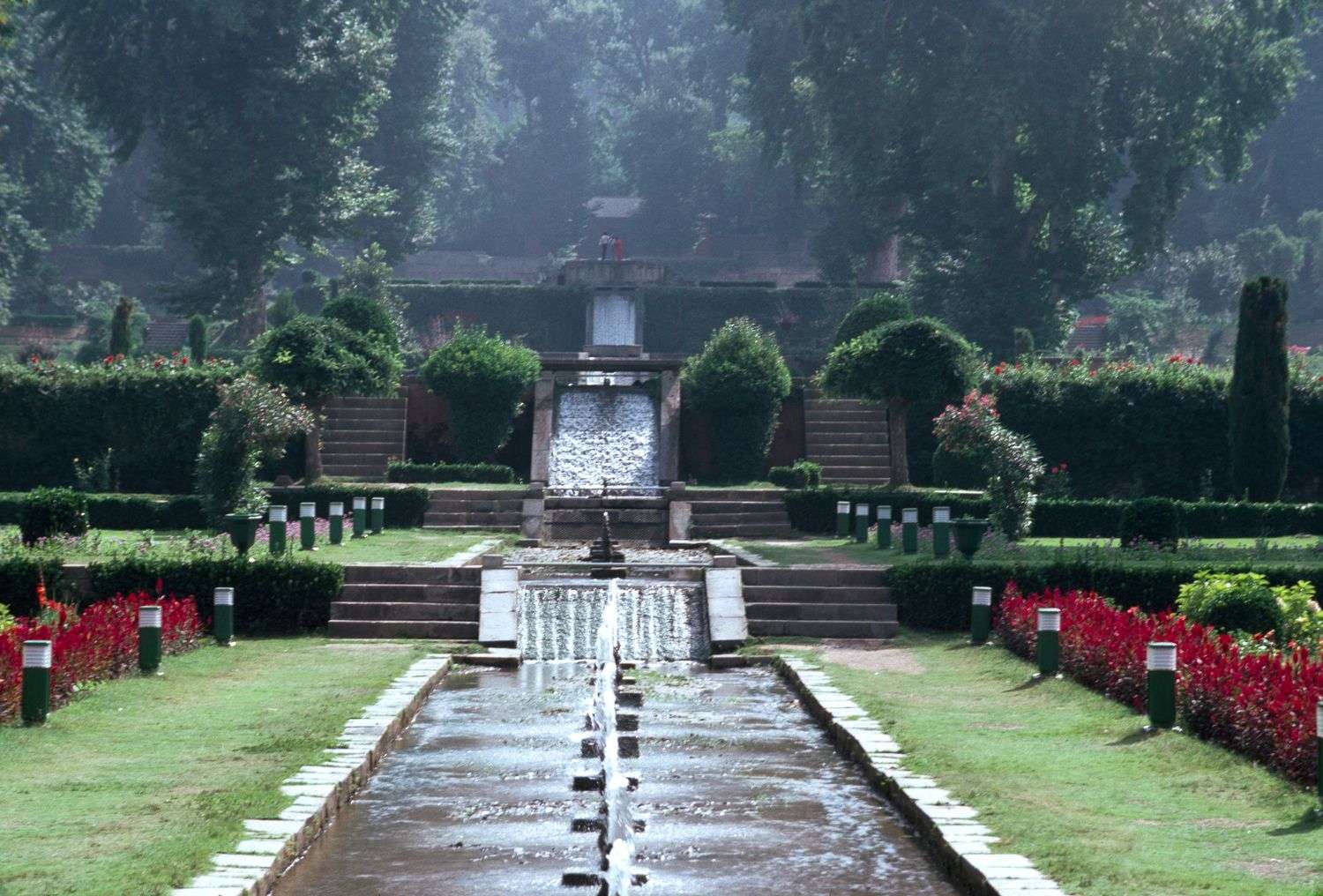
~4–5 km away
A grand, fully intact Mughal garden with a central water channel running straight down to the shore of Dal Lake.
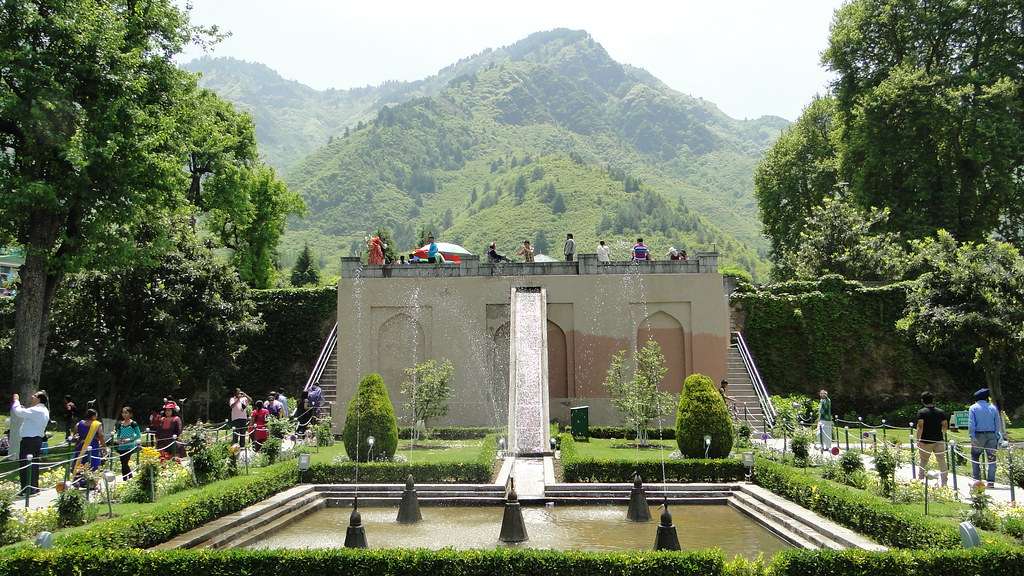
~6–7 km away
A small, spring-fed Mughal garden on the far side of the lake, easy to combine with Pari Mahal.
~7–8 km away
Another hilltop viewpoint on the Zabarwan range, on a different ridge from Shankaracharya — a good sunset comparison.
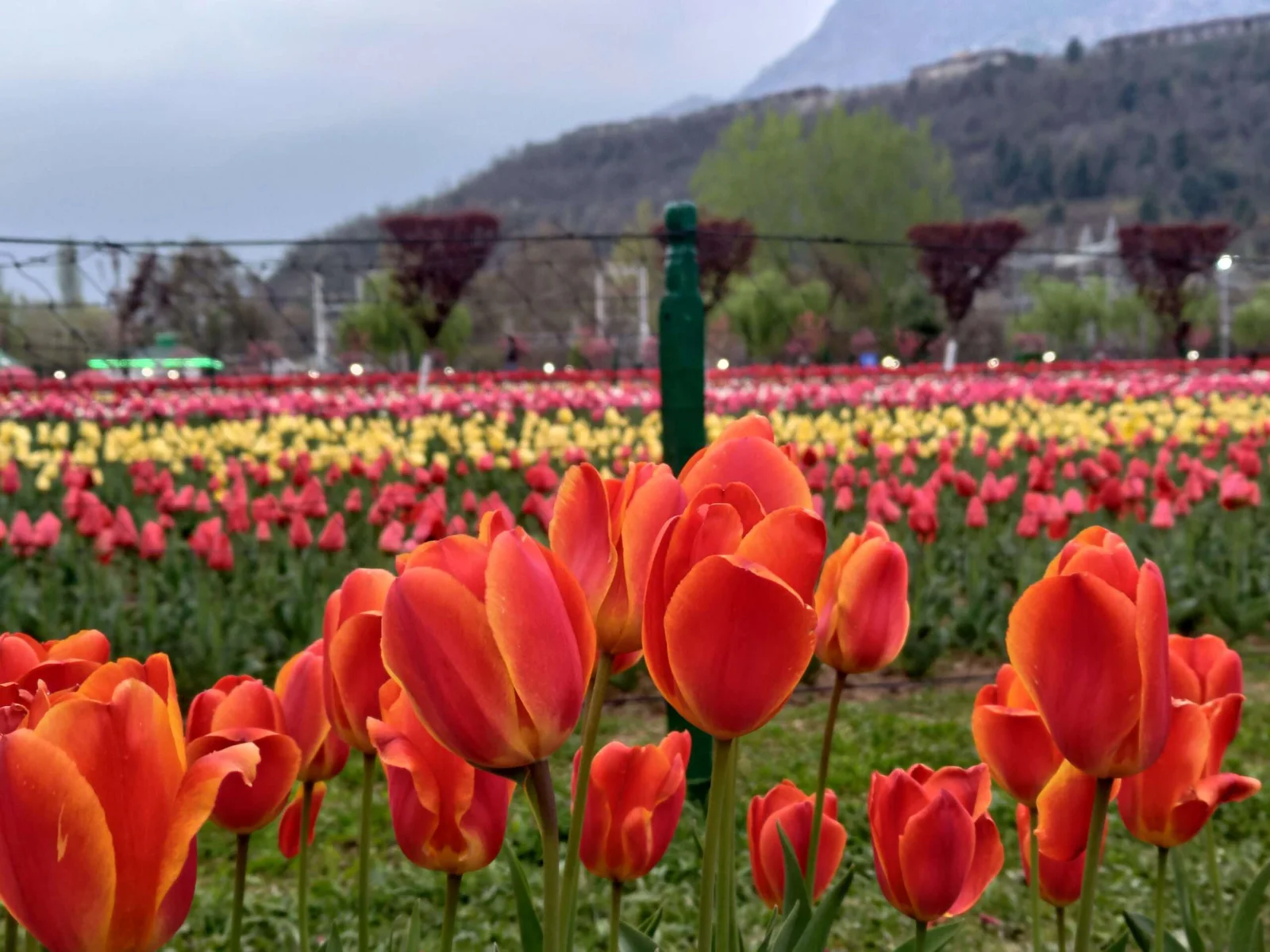
Seasonal · Mar–Apr
Asia's largest tulip garden, in bloom for a short window each spring — check dates before planning around it.
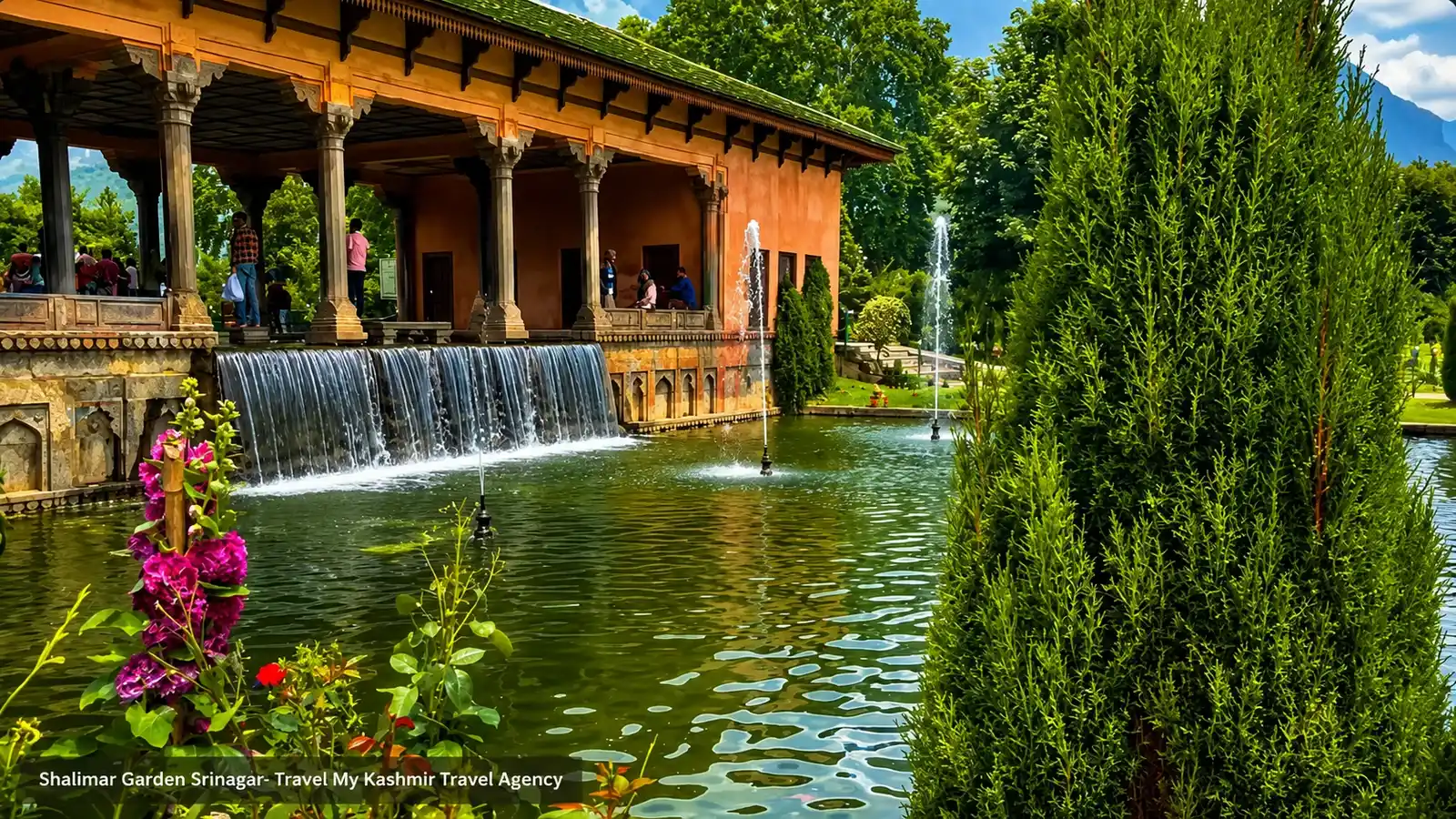
~8–9 km away
Built for Empress Nur Jahan, and the grandest of the valley's Mughal gardens — worth the extra distance.
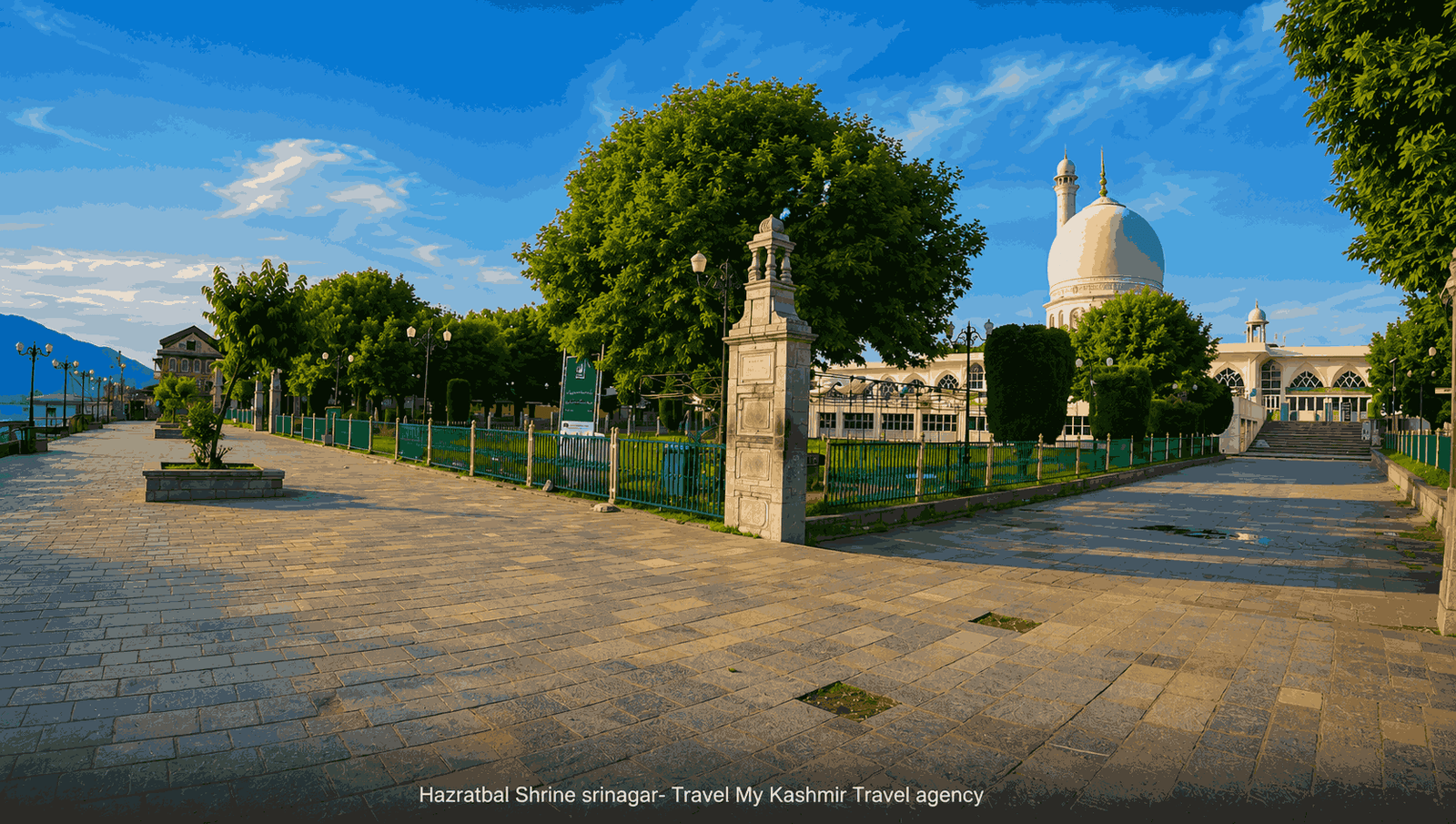
~13–14 km away
The furthest stop on this list — Srinagar's most revered mosque, set on the lake's northern shore.
WhatsApp!