
Vishansar Lake Trek from Sonamarg Highlights
- Trek name: Vishansar Lake Trek (also: Krishansar Vishansar Trek)
- Starting point: Shitkadi village, 6 km from Sonamarg
- Highest point: Nichnai Pass — 4,100 m / 13,451 ft
- Vishansar Lake altitude: 3,710 m / 12,172 ft
- Krishansar Lake altitude: 3,810 m / 12,500 ft
- Trek duration: 5 days (including drive days from Srinagar)
- Total trail distance: 50 km round trip
- Difficulty: Moderate
- Best time: Late June to September
- Trek type: Out and back — same trailhead start and end
- Region: Ganderbal district, Kashmir
- Also part of: Kashmir Great Lakes Trek (first two lakes)
Table of Contents
ToggleThe Thing No Other Guide About Vishansar Lake Trek Will Tell You
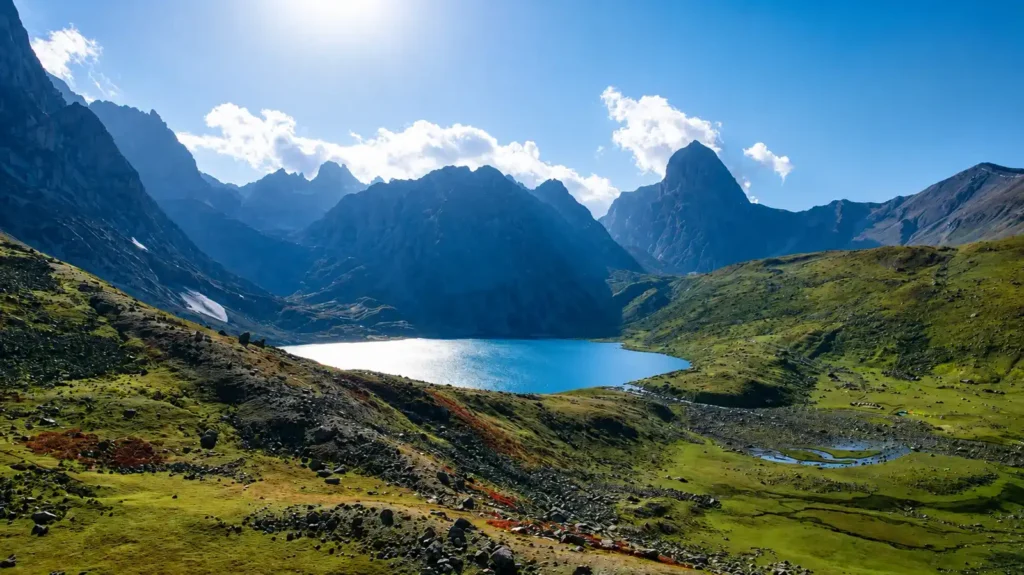
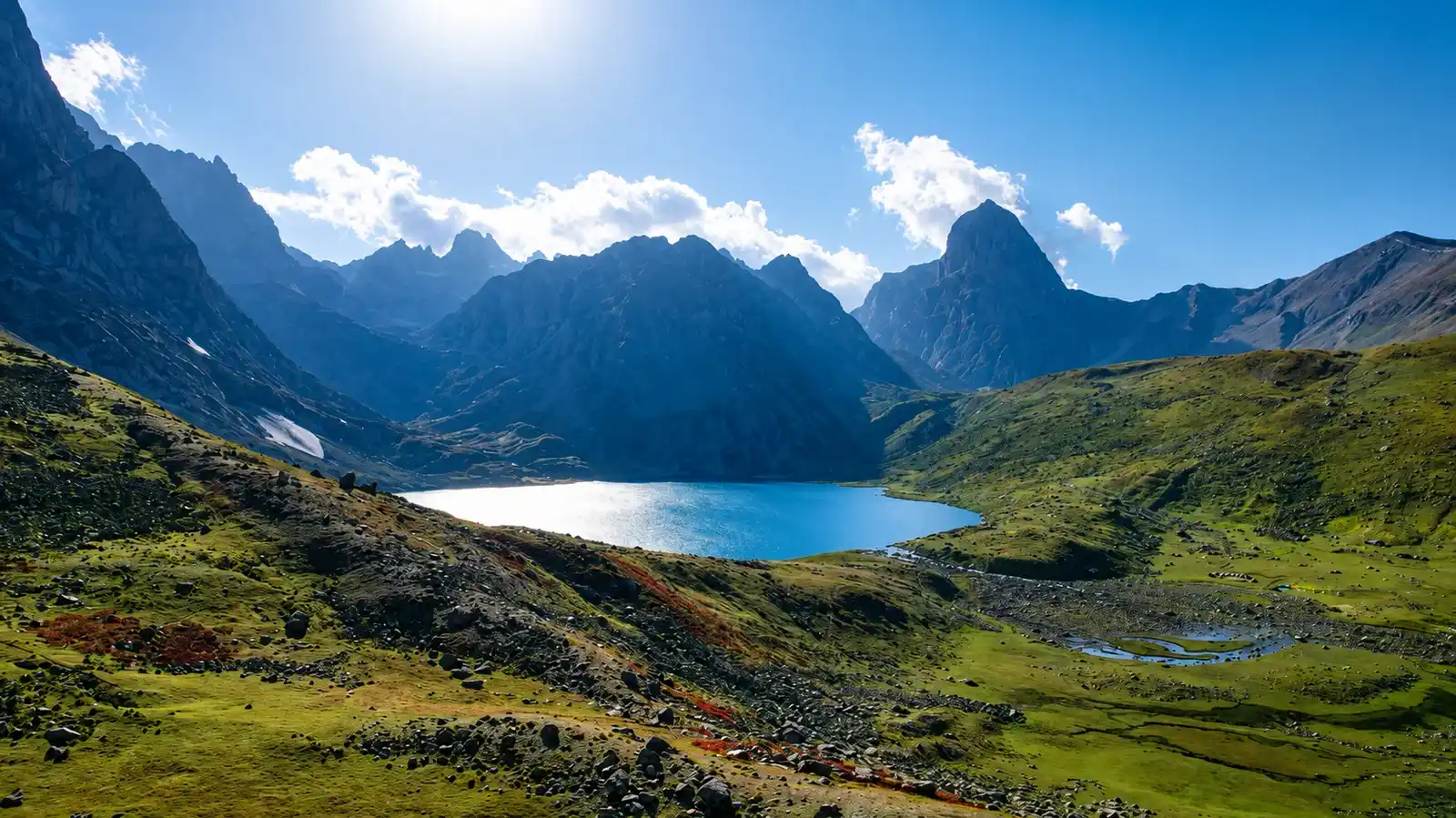
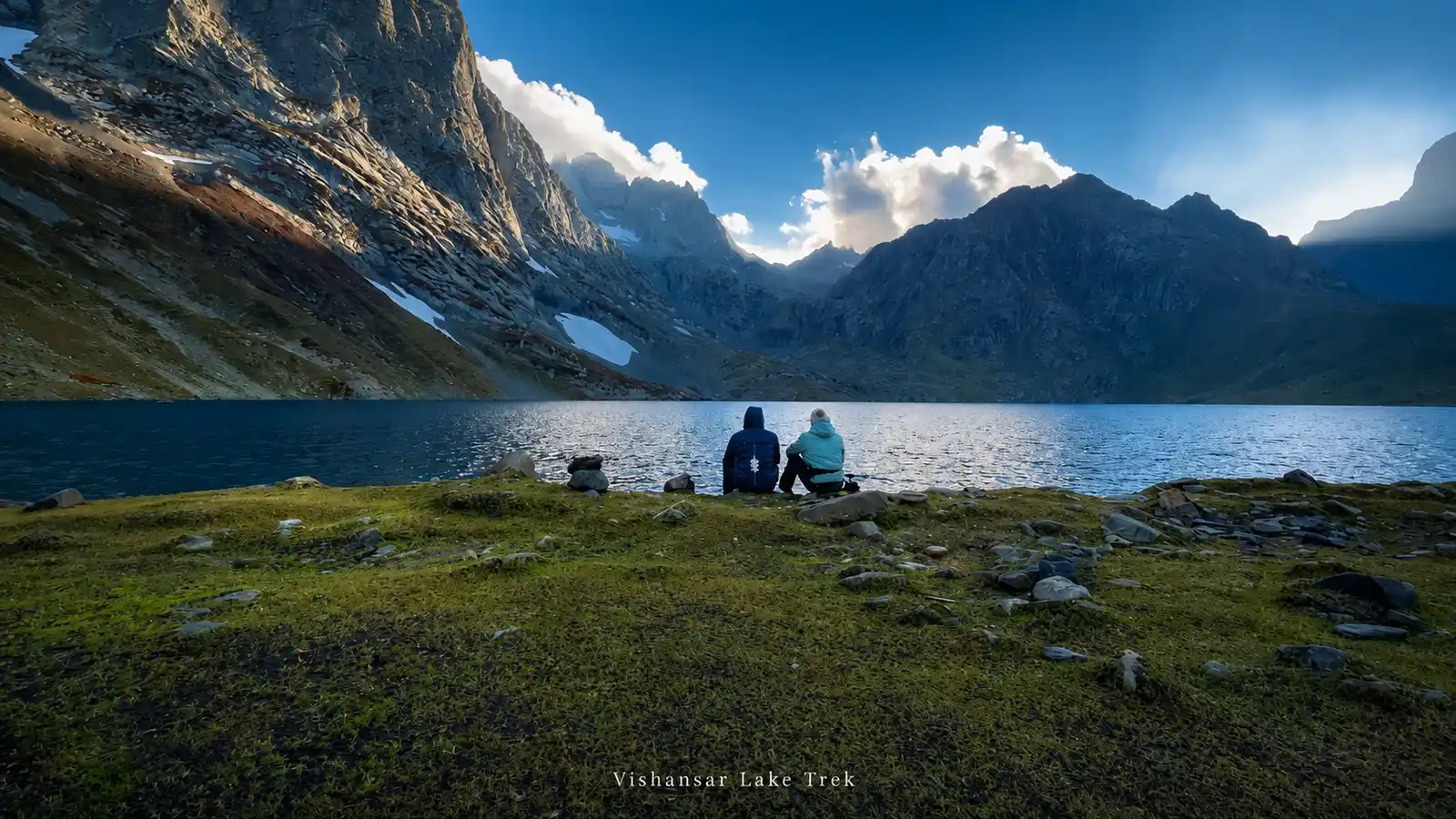
Located at an elevation of 3,710 meters, Vishansar Lake also known as the “Lake of Vishnu” is one of the most stunning alpine lakes in the Indian Himalayan region. Known for its deep turquoise waters, shifting hues and the dramatic reflection of the jagged Kishansar peaks in the background, this high-altitude oligotrophic lake is a true bucket list destination for trekkers.
Vishansar Lake is also the first lake on the Kashmir Great Lakes Trek, which means the Vishansar trek and the Great Lakes trek share the same trailhead, the same first three days and the same pass. The difference is what you do when you reach the lake: Great Lakes trekkers continue west through Gadsar Pass, Gadsar Lake, Satsar and Gangabal over seven days. Vishansar trekkers camp at the twin lakes, explore Krishansar above it and return the way they came. Same first act, two completely different decisions about what comes next.
What Makes Vishansar and Krishansar Worth the Pass Crossing
High-altitude lakes in Kashmir are not rare. What makes the Vishansar-Krishansar pair specific:
The twin lake geography. Vishansar (lower, larger, 3,710 m) and Krishansar (higher, slightly smaller, 3,810 m) sit in adjacent basins separated by a short ridgeline. Krishansar drains into Vishansar through a small stream connecting the two. You can stand at Vishansar and see the ridgeline above that Krishansar sits behind. Standing at Krishansar, you look back down at Vishansar below. The layered view between the two lakes each reflecting its own section of sky is the defining visual of this trek.
The medicinal plant valley. The Vishansar Valley on the descent from Nichnai Pass into the lake basin is known locally as a medicinal plants corridor. Herbalists and Gujjar communities have gathered plants here for generations. The valley floor has an unusual density and variety of wildflowers and herbs even by Kashmir alpine standards yarrow, gentian, wild carrot relatives, high-altitude sedges. In July the meadows are layered with colour in a way that photographs consistently and looks slightly unreal.
The brown trout. Vishansar and Krishansar are both home to brown trout. Fishing is permitted with a J&K Fisheries Department permit, arranged in advance. If you want to combine alpine lake trekking with fly fishing, this is the right trek the combination of the altitude, the clear water and the trout population makes Vishansar one of the better high altitude fishing destinations in the state.
The name’s origin. Vishansar takes its name from Vishnu, the Sanskrit root is clear in the syllable. The lake has religious significance for Kashmiri Pandits, who consider the high alpine lakes of this belt sacred. This is not incidental. The landscape you walk through these meadows, these passes, these lakes was named and considered long before modern trekking routes were drawn. Walking it with a local guide from Travel My Kashmir Tour company means walking it with that context explained.
Trek Route: Stage by Stage
Route Overview
The Vishansar Lake Trek runs from Shitkadi (a small village 6 km beyond Sonamarg on the Zoji La road) through Shokdar meadows, up to Nichnai Valley camp, over Nichnai Pass and down into the Vishansar basin. The return retraces the same route. Total trail distance is approximately 50 km round trip.
The Vishansar trek is also the first leg of the Kashmir Great Lakes Trek. If at the time of planning you are uncertain whether to do the full 7-day Great Lakes circuit or just Vishansar, reading both pages in parallel is the most useful way to decide.
Detailed Day-by-Day Itinerary
Day 1 — Srinagar to Sonamarg
Drive: 80 km | 3-4 Hours | Altitude: 7,800 ft
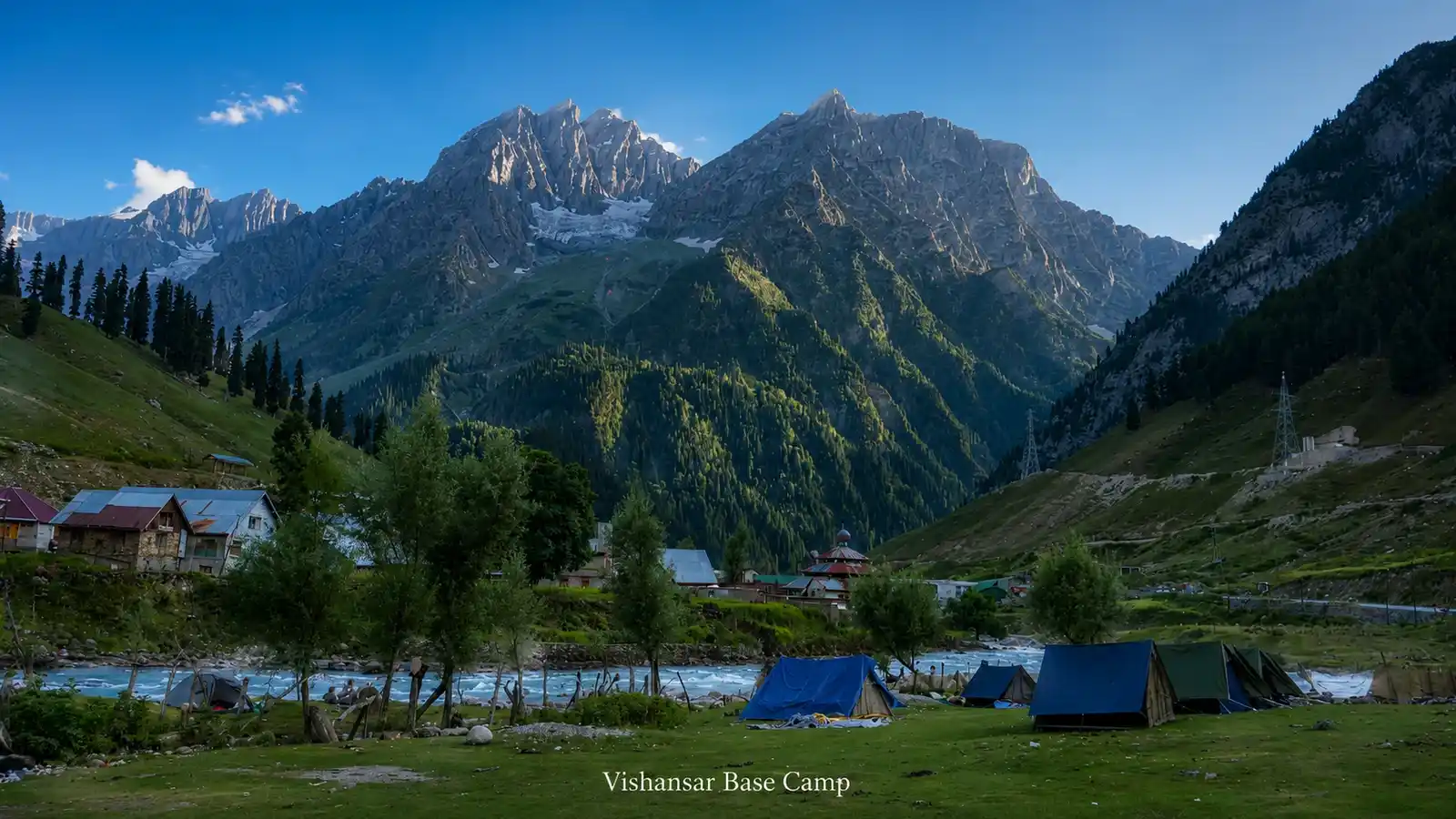
Leave Srinagar early on the Srinagar-Leh highway (NH 1). The road follows the Sindh River northeast through Kangan and Gagangir before reaching Sonamarg at 2,740 m one of the better mountain town drives in Kashmir. Arrive by midday, check into your guesthouse or hotel in Sonamarg, and rest. Do not push straight to Shitkadi on the same day. Sonamarg is 1,140 m above Srinagar and one night here helps your body begin adjusting before the significant altitude gains start.
In the afternoon, take a short walk around Sonamarg’s meadows the famous Thajwas Glacier is an easy 2 km from the town centre. Thajwas Glacier makes an excellent half day warm up walk the evening before the Vishansar trek begins. Many trekkers do exactly this.
Altitude: 2,740 m (Sonamarg) Stay: Hotel or guesthouse in Sonamarg
Day 2 — Shitkadi to Nichnai Valley Camp
Drive: Sonamarg to Shitkadi — 6 km, 15 minutes Trek: Shitkadi (2,740 m) to Nichnai camp (3,505 m) Distance: 9–10 km Time: 5–6 hours Altitude gain: ~765 m
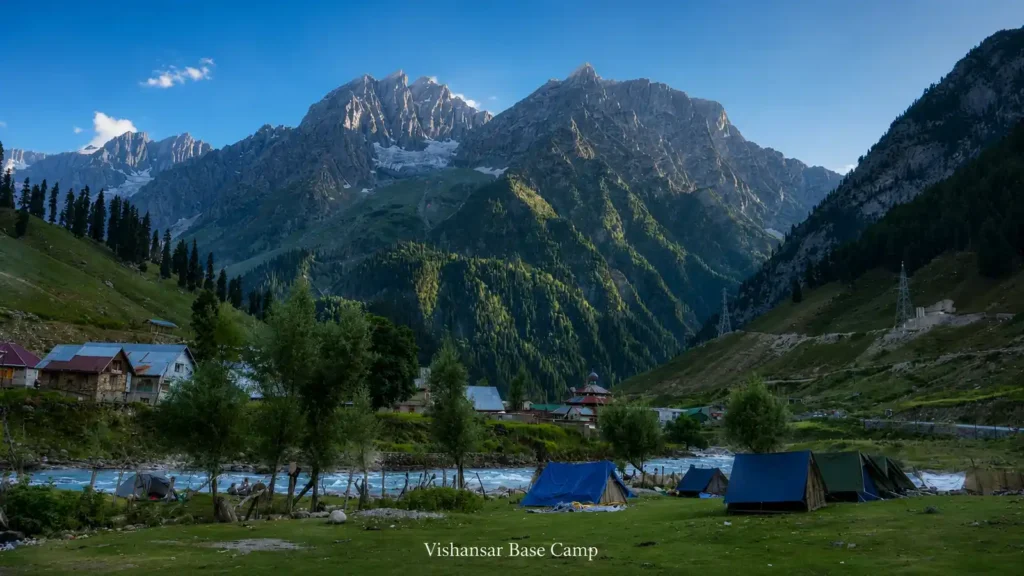
The trek begins at Shitkadi, a small roadside village. From here, the trail immediately enters pine and birch forest, climbing steadily through the Butsheri forest section with the Sindh River tributary audible below on the left. This first stretch is physically demanding the forest climb in the first two hours involves consistent uphill on a narrow trail before opening dramatically onto the Shokdar plateau.
Shokdar (also written Shukdar or Shekdur, the transliteration varies and confuses many first-time planners) is a broad meadow table at around 3,200 m with striking panoramic views of the Sonamarg Valley behind you. The valley you have been walking toward all morning is now visible below the white thread of the Zoji La road, the green floor of Sonamarg, the peaks you’ll be looking down at from Nichnai Pass the next day. Take a break here. The altitude jump from Srinagar to this meadow in a single morning is significant and slowing down at Shokdar rather than rushing toward Nichnai is the right call.
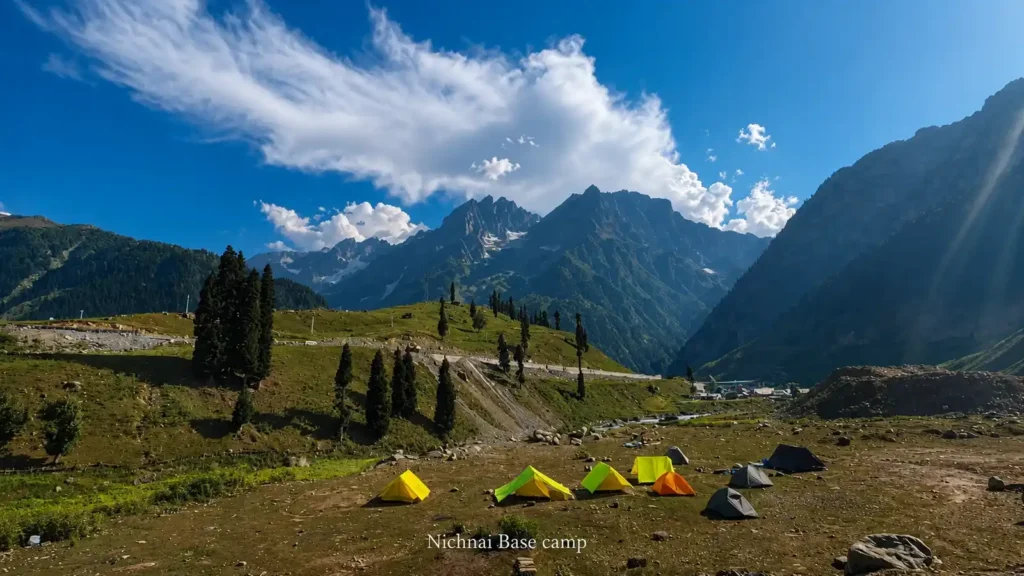
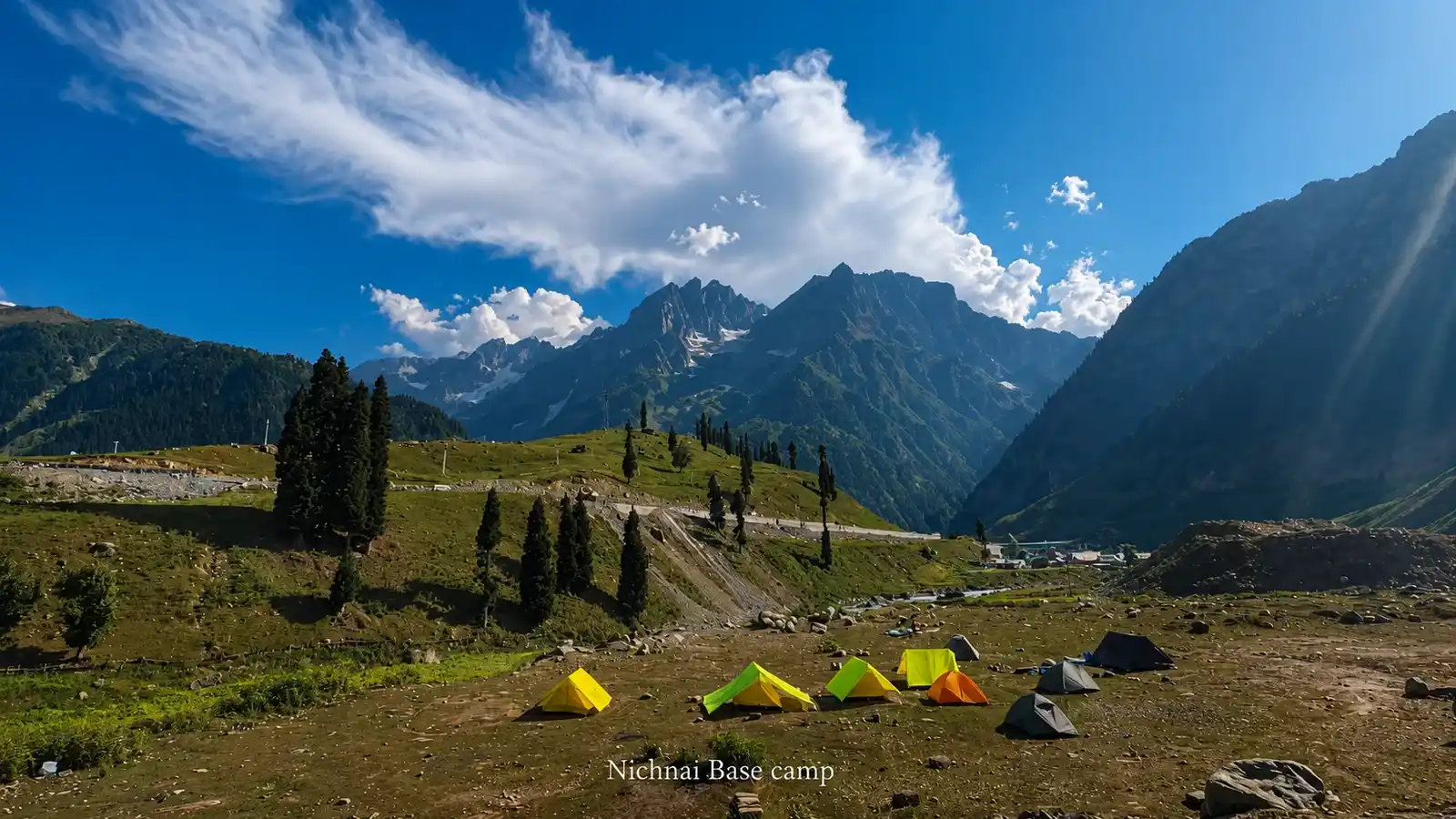
From Shokdar, the trail follows the Nichnai stream northward through increasingly open meadow terrain, gaining altitude gradually. The stream comes from the high ground ahead from the direction of Nichnai Pass and the trail follows its course upstream. By late afternoon, reach the Nichnai campsite at 3,505 m, a wide meadow at the base of the pass with the stream running through it.
The transition from the Butsheri forest to the Shokdar plateau to the Nichnai meadow compresses three distinct ecological zones into one day’s walking. Most trekkers describe this day as exhausting and beautiful in roughly equal measure.
Altitude gained: 765 m Stay: Camp at Nichnai meadow (3,505 m)
Day 3 — Nichnai to Vishansar Lake via Nichnai Pass
Distance: 12–13 km Time: 6–7 hours Altitude: Nichnai (3,505 m) → Nichnai Pass (4,100 m) → Vishansar Lake (3,710 m)
This is the day the trek earns its reputation and it begins at the pass.
Start early — 6:30 am at the latest. The ascent to Nichnai Pass from the Nichnai camp is approximately 595 m of altitude gain over about 5–6 km. The lower section climbs through grazing meadows where shepherd families are active in July and August, their flocks spread across the hillside in the morning light. Higher up, the meadow gives way to open rocky terrain and the final push to the pass ridge.
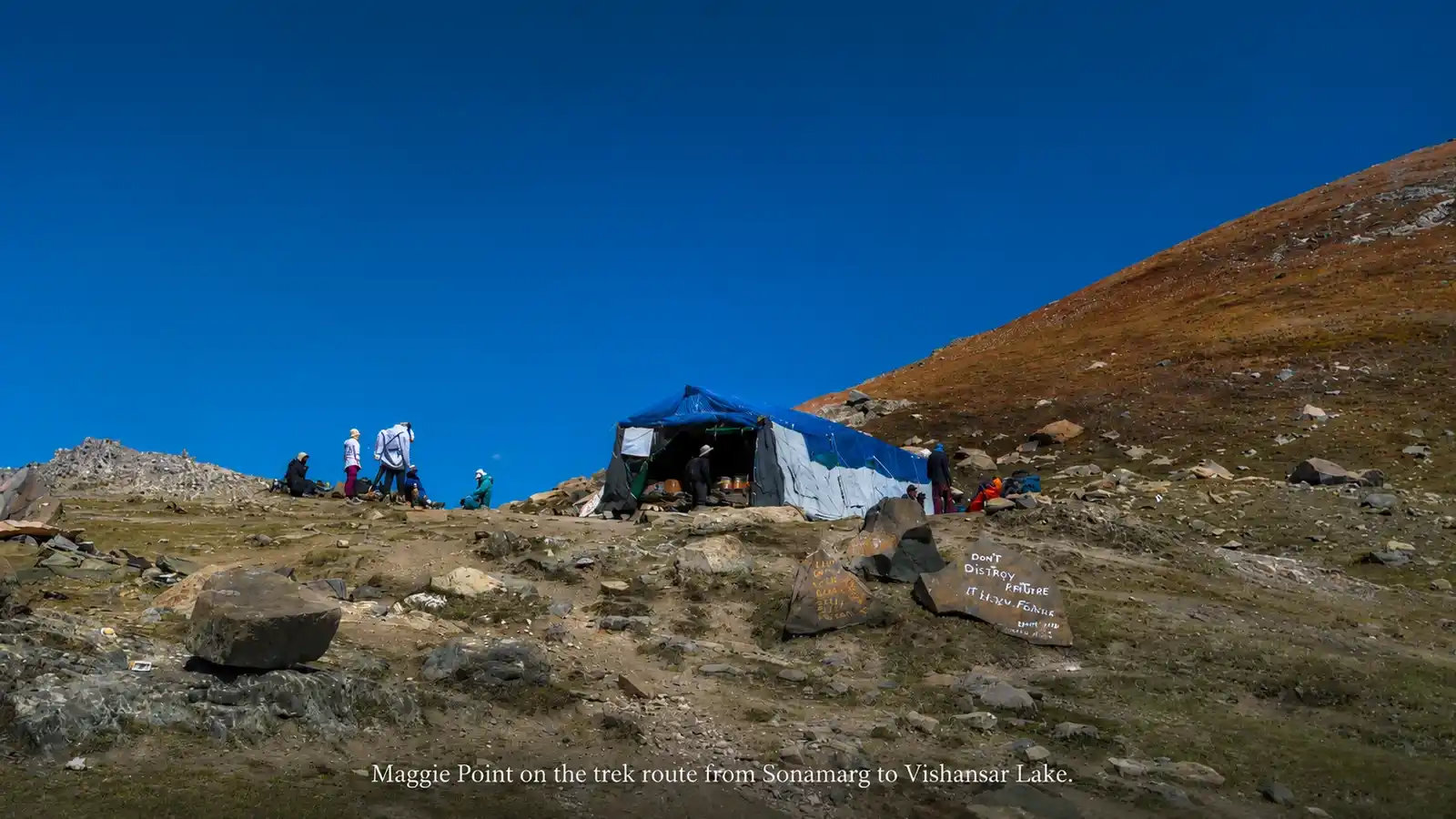
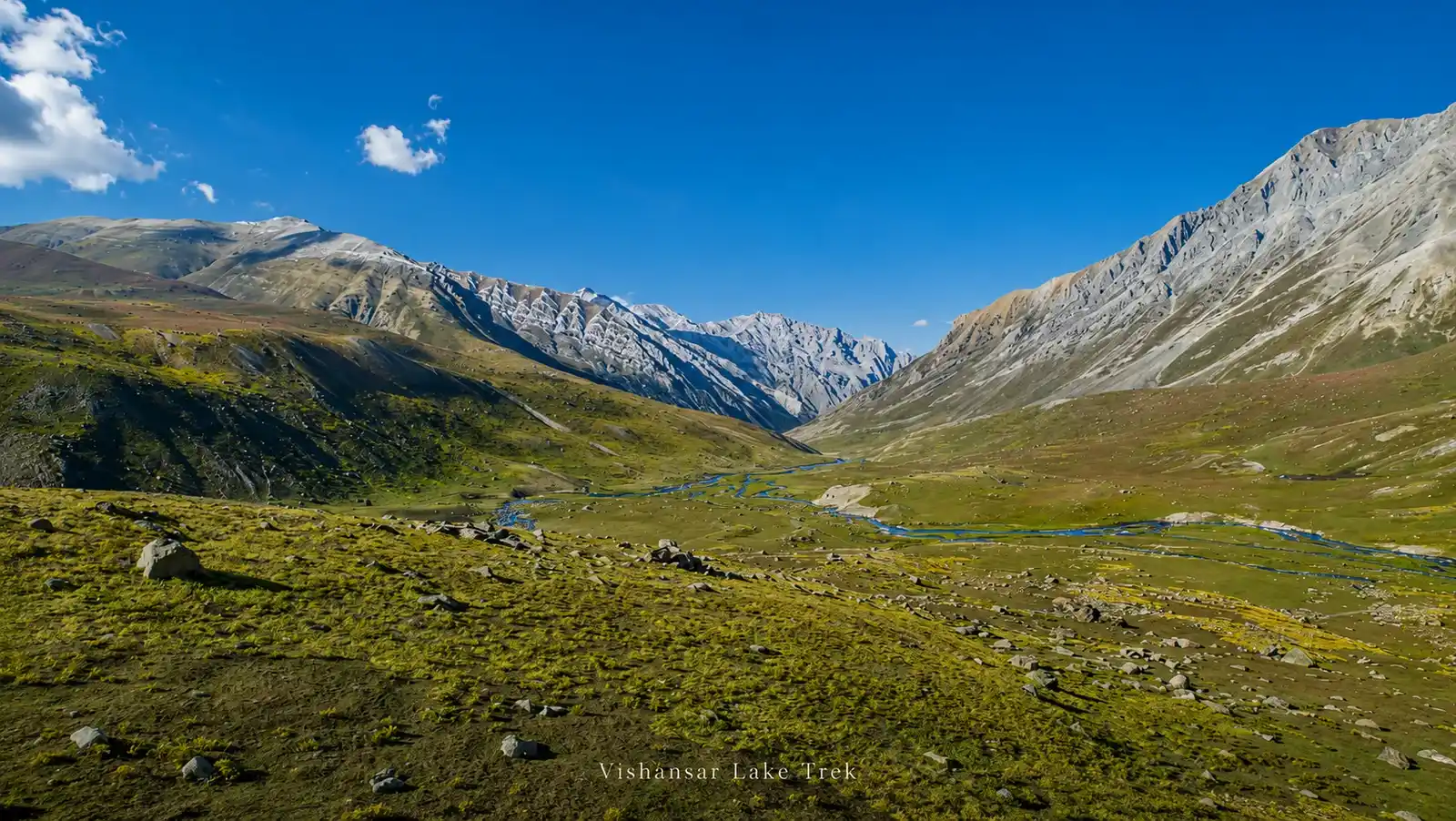
Nichnai Pass at 4,100 m is the highest point of this trek and the highest point of the Great Lakes circuit if you continue. From the top, the view south looks back across Nichnai meadow toward Shokdar and the Sonamarg Valley, you can trace every step of the previous day’s climbing in a single glance. North from the pass, the Vishansar Valley opens below: wide, green, with the lake not yet visible but the medicinal plant meadows of the valley floor already apparent in the concentrated colour of the flora.
The descent from Nichnai Pass into Vishansar Valley is 390 m of downhill over a rocky, steep section that requires steady footing. A waterfall appears on the right as you descend, the meltwater from glaciers above dropping toward the valley floor. Then the gradient eases, the meadows widen and Vishansar Lake appears at the valley floor a long, flat body of water at 3,710 m reflecting the peaks and sky with the kind of clarity that only happens above the treeline.
Camp near the lakeside. The Vishansar basin is exposed to wind and the lake sits in an open bowl and evenings here are cold even in July. Have your camp set up and warm clothes on before the sun drops behind the western ridge.
Net altitude at camp: 3,710 m (205 m above Nichnai, 370 m below Nichnai Pass) Stay: Camp at Vishansar Lake (3,710 m)
Day 4 — Vishansar: Exploration and Krishansar Lake
Distance: ~5 km round trip to Krishansar Time: 3–4 hours return Altitude gain to Krishansar: ~100 m
This is the acclimatisation and exploration day, short in distance but important for the body and for the experience.
Spend the morning at Vishansar itself. Walk the lake’s perimeter if conditions allow. The south end of the lake, where the Neelum River begins its departure northward, is easy to reach on foot and gives a different angle of the basin. The water at this depth and altitude has a green-blue quality that changes through the day as cloud shadow moves across the surrounding peaks.
The climb to Krishansar takes roughly 1.5–2 hours from Vishansar camp. The trail crosses the ridgeline dividing the two basins and arrives at Krishansar (3,810 m) slightly higher, slightly smaller and with a different character. Where Vishansar is wide and meadow fringed, Krishansar has steeper walls on two sides and a more enclosed feel. The view from Krishansar back down to Vishansar, with the Nichnai Pass ridge visible above both lakes, is the defining photograph of this trek. On a clear morning the light on the peaks above the pass is exceptional.
If you have fishing permits, both lakes hold brown trout. The fishing around Krishansar is considered particularly good in July and early August.
Stay: Return to camp at Vishansar Lake
Day 5 — Vishansar to Nichnai (Return)
Distance: 12–13 km Time: 5–6 hours Altitude gained/lost: +390 m over the pass, -765 m on descent to Nichnai
The return crossing of Nichnai Pass. The ascent from Vishansar to the pass (390 m up) is shorter than yesterday’s approach from the Nichnai side (595 m up) and typically feels easier because you have now had a night at altitude and an acclimatisation day. The descent from the pass back to Nichnai is the long descent, the same 765 m you climbed on Day 1, now reversed.
The descent through the Shokdar meadows goes quickly on good knees. Trekking poles reduce impact significantly on this stretch. Camp again at Nichnai.
Stay: Camp at Nichnai meadow (3,505 m)
Day 6 — Nichnai to Shitkadi, Drive to Srinagar
Distance: 9–10 km Time: 4–5 hours descent
The final descent retraces the Butsheri forest section and the lower Sindh River tributary trail back to Shitkadi. Arriving at Shitkadi by midday, drive back through Sonamarg to Srinagar 80 km, approximately 3 hours on the NH 1. Most trekkers arrive in Srinagar by early evening.
Stay: Hotel in Srinagar (houseboat on Dal Lake recommended as a recovery night)
Difficulty Level and Who This Trek Is For
The Vishansar Lake Trek is rated moderate. That rating is accurate across the full five days there are no technical sections, no glacier crossings and no extreme altitude. But the word “moderate” covers a lot of physical ground and deserves specifics:
What makes it genuinely moderate and not easy:
- Nichnai Pass at 4,100 m is the highest point, and crossing it requires a good-paced morning with no prior day’s fatigue
- Day 1’s altitude gain of 765 m from Shitkadi to Nichnai is a steep opening day, the Butsheri forest section has limited shade and demands fitness
- Camping at 3,710 m for two nights means real altitude effects for trekkers without prior high-altitude experience
- The Day 4 return descent — 765 m downhill in one stretch — tests the knees significantly
This trek is right for:
- Trekkers who have completed at least one multi-day mountain trek before (even outside Kashmir)
- Anyone in solid aerobic fitness and you don’t need to be a runner, but you should be able to walk uphill at pace for 5–6 hours without stopping for more than short breaks
- Trekkers who want to experience two lakes and a 4,000 m pass without committing to the 7-day Great Lakes circuit
- People considering the Kashmir Great Lakes Trek in a future year — Vishansar is the ideal “test” for whether the Great Lakes circuit is right for you
Think carefully if:
- You have known altitude sensitivity because Vishansar camp at 3,710 m is the highest sleeping altitude on this trek and two nights there without a prior acclimatisation day at Sonamarg is pushing it for people with poor altitude tolerance
- You have knee issues, the descents on Days 4 and 5 are long
- You have never camped at altitude before this is not a tea-house trek; there are no facilities between Shitkadi and the lake.
Best Time for the Vishansar Lake Trek
Late June to September is the operating window.
Late June: Snow remains on the Nichnai Pass approach and the upper section of the descent into Vishansar Valley. Possible for experienced trekkers with microspikes or crampons. The lake itself may still be partially frozen. Not recommended for first-timers.
July: The pass clears of major snow and the Vishansar Valley is at its wildflower peak. The medicinal plant meadows below the pass are extraordinary in mid-July dense, varied, in full flower. Temperatures at Vishansar camp: 8–14°C by day, 2–6°C at night. This is the best all-round month.
August: Excellent conditions throughout. The wildflowers thin slightly by late August but the views are consistently good. Afternoon cloud builds above 3,500 m from around 1 pm so start the Nichnai Pass crossing by 7 am to be over the top before weather develops. Nichnai camp temperature: 10–15°C days, 4–8°C nights. Vishansar camp: 6–12°C days, 0–4°C nights.
September: Outstanding photography conditions. The light in September has a different quality longer shadows, cleaner air after the monsoon. The meadows at Shokdar and Nichnai begin to show autumn yellow. Nights at Vishansar drop below zero regularly. Sleeping bag rated to -5°C is mandatory. Fishing at the lakes is particularly good in September. Fewer trekkers than July or August.
October and after: The first significant snowfall can arrive at pass level from early October. Do not plan the pass crossing in October without confirmed current conditions. The trail between Shitkadi and Shokdar remains accessible longer, but above Shokdar is unpredictable.
The Vishansar Trek as the First Act of the Kashmir Great Lakes
It’s worth being explicit about the relationship between these two treks, because it affects how you plan.
The Vishansar Lake Trek and the Kashmir Great Lakes Trek share the same trailhead, the same first three days (Shitkadi → Nichnai → Nichnai Pass → Vishansar) and the same twin lake destination. They diverge after Day 3 at Vishansar: Great Lakes trekkers continue west toward Gadsar Pass (4,180 m) and the remaining five lakes. Vishansar trekkers turn around.
This means:
- If you do the Vishansar trek this year, you have already done the hardest navigation section of the Great Lakes circuit in a future year
- The Nichnai Pass crossing is shared between both doing it on the Vishansar trek familiarises you with your altitude response before you attempt the Great Lakes’ longer duration
- The camps and conditions at Vishansar are a direct preview of what Great Lakes camping feels like
For trekkers who are genuinely uncertain about whether the full Great Lakes circuit is right for them, doing the Vishansar trek first is the correct test. Arrive at Vishansar camp on Day 2, see how you feel at 3,710 m, and you will know whether you are ready for six more days at similar or higher altitude.
How to Reach Shitkadi (Starting Point)
From Srinagar: Srinagar to Sonamarg is 80 km on the Srinagar-Leh National Highway (NH 1), taking 2.5–3 hours. The road follows the Sindh River northeast through Kangan, passing Wangath (base for the Naranag Gangabal Trek) and Gagangir before climbing to Sonamarg. From Sonamarg, Shitkadi is 6 km further east on the same highway a 15-minute drive.
Travel My Kashmir arranges direct cab service from Srinagar to Sonamarg and Shitkadi as part of trekking packages.
By air: Fly into Srinagar (SXR). The drive to Shitkadi from the airport takes approximately 3.5–4 hours. Book your cab transfer in advance same-day availability can be limited in peak season.
Important road note: The Srinagar-Leh Highway crosses Zoji La Pass beyond Sonamarg. This section is sometimes closed due to landslides or snow clearing, particularly in early June and after heavy rain. Check road conditions before travel, especially in the shoulder months.
Permits for the Vishansar Lake Trek
No special restricted area permit (inner line permit) is required for the Vishansar Lake Trek. Unlike the Gurez Valley Trek, which requires an ILP due to its proximity to the Line of Control, the Vishansar trek route is straightforward for all Indian nationals and foreign tourists with standard documentation.
You will need:
- Standard government photo ID (Aadhaar, passport or voter ID)
- Forest Department trekking permit — collected at the Sonamarg tourism office or at Shitkadi checkpost. Travel My Kashmir handles this for all guided packages.
- Fishing permit (if applicable) from J&K Fisheries Department in Pahalgam or Sonamarg. Arrange at least a day in advance if fishing is part of your plan.
Foreign nationals should carry their passport and Indian visa documentation. The Sonamarg region is open to international visitors without additional clearances.
What to Pack for vishansar Lake Trek
This is a higher-altitude trek than the Tulian Lake Trek or the Thajwas day trek. The two nights at 3,710 m define your packing decisions.
Sleeping system — this is not negotiable: A sleeping bag rated to at least -5°C is required for Vishansar camp. Trekkers who bring a +5°C or “3-season” bag rated for warmer conditions will be cold on both nights at the lake, especially in August and September. Cold sleep at altitude impairs recovery and directly affects Day 3 and 4 performance. Do not underinvest here.
Layering for the pass crossing: On Nichnai Pass at 4,100 m, wind is the primary hazard. A mid-layer fleece or down jacket worn under a waterproof shell will hold warmth during the 20–30 minutes you spend at the top. Below the pass on the descent into Vishansar, the wind drops and you’ll be warm enough to remove layers. The key is having both the insulation and the shell accessible at the top of your pack, not buried.
Footwear for the pass section: The upper approach to Nichnai Pass involves loose, rocky terrain. In late June and sometimes early July, this section may have compacted snow or ice. Ankle-support trekking boots are essential. In June, microspikes or trail crampons may be required confirm snow conditions with Travel My Kashmir before departure.
Altitude medication: Diamox (acetazolamide) is commonly used as a prophylactic for altitude sickness above 3,000 m. Consult your doctor before the trek if you have no prior experience at 3,700+ m altitude. Symptoms of AMS (headache, nausea, fatigue, difficulty sleeping) at Vishansar camp are common on Day 2 — they are manageable with rest and hydration but should not be ignored. If symptoms worsen rather than improve after rest, descend immediately.
Sun protection at altitude: The UV index above 3,500 m is significantly higher than at sea level. Lips and the exposed face (particularly under the chin, which most people forget) burn quickly. SPF 50 sunscreen, UV-blocking sunglasses, and a brimmed hat for the pass crossing are practical necessities, not optional.
Water: Stream water in the Nichnai and Vishansar basins is glacially sourced and visually clean, but treat all water. Iodine tablets, a Steripen, or a filter are all adequate. Your guide will show you the best water sources at each camp.
What to leave in Srinagar: Anything above 12 kg personal pack weight will slow you down on the Butsheri forest climb and the Nichnai Pass ascent. Travel My Kashmir trek packages include pony/porter support for group gear your personal daypack for the pass crossing should carry only what you need for that day.
Ground Reality: What Other Trek Guides Don’t Prepare You For
The Butsheri forest climb on Day 1 is the hardest section of the trek. Most guides describe it as “a steady ascent through forests.” That’s accurate but understated. The forest section immediately after Shitkadi has limited switchbacks and goes straight uphill for nearly two hours. On a warm July morning, starting after 7 am, this section is genuinely hard. Start by 6:30 am, move at a sustained but not rushed pace and do not burn out here in the first hour trying to keep up with a faster guide.
Shokdar is worth more time than most itineraries give it. Every operator’s schedule has you passing through Shokdar on the way to Nichnai without stopping. But Shokdar’s plateau view of Sonamarg Valley below is one of the better photographs of this entire trek and the meadow itself is good for 20 minutes of rest and acclimatisation. Don’t rush through it.
The Vishansar camp wind is not mentioned anywhere. The lake sits in a wide open bowl at 3,710 m with no tree cover and no significant windbreak on the western side where weather moves in from. Evening winds at Vishansar can be strong enough to destabilise tents if they are not properly anchored. Your guide and camp crew know how to set up for this but if you are camping independently, know to set your tent doors facing east, away from the prevailing wind direction.
Altitude at 3,710 m is real, even for fit people. The most common feedback from first-time trekkers at Vishansar is that they expected the altitude to feel like “being tired” and were surprised when it felt like having the flu headache, nausea, poor sleep and a general heaviness. These symptoms are normal and typically resolve in 24–36 hours of rest at altitude. Day 3 is explicitly an acclimatisation day in this itinerary for exactly that reason. Trust the itinerary.
The Gadsar Pass extension temptation. On Day 3, when you have reached Krishansar and you can see the Gadsar Pass ridge above you, the next stage of the Great Lakes route, some trekkers decide impulsively to continue. Don’t. Gadsar Pass is 4,180 m, and crossing it without having planned the extension (food, camp, return logistics) is the setup for an uncomfortable or dangerous situation. If you want to continue to Gadsar, plan it before you leave Srinagar. Contact Travel My Kashmir Tour and Travel Agency to extend the itinerary to the full Great Lakes route that conversation is much better had at a desk than at the edge of a pass at 3,800 m.
Photos of Vishansar Lake Trek
Frequently Asked Questions
Is the Vishansar Lake Trek the same as the Kashmir Great Lakes Trek?
Not the same, but related. Vishansar and Krishansar are the first two lakes of the seven lake Kashmir Great Lakes circuit. The Vishansar trek follows the same route for the first three days and then returns the same way. The Great Lakes trek continues west from Vishansar for an additional four days through Gadsar, Satsar and Gangabal. If you have 5 days, do Vishansar. If you have 7–8, do the full Great Lakes circuit.
Can I do the Vishansar trek without prior high-altitude experience?
Yes, but with preparation. Spend at least one night in Sonamarg before beginning the trek. Train for sustained uphill walking for 4–6 weeks before departure. Know the signs of altitude sickness. Trekking with a local guide who can assess your condition daily makes a significant safety difference at this altitude.
Is the Nichnai Pass dangerous in June?
In early to mid-June, the pass may have compacted snow and ice on the approach and the descent into Vishansar. Without microspikes or crampons, this section becomes hazardous. Confirm snow conditions with Travel My Kashmir before planning a June departure we do not operate the pass crossing if conditions are unsafe.
Can I fish at Vishansar and Krishansar?
Yes. Both lakes are home to brown trout. You need a fishing permit from the J&K Fisheries Department, which can be arranged in Sonamarg or through Travel My Kashmir. Fishing without a permit is illegal and fines are enforced. The best fishing conditions are typically July to early September, with September considered the prime month by local anglers.
How cold does it get at Vishansar Lake camp?
July nights: 2–6°C at lakeside. August nights: 0–4°C. September nights: -2 to 2°C, dropping below zero on clear nights. Pack a sleeping bag rated to -5°C regardless of when you go.
Is there any network connectivity on this trek?
Sonamarg has reasonable Jio/Airtel coverage. Shitkadi has some BSNL. Above Shokdar, expect no reliable signal on any network. Nichnai and Vishansar camps have no connectivity. Inform family and contacts of your full itinerary before leaving Sonamarg.
Can Vishansar be done as a 3-day trek?
Some operators offer a 3-day version (Shitkadi to Vishansar and back in 3 days with no acclimatisation day). This is not recommended. Reaching 3,710 m on Day 2 without a prior night at intermediate altitude significantly increases altitude sickness risk. The 5-day format including the Sonamarg night and the Day 3 acclimatisation day at the lake exists because it works. A shorter version saves one day but trades it for a meaningful increase in risk and reduced experience at the lakes.
How does Vishansar compare to the Naranag Gangabal Trek?
Both involve alpine lakes above 3,500 m and a significant pass crossing. Naranag Gangabal approaches from the Ganderbal side and crosses a lower pass. Vishansar’s Nichnai Pass at 4,100 m is higher and more demanding. Gangabal Lake itself is larger and sits below Haramukh Peak, giving it a more dramatic backdrop. Vishansar is more remote and less visited. Both are excellent the choice depends on your base location and whether you prefer the Sonamarg or Srinagar-north starting point.
What is the Vishansar Lake Trek cost?
Costs vary by group size, inclusions and season. A typical guided package includes cab from Srinagar to Sonamarg and back, all camping equipment, guide, camp cook, meals on trail and permit arrangements. Contact Travel My Kashmir at +91 9796466052 for a current quote.
Can beginners do the Vishansar Lake Trek?
Yes, provided you have a decent level of cardiovascular fitness. The first day’s steep climb through the Butsheri tree line and the rocky switchbacks of Nichnai Pass are physically demanding, so building leg endurance via stairs or jogging at least a month prior is strongly recommended.
Planning the Vishansar Lake Trek for 2026? July and August bookings fill quickly. Call or WhatsApp Travel My Kashmir at +91 9796466052 to check available dates and get your itinerary started. If you are considering the full Kashmir Great Lakes circuit instead, our Great Lakes Trek page covers everything you need to decide.
Not sure which Kashmir trek is right for you? See the complete Kashmir trekking guide for a comparison across all routes, difficulty levels and durations.