
Kashmir in January: Deep Winter, Peak Snow & How to Travel It
If you want to guarantee snow in Kashmir, January is the month. It is the coldest, whitest part of the year, falling inside Chillai Kalan the 40-day harshest-winter period the valley has named for centuries. This is Kashmir at its most dramatic and its most demanding with postcard-perfect white landscapes, but genuine cold and the real possibility of road and flight delays. Here’s an honest guide to visiting in January and how to plan around the challenges.
What is Chillai Kalan and why it matters
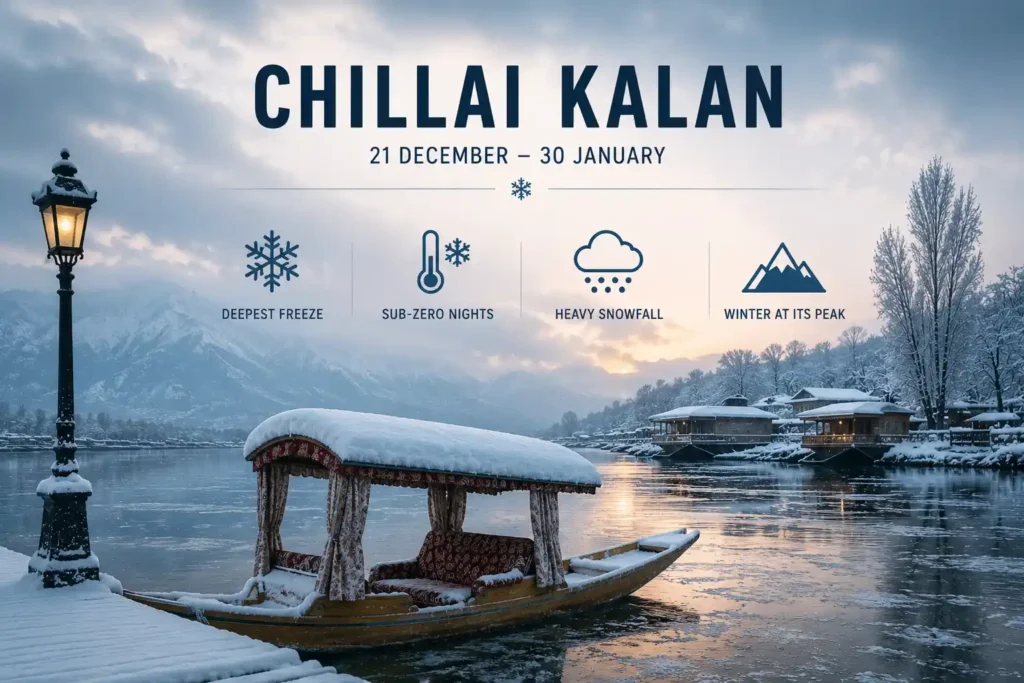
Chillai Kalan runs roughly from 21 December to 30 January, the deepest freeze of the Kashmiri winter. Water bodies partly freeze, temperatures drop below zero at night and the heaviest, most reliable snowfall of the year arrives in this window. For a traveller, that’s the appeal (snow is close to guaranteed) and the catch (this is not a gentle weather trip). Understanding Chillai Kalan is the single most useful thing to know before booking January.
Where you are guaranteed snow in January
Gulmarg — The most famous place for snowfall in Kashmir and the center of the ski season. The Gondola operates (weather permitting) and the slopes are in full winter condition. It’s best to book your Gulmarg cable car tickets in advance.
Srinagar — The city often experiences snowfall in January, and parts of Dal Lake may partially freeze. A shikara ride across a snow covered lake is one of the most memorable winter experiences in Kashmir.
Pahalgam — Covered in deep snow, quieter and more peaceful than Gulmarg. Some higher areas may be inaccessible due to heavy snowfall, but the main region remains scenic and worth visiting.
For a detailed breakdown of the most reliable snowfall areas across the valley, check our complete snowfall in Kashmir guide.
Kashmir weather in January
Expect daytime temperatures of around 2–7°C in Srinagar, with sub-zero nights. It gets even colder in Gulmarg and Pahalgam. Fresh snowfall is common throughout the month, often occurring multiple times.
Days are short and frequently overcast, but when the sun breaks through over fresh snow, the views are exceptional.
This is not a light winter destination so pack for extreme cold. Thermal layers, an insulated waterproof jacket, waterproof boots with good grip, gloves and a warm hat are essential.
Things to Do in Gulmarg in January
Gulmarg is the epicenter of winter adventure in Kashmir. Once the snow settles, the entire landscape transforms into a high altitude playground with activities for every kind of traveler.
- Skiing and snowboarding – Among the best in India, Gulmarg’s slopes at Apharwat and Kongdori attract both beginners and advanced riders. Equipment rentals and professional instructors are easily available.
- Gondola ride – The Gulmarg Gondola, one of the highest cable cars in the world, operates in two phases and offers breathtaking views of the snow covered Himalayas.
- Sledging – A simple, affordable activity available near the main bowl. Ideal for families, kids or anyone looking for a quick snow experience.
- Ice skating – During peak winter, natural ice rinks form in select areas of Gulmarg. Skates can be rented locally.
- Snowmobile and ATV rides – Perfect for those who want a fast-paced snow experience without the learning curve of skiing.
Explore more details and book activities: Activities to do in Gulmarg
Things to Do in Srinagar in January
Srinagar in January slows down, but that’s exactly where its winter charm lies. The crowds thin out, the pace becomes calmer and the experience feels far more authentic.
- Shikara ride on Dal Lake – Even when parts of the lake freeze, the atmosphere is unmatched. The mist, quiet waters and minimal tourist traffic make it a far more peaceful experience than peak season.
- Mughal Gardens in winter – Shalimar Bagh and Nishat Bagh take on a completely different character under snow. Expect fewer visitors and a serene, almost untouched landscape.
- Old city and local markets – A great time to explore Srinagar’s old quarters at your own pace. Shops are less crowded, making it easier to browse Pashmina shawls, saffron and authentic Kashmiri handicrafts without pressure.
- Kahwa by a bukhari (wood stove) – Not a formal activity, but an essential winter experience. Sitting indoors with a warm cup of Kahwa beside a traditional bukhari is as local and real as it gets.
What's open and what's closed
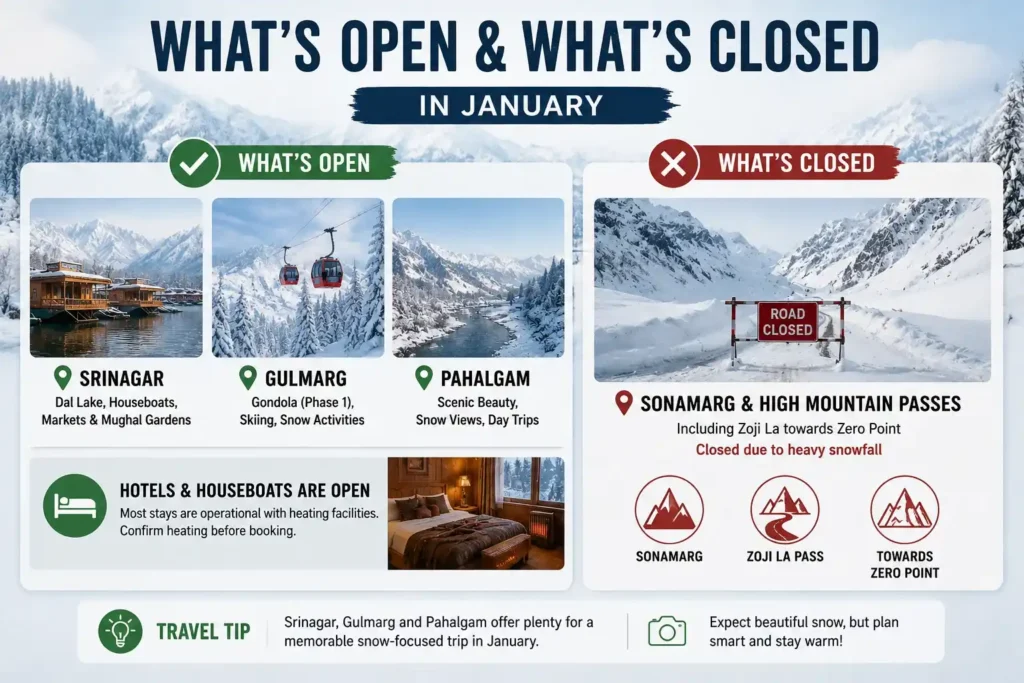
In January, Sonamarg and the high mountain passes including Zoji La toward Zero Point remain closed due to heavy snowfall.
A typical winter itinerary in Kashmir focuses on Srinagar, Gulmarg and Pahalgam which together offer more than enough for a snow focused trip.
Many houseboats and hotels remain open during this time, usually with heating facilities. However, it’s important to confirm heating arrangements before booking, as this matters more in January than in any other month.
Road Conditions and Travel Logistics in January (Honest Guide)
Srinagar to Gulmarg (~50 km): Usually manageable, but travel is slower due to snow. The final uphill stretch to Gulmarg may require snow chains or a 4×4 vehicle after fresh snowfall.
Srinagar to Pahalgam (~90 km): Generally open and accessible, though you should allow extra travel time due to winter conditions.
Flights: Morning fog and snowfall can lead to delays or diversions. It’s wise to keep a buffer day in your itinerary and avoid tight same-day connections.
Vehicles: Always use a driver experienced in snow conditions. Self driving in deep winter Kashmir is not recommended for most visitors.
Driving on snow-cleared but icy roads is routine in Kashmir, but the quality of your driver makes a significant difference. For a safer and smoother experience, consider booking winter ready transport through our Kashmir cab service.
Who January Suits and Who Should Choose Another Month
Choose January if you you want proper snow, not just “some snow”, skiing and the drama of Chillai Kalan. It suits travellers who are comfortable with sub zero temperatures, flexible plans and occasional delays due to weather. Consider February or December instead if you want snow with slightly easier conditions or March if you would rather have snow and the first blossoms without the extreme cold. If this is your first Kashmir trip and snow isn’t the goal, the spring or autumn months are gentler.
What to Pack for Kashmir in January
Packing right makes the difference between an uncomfortable trip and an enjoyable one. Here’s what you actually need:
- Insulated winter jacket (down or heavy fleece-lined) a light jacket won’t cut it once you are above Srinagar
- 3-4 thermal base layers (top and bottom) to wear under regular clothes
- Woolen sweaters or fleece mid-layers
- Waterproof, insulated snow boots with good grip
- regular sneakers, will soak through and offer no traction on ice
- Woolen socks (pack extra pairs; wet socks are miserable in this cold)
- Gloves with waterproof ones if you are doing any snow activities in Gulmarg
- A warm cap or beanie that covers the ears
- A muffler or scarf
- Sunglasses with UV protection as snow glare is intense on clear days
and can strain your eyes - Moisturizer, lip balm and a good face cream the cold and dry air
crack skin fast - A small first-aid kit with any personal medication
- A power bank because batteries drain faster in the cold and charging points can be limited in remote stays
- Tip: layering beats one heavy item. You can always remove a layer indoors, but you can’t add warmth you didn’t bring.
Ready to plan a January trip?
A January trip to Kashmir is incredible, but only if it’s planned right. The cold, snow conditions and travel delays aren’t forgiving if you get the basics wrong.
Our Kashmir winter packages are built for these exact conditions. You get heated stays, snow ready vehicles and a properly planned Gulmarg itinerary, so you are not figuring things out in sub-zero temperatures.
If you are serious about experiencing Kashmir in peak winter, don’t leave logistics to chance , book a winter-ready Kashmir package and focus on the experience, not the struggle.
Planning around the calendar? Compare with Kashmir in December and Kashmir in February or return to the best time to visit Kashmir guide.
Frequently asked questions
Is January a good time to visit Kashmir?
Yes, if you want guaranteed snow and skiing and can handle serious cold and occasional delays. It’s the most reliable month for a white Kashmir, but it’s not a mild weather trip.
Is snow guaranteed in Kashmir in January?
It’s as close to guaranteed as Kashmir gets. January falls in Chillai Kalan, the heaviest-snow period and Gulmarg in particular is reliably snow-covered.
How cold does Kashmir get in January?
Srinagar daytime highs are around 2–7°C with sub-zero nights, Gulmarg and Pahalgam are colder. Dress for deep winter.
Is the Gulmarg Gondola open in January?
Usually yes, weather permitting and it’s peak ski season but it can pause during heavy snow or wind. Book ahead and keep your plans flexible.
Can I visit Sonamarg in January?
No, Sonamarg and the high passes are closed under snow in winter. Plan around Srinagar, Gulmarg and Pahalgam.
How cold does it get in Gulmarg in January?
Gulmarg is noticeably colder than Srinagar due to elevation. Daytime temperatures hover around -2°C to 2°C and nights can drop to -10°C or lower during heavy snow spells.
Is there sunshine in Kashmir in January, or is it cloudy the whole time?
Kashmir gets a mix clear, sunny days do happen and are popular for photography, but skies are frequently overcast, especially during and
right after snowfall. Even on sunny days, direct sun does little to raise the overall temperature, so it’s still worth dressing warm.
How cold are the nights in Kashmir in January?
Nights are the harshest part of the day. In Srinagar, expect -3°C to -8°C after dark and in higher areas like Gulmarg or Sonamarg, nights can fall below -10°C. Heated accommodation is essential, not optional.