
How to Plan Kashmir Family Trip guide
Planning a trip to Kashmir with family or a large group is exciting but it also comes with extra challenges. When you are traveling with kids, elderly parents or 8–15 people together, the wrong itinerary, transport choice or hotel location can quickly turn a dream holiday into a stressful experience.
That is why choosing the best Kashmir tour packages for families and large groups is not just about price it is about comfort, pacing, logistics and planning the trip in a way that suits everyone.
In this guide, you will learn how to plan a Kashmir family trip smartly, what itinerary works best, transport tips, common mistakes to avoid and how to choose the right package for your group.
Why Kashmir is Perfect for Family and Group Travel
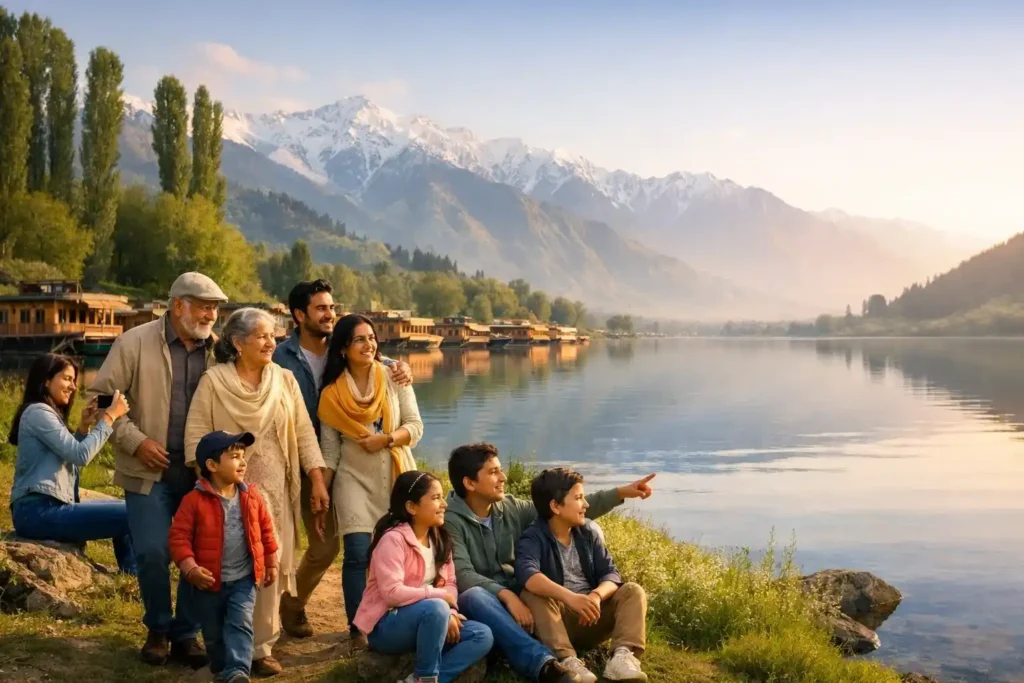
Kashmir is one of the few destinations in India that naturally suits family vacations and group travel. The region offers scenic beauty, peaceful surroundings, moderate sightseeing and a mix of relaxation and activities that appeal to both kids and adults.
Unlike destinations built around nightlife or adventure heavy itineraries, Kashmir’s appeal lies in its pace. A five-year-old can ride a shikara on the lake. A seventy-year-old can sit in the sunshine at Pahalgam’s Baisaran meadow. A group of college students can attempt the Gulmarg gondola ride. Not many destinations offer that breadth within a compact geography.
For large groups, Kashmir also works well because the main tourist destinations Srinagar, Gulmarg, Pahalgam and Sonamarg can be combined into a smooth route if planned properly. However, this only works when the itinerary is designed realistically.
The biggest advantage of traveling in Kashmir with family or large groups is how close everything is. Popular places like Srinagar, Gulmarg and Pahalgam are just two to three hours apart. This means you don’t waste time on long journeys and your plan can stay flexible. If the weather changes, someone feels unwell or your group wants to spend more time at a place, it’s easy to adjust without stress.
Designing a Balanced Family Itinerary
A common pitfall for many first-time visitors is trying to see “everything” in a single week. For families, the secret to success is a slower pace. A typical high-quality itinerary focuses on the “Golden Triangle” of Kashmir: Srinagar, Gulmarg and Pahalgam. However, the way these are sequenced makes all the difference for group comfort.
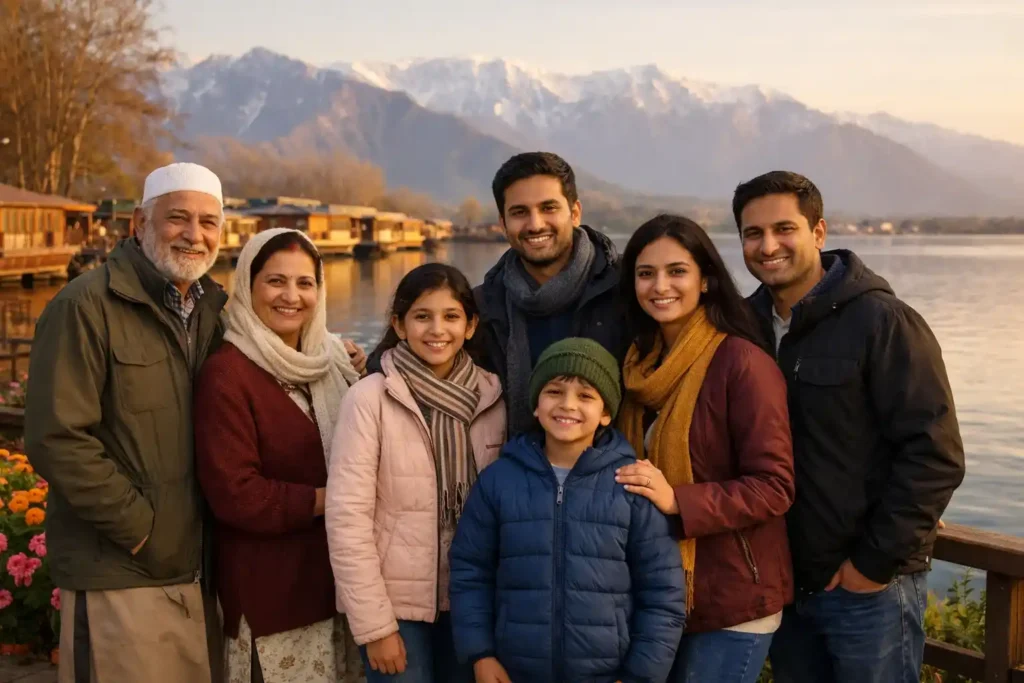
Starting in Srinagar allows the group to acclimatize. A stay on a houseboat on Dal Lake or Nigeen Lake is a quintessential experience, but for large groups, it is often wiser to book adjacent boats or a large “super deluxe” boat to keep everyone together. From here, moving to Pahalgam offers a gentle transition into nature. Known as the ‘Valley of Shepherds,’ Pahalgam is ideal for families because of its wide-open meadows and the gentle Lidder River, which provides a serene backdrop for multi-generational bonding without requiring strenuous activity.
Gulmarg, while famous for its high-altitude Gondola, requires more strategic planning. For groups with kids and elderly members, the Phase 1 Gondola ride is usually sufficient to enjoy the snow and views without the oxygen thinning significantly. By keeping the travel duration between these hubs to roughly 2 to 3 hours, you ensure that the journey remains enjoyable rather than exhausting.
Srinagar sits at roughly 1,585 metres above sea level, Pahalgam at around 2,130 metres and Gulmarg at approximately 2,690 metres. Moving through these altitudes sequentially gives families particularly elderly members time to acclimatise gently without the headaches and fatigue that rapid altitude gain can cause.
Planning tip: If you are travelling with anyone over sixty or with cardiovascular conditions, spend the first night at Srinagar before heading to higher-altitude destinations. It makes a noticeable difference in comfort.
How Key Destinations Fit Into a Family Itinerary
Srinagar — your anchor and your arrival
Gulmarg — calibrated to your group's comfort
Gulmarg demands a bit more planning than the other destinations, particularly for groups with elderly or health-sensitive members. The gondola, which carries passengers to Kongdoori at around 3,080 metres is an extraordinary experience and perfectly safe for healthy adults and children over six or seven. However, altitude sensitivity varies significantly between individuals and it is worth having a candid conversation with your group before the trip about whether the gondola is on the agenda. In winter, when Gulmarg transforms into Kashmir’s ski destination, the destination becomes less suitable for very young children or elderly travellers who are not interested in snow activities.
Pahalgam — the destination most families enjoy most
If Srinagar is Kashmir’s heart, Pahalgam is its most family friendly destination. Set along the Lidder River, surrounded by pine forests and with Betaab Valley accessible by a short drive, it strikes the right balance between scenery and accessibility.
The Baisaran meadow, often called Mini Switzerland, involves a pony ride or a short uphill walk both options are manageable for most ages. The river itself, particularly in summer, is a hit with children who can paddle in the shallower sections. Horse riding, which is widely available and well organised at Pahalgam, is one of the easiest activity options to arrange for a large group, with ponies suited to both children and nervous first-time riders.
Transport Planning for Large Groups
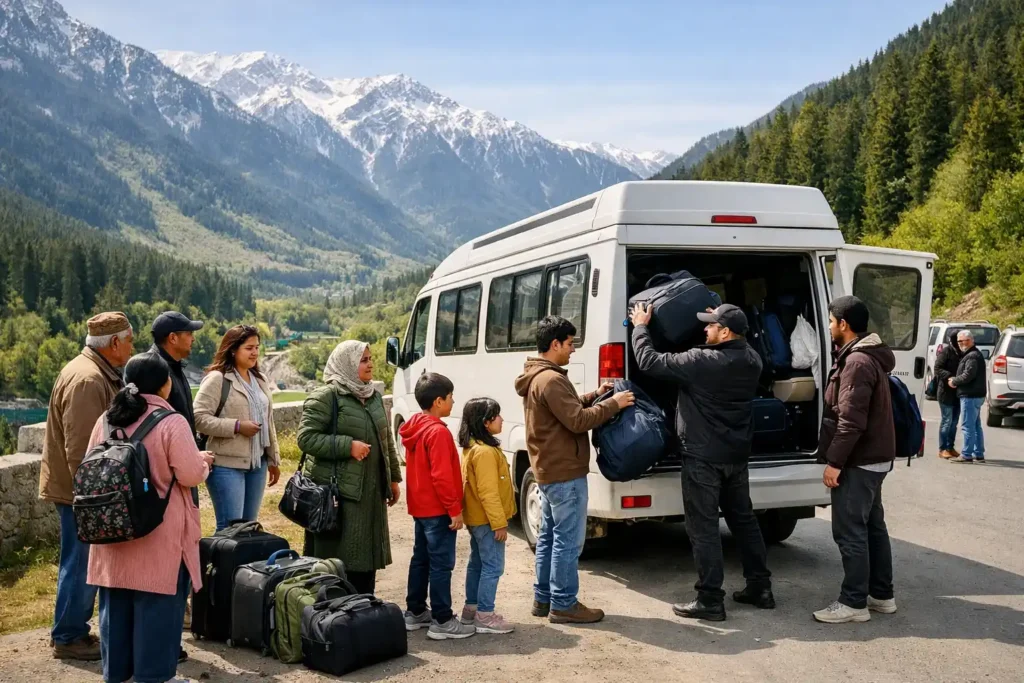
Transport is where group trip planning either succeeds or unravels. For a family of five or six people, a single large SUV like an Innova Crysta is generally sufficient for inter-destination travel, though it becomes crowded for longer drives when luggage is added. For groups of ten or more, the most practical option is a tempo traveller a twelve or thirteen-seater van that keeps everyone in one vehicle and is well suited to Kashmiri mountain roads.
Larger groups sometimes consider splitting across multiple smaller vehicles, but this introduces its own complications, the group arrives at attractions at different times, restaurants struggle to seat everyone simultaneously and the logistics of coordinating multiple drivers add friction throughout the trip. Unless a single larger vehicle is genuinely unavailable, keeping everyone together in one vehicle is almost always the better choice for group cohesion and practical simplicity.
Travel times between destinations are worth understanding clearly before you finalise your itinerary. The Srinagar to Pahalgam route covers roughly 95 kilometres and typically takes two to two and a half hours in normal road conditions. The Srinagar to Gulmarg route is about 56 kilometres but often takes an hour and a half or more due to mountain road conditions and traffic at the gondola base station. Planning inter-destination travel for mornings before tourist traffic builds improves journey times considerably. Arranging a reliable Srinagar airport taxi service from the moment of arrival sets the right tone for the logistics of the entire trip.
Balanced Travel Days
Long road journeys every day can quickly exhaust children and elderly members. A well-planned itinerary spaces out sightseeing and avoids excessive back-to-back transfers.
Flexible Sightseeing Time
Families often need more time at each destination. Kids may need breaks, elderly travelers may move slower and group coordination naturally takes longer.
Choosing the Right Vehicle
In the mountains, comfort is a safety feature. For a group of 6 to 12 people, a 12-seater or 17-seater Tempo Traveller offers ample legroom and dedicated space for the substantial luggage that families usually carry. For smaller families of 4 to 5, an Innova Crysta is often the gold standard for its superior suspension on winding roads.
Understanding Travel Times
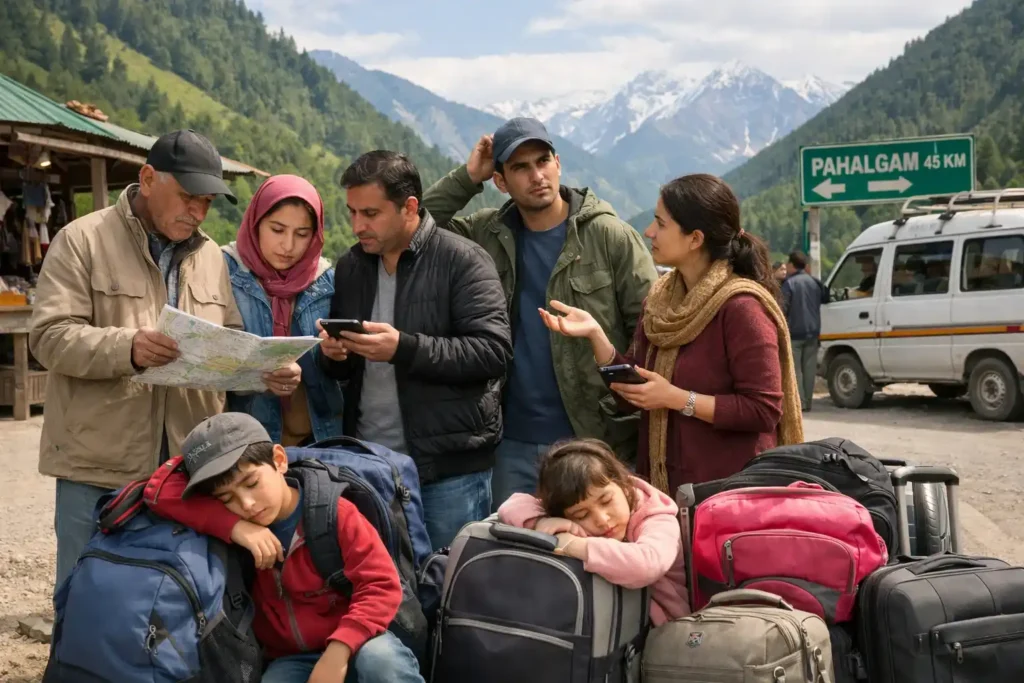
Distances in Kashmir can be deceptive. A 50 km drive from Srinagar to Gulmarg might take 90 minutes on a clear day, but can stretch to 3 hours during peak tourist season or after a fresh snowfall. When planning, always build in a “buffer hour.” This is especially important for groups, as “quick” stops for tea or photos naturally take longer with more people. Relying on professional Srinagar airport taxi services or pre-booked private rentals ensures you have a driver who understands these rhythms and can navigate local traffic patterns effectively.
Budgeting for a Family or Group Trip to Kashmir
A budget Kashmir trip for families and groups is entirely possible, but it requires understanding where to save and where to splurge. The primary drivers of cost are accommodation categories and vehicle types.
High end resorts in Gulmarg or boutique houseboats in Srinagar will naturally elevate the price, but many families find value in “luxury homestays” which offer a more authentic experience at a fraction of the cost. When traveling in a large group, you often have more bargaining power for “MAP” (Modified American Plan) hotel deals, which include breakfast and dinner. This is not only cost effective but also eliminates the daily stress of finding a restaurant that can seat a dozen people simultaneously.
For large groups, per-person costs generally decrease when accommodation is selected thoughtfully. Booking interconnecting rooms, opting for a family suite or in some cases chartering an entire houseboat can bring the per-head accommodation cost well below what individuals or couples pay for comparable rooms.
Transport costs for a tempo traveller shared across twelve people are similarly economical. The areas where large groups often overspend unnecessarily are individual pony or gondola tickets at popular sites when booked through a package operator like rather than directly on arrival, these are frequently marked up significantly.
A practical Kashmir cab rental arrangement negotiated for the full duration of the trip is almost always better value than hiring vehicles on a day-by-day basis. Operators who know you are a captive group for six or seven days have less incentive to be competitive booking the full transport arrangement upfront, ideally through a reference or trusted agency like Travel My Kashmir, protects against this.
When Should You Take Your Family on a Trip to Kashmir?
The best time to visit Kashmir with family or Group tour depends entirely on what you want to see through your camera lens. Each season demands a different approach to packing and pace.
Spring (March to May): This is the season of the Tulip Festival. It is the best time for elderly travelers who enjoy gentle walks through the Mughal Gardens. The weather is mild, though carry light woolens for the evenings.
Summer (June to August): As the rest of India heats up, Kashmir stays pleasantly cool. This is peak season for family vacations, offering the best accessibility to higher meadows like Sonamarg.
Winter (December to February): Ideal for families seeking a “white Christmas” or snow play. If traveling with kids or the elderly in winter, ensure your chosen Kashmir tour packages include hotels with central heating or high-quality “electric blankets,” as traditional wood-fired heaters (Bukharis) can sometimes be overwhelming in small spaces.
Get more information about the best time to visit Kashmir here
Common Planning Mistakes to Avoid
Experience-driven Kashmir travel tips for families often focus on what not to do. Many travelers fall into the trap of “itinerary fatigue.”
- Over-scheduling: Trying to visit Sonamarg, Gulmarg and Pahalgam all as day trips from Srinagar is a recipe for exhaustion. You will spend 6 to 8 hours a day in a car. Instead, opt for overnight stays in each location.
- Ignoring Local Unions: In places like Pahalgam and Sonamarg, outside vehicles are often restricted from certain sightseeing points. You will need to hire local union cabs for specific valleys (like Aru or Betaab). A good travel plan accounts for these small additional costs and the time needed to switch vehicles.
- Underestimating the Cold: Even in summer, temperatures in Gulmarg can drop sharply once the sun goes down. Families often arrive under-prepared, leading to last-minute, expensive purchases of low-quality woolens.
Safety and Accessibility for Kids and Seniors
Is Kashmir suitable for group travel involving vulnerable age groups? The answer is a resounding yes, provided you prioritize comfort. Most major tourist spots have been upgraded with better footpaths and accessibility features.
For the elderly, the Mughal Gardens in Srinagar (Nishat and Shalimar) offer paved paths and plenty of benches. For kids, the Shikara rides on Dal Lake are like a floating fairy tale. Safety in the valley has remained consistent for tourists for years, with a highly visible tourist police presence and a local culture that is famously hospitable to guests.
When planning, ensure your Kashmir car rental provider is a local and has experience with group dynamics. A driver in Kashmir isn’t just a driver but they are often your first point of contact for local insights, the best place to find authentic Wazwan, and the person who knows which mountain passes are currently clear.
By focusing on slow travel, robust transport and seasonal readiness, your family can move beyond the “package” mindset and truly experience the timeless magic of the valley.
Conclusion
Planning a Kashmir trip for families and large groups can be an incredibly rewarding experience. By focusing on a well-paced itinerary, choosing appropriate transport, considering the needs of all age groups and being aware of common planning pitfalls, you can ensure a comfortable, safe and unforgettable journey to this spectacular region. Kashmir’s allure lies in its ability to offer something special for everyone, making it a truly magical destination for collective memories.
Frequently Asked Questions (FAQs)
What is the ideal Kashmir itinerary for families?
A 5 to 7-day itinerary covering Srinagar, Gulmarg and Pahalgam is generally ideal for families, allowing enough time for sightseeing without rushing between destinations.
Is Kashmir suitable for large group travel?
Yes, Kashmir is well-suited for large groups due to its scenic destinations, family-friendly attractions, and availability of larger transport options like tempo travellers.
What is the best time to visit Kashmir with family?
Spring and summer are ideal for comfortable sightseeing, while winter is best for families seeking snow experiences.
How much does a Kashmir family trip cost?
The cost depends on travel season, hotel category, group size, vehicle type and trip duration. Larger groups often benefit from lower per-person transport costs.
Are tempo travellers better than multiple cabs for group travel in Kashmir?
For larger groups, tempo travellers are often more practical as they improve coordination, luggage management, and group comfort.