
How to Plan a Hassle-Free Kashmir Tour: Expert Tips
Planning a trip to Kashmir sounds exciting but for many travelers, it quickly becomes confusing. Questions like when to visit, how to travel between places, what to book in advance, and how to avoid overpricing can make things stressful.
From transport issues and unclear itineraries to last-minute price hikes, small mistakes can turn a dream trip into a frustrating experience.
This guide is designed to help you plan a smooth, hassle-free Kashmir trip with practical, experience-based tips, so you can focus on enjoying the beauty instead of worrying about logistics.
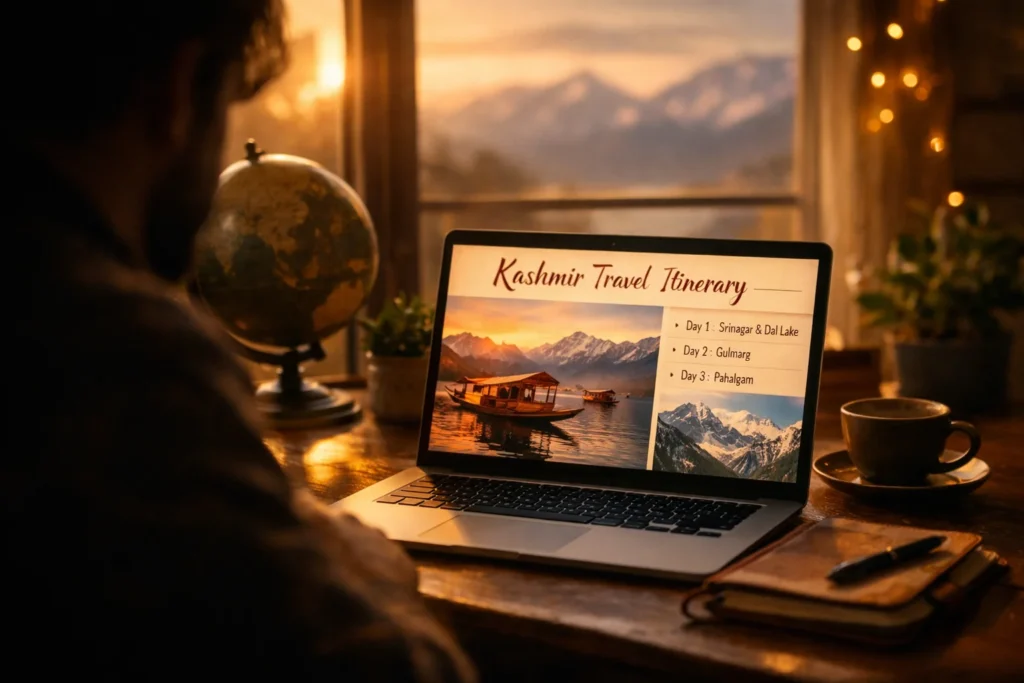
Step-by-Step Guide to Planning a Hassle-Free Kashmir Tour
Step 1: Decide the Best Time to Visit Kashmir
The “best” time depends entirely on what you want to experience. Kashmir transforms completely with every season, and understanding this is the first step in Kashmir itinerary planning.
Spring (March to early May)
This is when the valley wakes up. The world-famous Tulip Garden in Srinagar blooms in April. The weather is pleasant, though occasional showers are common.
- Highlight: Colorful blossoms and lush greenery.
- Tip: Pack a light jacket and an umbrella.
Summer (June to August)
While the rest of India swelters, Kashmir remains cool. This is peak tourist season. It is the best time for trekking and visiting high-altitude meadows like Sonmarg.
- Highlight: Pleasant weather (15°C to 30°C) and clear roads.
- Tip: Book everything at least 3 months in advance.
Autumn (September to November)
The valley turns into a canvas of gold and orange as the Chinar trees change color. The air is crisp, and the harvest of apples and saffron begins.
- Highlight: Photogenic landscapes and fewer crowds.
- Tip: Great for travelers looking for peace and lower hotel rates.
Winter (December to February)
Kashmir turns into a white wonderland. Gulmarg becomes a hub for skiing and snowboarding.
- Highlight: Snowfall and the experience of staying in a heated houseboat.
- Tip: Carry heavy woolens and thermals. Be prepared for occasional flight cancellations due to snow.
For more detailed information, visit our Best Time to Visit Kashmir guide.
Step 2: Plan Your Kashmir Itinerary Smartly
A common mistake is trying to see everything in four days. Kashmir requires a slow pace. To ensure a smooth Kashmir vacation, we recommend a minimum of 6 to 7 days.
The Ideal 6-Day Route
- Day 1: Arrival in Srinagar. Check into a houseboat, enjoy a sunset Shikara ride and visit the local Mughal Gardens.
- Day 2: Srinagar to Gulmarg. Head to the “Meadow of Flowers.” Take the Gondola ride (book tickets online weeks in advance!). Stay overnight to enjoy the quiet.
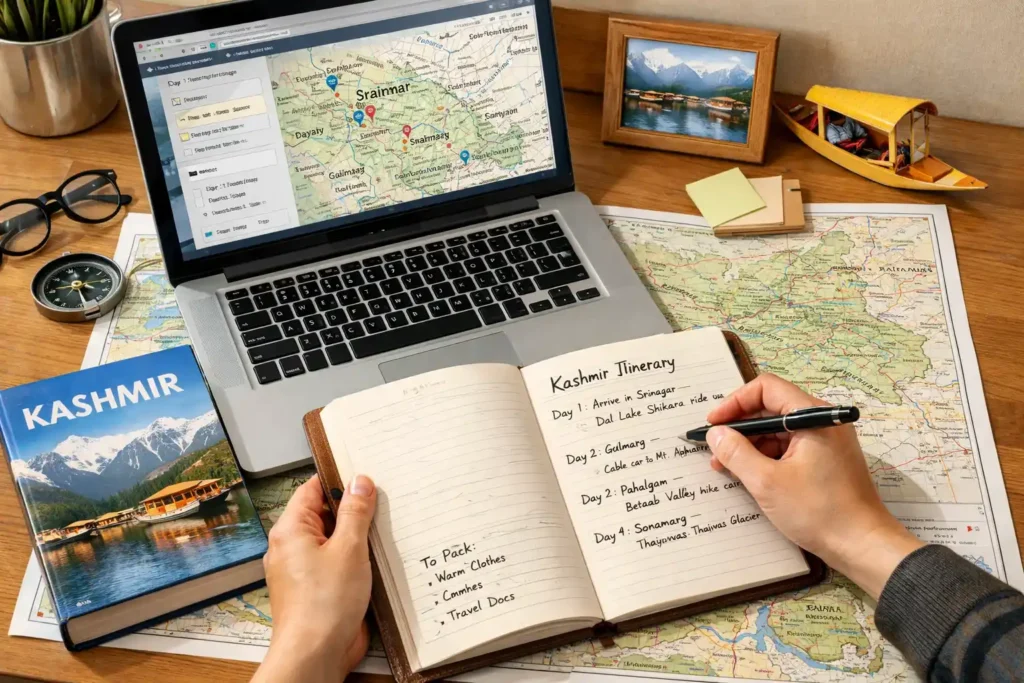
- Day 3: Gulmarg to Pahalgam. Drive to the “Valley of Shepherds.” En route, visit the saffron fields of Pampore.
- Day 4: Pahalgam Exploration. Visit Aru Valley, Betaab Valley, and Chandanwari using local internal taxis.
- Day 5: Pahalgam to Srinagar (via Sonmarg). If you have the energy, do a day trip to Sonmarg to see the Thajiwas Glacier before returning to Srinagar.
- Day 6: Departure. Shop for local handicrafts in the morning and head to the airport.
Expert Advice: Don’t change hotels every night. Spend at least two nights in Pahalgam and two in Srinagar to avoid spending your whole trip packing and unpacking.
Important : Don’t try adding Gurez valley, Doodhpathri Or Lolab valley to this route unless you have 9-10 days. Overpacking kills the experience.
Step 3: Book Flights and Accommodation Early
Flights: Srinagar International Airport(SXR) is well connected to Delhi, Mumbai, Bangalore and other major cities. Flights get expensive fast during peak season . Try to book 6-8 weeks ahead.
Where to Stay in Srinagar: For a classic experience, spend one night on a Houseboat in Dal Lake or Nigeen Lake. For the rest of your stay, choose a hotel near the Boulevard Road or Rajbagh for better access to restaurants and markets.
Early Booking Perks: Many premium properties offer “Early Bird” discounts that aren’t available on major booking engines last minute.
- Gulmarg & Pahalgam: Stay overnight if time permits , early morning landscapes here are extraordinary.
Tip: Always check if your hotel includes breakfast and confirms your arrival time. Winter bookings especially need clear communication about heating facilities.
Step 4: Arrange Local Transport in Advance
Transport is where many Kashmir trips go wrong. Taxis in Kashmir are not metered so pricing is usually day based or tour based. A taxi hired in Srinagar can drop you at Gulmarg or Pahalgam, but it cannot take you for local sightseeing within those towns. You will need to hire a separate local union taxi for spots like Aru Valley or the Gondola base station.
How to arrange transport smartly:
Pre-book a dedicated cab: Hire a reliable vehicle and driver for the duration of your trip. While they can’t do the “internal” sightseeing in union-protected zones, having a fixed driver for inter-city transfers prevents daily price haggling.
Confirm prices upfront: If you haven’t pre-booked, always agree on a price before sitting in the vehicle.
Airport pickups: Always arrange your pickup through a trusted Kashmir cab rental service. The airport can be chaotic and having a driver waiting with a name sign makes arrival much smoother.
Step 5: Pack Smart for Kashmir Weather
The weather of Kashmir is unpredictable with warm afternoons turn into chilly evening fast, especially at altitude. Packing wrong is a very common traveler mistake.
- Season wise packing checklist:
- Spring/Autumn: Light woolens, windbreaker, comfortable walking shoes and a scarf.
- Summer: Cotton clothes for the day, a light sweater for the evenings, sunscreen(UV is stronger at altitude), sunglasses.
- Winter: Heavy woolen jacket, thermal innerwear, snow boots, gloves, woolen cap and moisturiser for dry cold.
Common packing mistakes: Forgetting to carry personal medications (Pharmacies can be limited in remote areas), not bringing a power bank and packing too many forma clothes when you will mostly be outdoors.
Important Things before travelling to Kashmir
Before you board your flight, ensure these four boxes are checked for a hassle-free Kashmir trip:
Mobile Connectivity: Only Postpaid SIM cards (BSNL, Airtel, Jio) work in Jammu & Kashmir. Prepaid SIMs from other states will stop working the moment you land. Have any confusion check our detailed post on which sim works in Kashmir.
Internet: While hotels have Wi-Fi, it can be spotty. Download offline maps of the region.
Permits: Most tourist areas don’t require permits for Indian nationals, but if you plan to visit border areas like Gurez Valley, check the latest permit requirements.
Identity Proof: Carry original Aadhar cards or Passports. Security checks are frequent and thorough.
Weather Forecast: Check 7-day weather for your specific destinations because the weather at mountains changes quickly.
Road accessibility: The Jammu Srinagar Highway and Zoji La can close dur to snow or landslides. Always check latest updates before travel.Hotel and Transport confirmations: Always call and confirm 48 hours before arrival. Written confirmation isn’t always enough.
Expert Tips for a Hassle-Free Kashmir Trip
These small habits make a big difference on the ground.
- Start Your Day Early: Most tourist spots get crowded by 11:00 AM. If you leave your hotel by 8:30 AM, you’ll reach destinations like the Gulmarg Gondola before the massive queues form.
- Buffer Time is Essential: Road closures due to landslides (in winter/monsoon) or security convoys can cause delays. Never plan a tight schedule on your flight departure day.
- Respect Local Customs: Kashmir is culturally conservative. Dress modestly when visiting shrines or walking through local villages.
- Verify the “Pony” Rates: If you take a pony ride in Pahalgam or Sonmarg, check the government-approved rate list (usually displayed on boards) to avoid being overcharged.
- Carry Cash: ATMs exist in Srinagar but can be unreliable in smaller towns. Always carry sufficient cash for day trips.
- Choose reliable local operators: The cheapest option is rarely the best. A trustworthy operator like Travel My Kashmir Tour Operator with verified reviews saves you time, stress and sometimes money.
Common Mistakes Tourists Make
Overcrowding the Itinerary: Trying to cover Srinagar, Gulmarg, Pahalgam, Sonmarg and Doodhpathri in 4 days. You’ll spend 80% of your time in a car.
Booking “Too Cheap” Services: Extremely low-priced packages often lead to hidden costs, poor-quality vehicles or hotels located far away from the main attractions.
Ignoring the Weather Forecast: If a heavy snow warning is issued for Gulmarg, don’t try to force the trip. Safety should always come first.
Not Booking the Gondola Online: Tickets for the Gulmarg Gondola Phase 2 often sell out weeks in advance. Don’t wait until you arrive.
Why Local Travel Experts Make Your Trip Easier
Independent travel in Kashmir is absolutely possible, but local travel experts offer something difficult to replicate like real-time, ground-level knowledge.
A trusted local operator knows when a road has just opened, which houseboat was recently renovated and why you should avoid a particular area on a specific date. That kind of insight isn’t available on any website.
- Real-time Ground Support: If a road is blocked or a flight is delayed, a local contact can rearrange your bookings instantly.
- Transparent Pricing: Experts often have fixed-contract rates with hotels and transport unions, protecting you from seasonal “price hikes.”
- Hidden Gems: Locals can guide you to quieter spots like Yusmarg or secret cafes in Srinagar that aren’t on the typical “tourist map.”
You don’t have to book a full package to benefit from local expertise even pre booking your srinagar airport taxi and one consultation call can transform your experience.
Frequently Asked Questions
How many days are enough for a Kashmir trip?
A minimum of 5 days is recommended to cover Srinagar, Gulmarg and Pahalgam without rushing. 7 days lets you add Sonmarg and enjoy a more relaxed pace. Anything less than 4 days means you will only scratch the surface.
Is it safe to travel to Kashmir for tourists?
Yes, Kashmir is generally very safe for tourists. Tourism is the backbone of the local economy, and locals are exceptionally welcoming and helpful toward visitors.
Do I need to pre-book taxis in Kashmir?
It is highly recommended to pre-book your main transport for inter-city travel. For internal sightseeing in places like Pahalgam, you will have to use local union taxis, which can be hired on the spot.
How much does a Kashmir trip cost?
Costs vary significantly based on season, accommodation choice and travel style. A budge traveler spending 6 days in Kashmir can manage on ₹20,000 to ₹30,000 (excluding flights). A comfortable mid range trip runs ₹40,000 to ₹70,000 per person. Luxury houseboats and premium hotels can push costs higher. Always get quotes from operators so you know exactly what’s included
What is the best time to visit Kashmir?
For most travelers, April-June (Spring/early summer) and September-October (autumn) offer the best combination of pleasant weather, natural beauty and manageable crowds. Winter (December-February) is ideal for snow seekers and skiers. Summer (July-August) is popular but crowded.