
Daksum Kashmir: The Quiet Pine Valley Below Sinthan Top
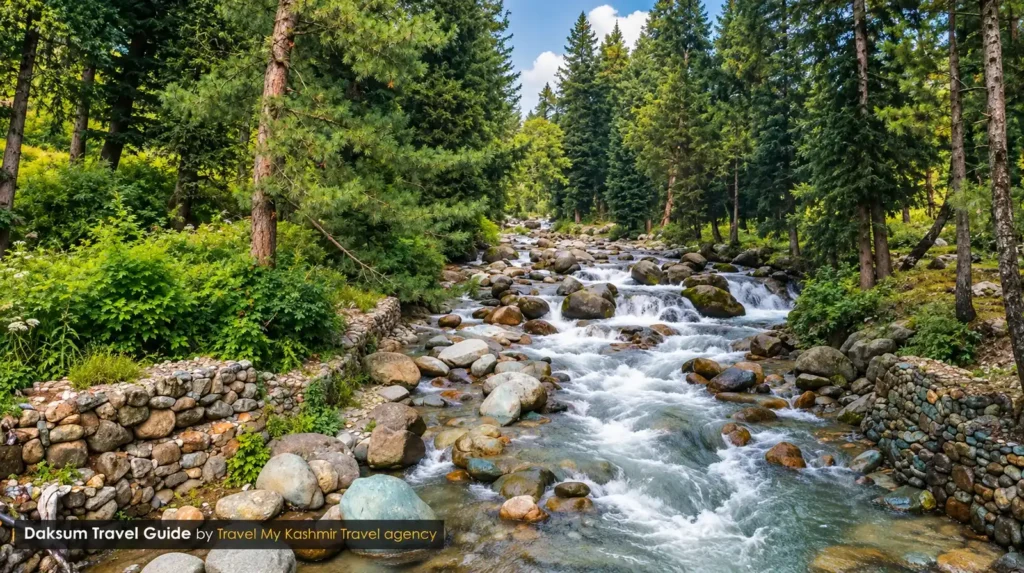
Daksum is a pine and deodar covered valley in Anantnag district of Kashmir about 10 km beyond Kokernag garden on the road toward Sinthan Top. At around 2,438 m, it is known for its forested landscape, the Bringhi River and trout fishing.
Some Kashmiri destinations are spectacles and Daksum is a mood. Dense forest, grazing meadows and the sound of the river give it a quieter character than the better-known tourist centres of the valley. Known for trout fishing and its beautiful Landscapes, Daksum is also the last green pause before the switchbacks climb to Sinthan Top.
Where Is Daksum in Kashmir?
Daksum is located in Anantnag district of Jammu and Kashmir, southeast of Anantnag and beyond Kokernag on the road toward Sinthan Top and Kishtwar. It sits at about 2,438 metres (7,999 ft) above sea level and is reached from Srinagar via Anantnag, Achabal and Kokernag.
Things to Do in Daksum, Kashmir
Daksum is best suited to forest walks, riverside time, trout fishing and short hikes into the surrounding meadows. The road to Sinthan Top also makes Daksum a natural stop before continuing toward the high-altitude pass.
Walk Through the Pine and Deodar Forests
Walking is one of the simplest ways to experience Daksum. The surrounding slopes are covered with coniferous forest, while streams and grassy clearings break up the woodland. Daksum is famous as a “trekker’s paradise” because of its forests, streams and meadows.
For an easy outing, stay around the main Daksum area and follow established local paths rather than attempting an unmarked route without local guidance.
Go Trout Fishing in the Bringhi River
Daksum is known for trout fishing and the Bringhi River and surrounding streams are associated with the area’s angling tradition. Fishing in Kashmir is regulated, so visitors should obtain the required permit and follow the current Fisheries Department rules before fishing.
Check the current permit process, fishing beat and daily limits before travelling, as these regulations can change.
Spend Time Beside the Bringhi River
The Bringhi River is one of Daksum’s defining natural features. It runs through the forested valley, providing a natural setting for photography, a short riverside walk or a quiet picnic.
For a simple visit, combine the river with a forest walk rather than treating it as a separate sightseeing attraction.
Hike Towards the Meadows
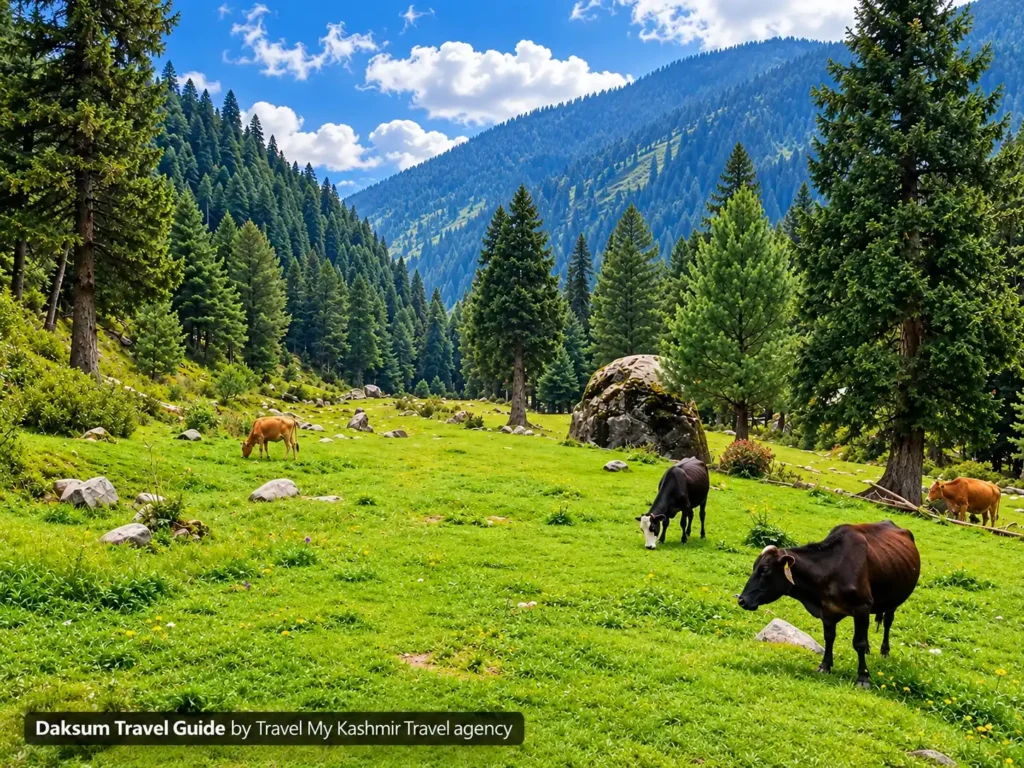
The hills around Daksum open into grassy meadows used for grazing during the warmer months. Short walks from the forested valley can provide wider views of the surrounding mountains and pastures.
Trail conditions and access can vary, so ask locally before taking less-used paths or walking toward seasonal grazing areas.
Continue from Daksum to Sinthan Top
Daksum lies on the Anantnag–Kokernag–Kishtwar road (NH-244) and is a convenient stop before the climb toward Sinthan Top. Sinthan Top stands at an elevation of about 3,748 metres, and the uphill drive from Daksum covers roughly 37 km.
The two destinations can therefore be combined in the same trip: visit Daksum’s forests and Bringhi River first, then continue uphill toward Sinthan Top if road and weather conditions permit.
What Is the Best Time to Visit Daksum?
The best time to visit Daksum is generally May to October, when the road through Kokernag is accessible and the valley is green. May and June are good for forest walks and combining Daksum with Sinthan Top, while July and August bring a greener landscape but also more variable monsoon weather. September and October offer cooler weather and autumn colours. Winter visits can be affected by snow and road closures, particularly on the higher road toward Sinthan Top.
Check our best time to visit Kashmir guide
May to June: Green Forests and Access to Sinthan Top
May and June are among the most suitable months for exploring Daksum’s forests, meadows and Bringhi River. The surrounding landscape is at its greenest, while access toward Sinthan Top generally improves as the higher road becomes free of winter snow.
If you plan to combine Daksum with Sinthan Top, check the current road and pass conditions before travelling, as opening dates depend on snow and local conditions.
July to August: Lush Valley and Trout Fishing
July and August keep Daksum green and relatively cool compared with the lower parts of Kashmir. These months can suit visitors interested in the valley’s forests, river and trout fishing, but fishing is subject to current Fisheries Department regulations, permits and seasonal rules.
Weather can be changeable, so check local conditions before planning longer walks or fishing trips.
September to October: Cooler Weather and Autumn Scenery
September and October bring cooler temperatures and the beginning of autumn colour to the surrounding forests. The period is suitable for visitors who want to combine Daksum’s forest landscape with a drive toward Sinthan Top, subject to road conditions.
October can become noticeably colder, particularly in the higher areas toward Sinthan Top.
Winter: Snow and Restricted Road Access
Winter brings snow and colder conditions to Daksum and the surrounding mountains. The higher road toward Sinthan Top can become inaccessible because of snow, so visitors should check current road conditions before travelling rather than assuming the pass is open.
For a straightforward Daksum sightseeing trip, the warmer months are generally more practical. Check current road and access conditions before travelling, particularly outside the main season.
How to Reach Daksum from Srinagar
Daksum is about 90–95 km from Srinagar via Anantnag and Kokernag taking roughly 3 hours by road, depending on traffic and road conditions. The usual route is Srinagar → Anantnag → Achabal → Kokernag → Daksum. A private cab in Kashmir is the most convenient option for visitors who want to stop at the springs and gardens along the way.
Also check our How to reach Kashmir guide
How to Reach Daksum — Air, Rail and Road
By Air
The nearest airport is Srinagar International Airport (SXR). From the airport hire a private airport cab or taxi toward Anantnag, then continue through Achabal and Kokernag to Daksum. The airport-to-Daksum journey is roughly 100–105 km depending on the route taken and usually takes around 3–4 hours by road.
By Rail
The nearest railway station for Daksum is Anantnag Railway Station from where you can continue by road through Achabal and Kokernag. Travellers arriving by train can also use Srinagar Railway Station and arrange a private srinagar railway taxi cab for the onward journey to Daksum. Jammu Tawi Railway Station is farther away and is mainly useful for travellers arriving from outside Kashmir who are continuing north by road.
By Road
Road is the most practical way to reach Daksum. From Srinagar, the usual route is Srinagar → Anantnag → Achabal → Kokernag → Daksum, covering roughly 90–95 km and taking around 3 hours, depending on traffic and road conditions. Daksum lies on the route toward Sinthan Top, so the two destinations can be combined when the higher road is open.
You can visit Achabal Garden and Kokernag on the way, making Daksum a natural extension of the southern Kashmir springs circuit.
Where to Stay in Daksum
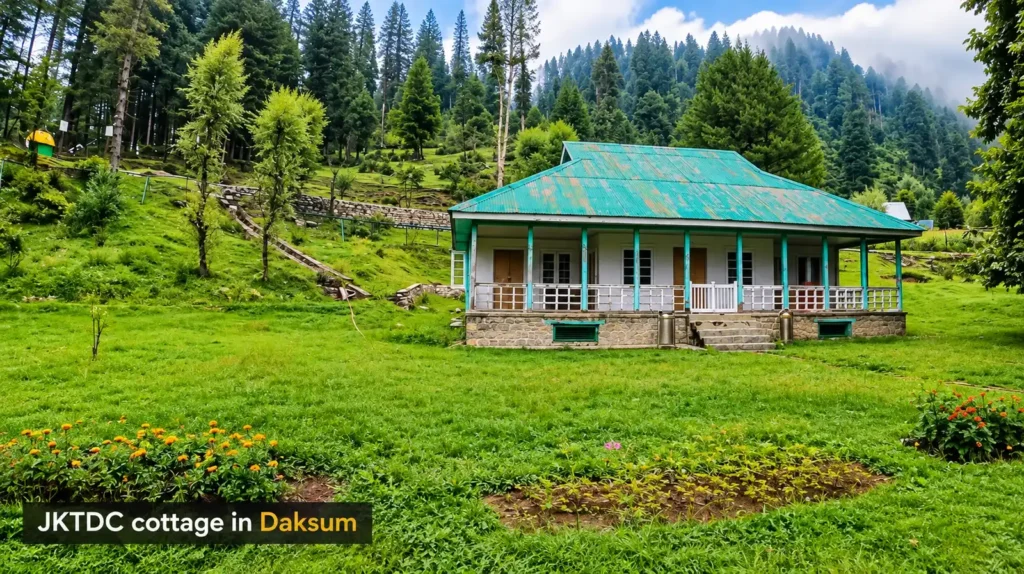
Accommodation in Daksum is limited compared with larger Kashmir tourist destinations, but JKTDC currently lists accommodation at Daksum, including Deluxe and Super Deluxe huts, larger cottages and a Yatri Niwas dormitory. JKTDC also lists the Daksum Resort with rooms and cottages.
If you want to stay overnight, book ahead and confirm availability before travelling, particularly during the summer and autumn season. For a wider choice of hotels, Kokernag and Anantnag are practical alternatives.
Can Daksum Be Combined with Sinthan Top?
Yes, Daksum lies on the road toward Sinthan Top, making it possible to combine the two destinations in the same trip, subject to road and weather conditions.
For a longer itinerary, Daksum can also be included in a Srinagar → Anantnag → Kokernag → Daksum → Sinthan Top route.
Daksum Road Conditions and Seasonal Access
Daksum is reached by road through Anantnag and Kokernag and the destination remains accessible by road when local conditions permit. The road continues from Daksum toward Sinthan Top and Kishtwar, but access to the higher sections can be affected by snowfall and seasonal weather.
Do not assume that Daksum and Sinthan Top have the same road conditions. Daksum is lower, while the road continues into a much higher mountain section toward Sinthan Top. Check current road conditions before travelling, especially during winter and early spring.
What Are the Facilities in Daksum?
Daksum has basic tourist facilities rather than the extensive services available in Srinagar, Pahalgam or Gulmarg. Accommodation is available through JKTDC, while food and other services are more limited.
Visitors should carry cash, drinking water, snacks and essential medicines rather than relying on finding every service locally. Mobile connectivity and other facilities can also vary by location and network, so download maps and keep important travel information available offline.
Is Daksum Suitable for Families and Couples?
Yes, Daksum can work well for families and couples who want a quieter nature-focused stop, particularly around the main valley, forest and river.
Families should keep in mind that Daksum is a mountain destination with uneven terrain and limited facilities. Couples looking for a peaceful overnight stay can use Daksum as a base before continuing toward Sinthan Top. Visitors who want extensive restaurants, shopping or developed tourist infrastructure may find Kokernag or larger Kashmir resorts more convenient.
Daksum vs Kokernag vs Sinthan Top
Daksum, Kokernag and Sinthan Top are close enough to combine in one southern Kashmir itinerary, but each offers a different experience.
Kokernag is best known for its freshwater spring, gardens and trout-related attractions. Daksum is the forested stop, with coniferous woodland, the Bringhi River, meadows and opportunities for walks and trout fishing. Sinthan Top is the high-altitude mountain destination, known for its panoramic views and snow availability even during the summer months.
A common route is Srinagar → Achabal → Kokernag → Daksum → Sinthan Top with the exact itinerary depending on road and weather conditions.
Frequently Asked Questions About Achabal Mughal Garden
What is Daksum known for?
Daksum is known for its dense coniferous forests, the Bringhi River, grassy meadows and trout. It is also a stop on the road toward Sinthan Top.
How far is Daksum from Srinagar?
Daksum is roughly 90–95 km from Srinagar via Anantnag and Kokernag, taking about 3 hours by road depending on traffic and road conditions.
Can you fish in Daksum?
Yes, Daksum is known for trout fishing, but angling in Kashmir’s trout waters is regulated and requires the appropriate fishing licence or permit. Check the current Fisheries Department rules before fishing.
Is Daksum worth visiting?
Daksum is a good choice for travellers looking for forests, rivers, short walks and a quieter mountain setting rather than a developed tourist centre. It can also be combined with Kokernag and Sinthan Top on the same trip.
Where do you stay in Daksum?
JKTDC currently lists Deluxe and Super Deluxe huts, larger huts and a Yatri Niwas dormitory in Daksum. Accommodation availability can vary, so confirm your stay before travelling.
Travel My Kashmir runs Daksum and Sinthan Top trips, with fishing permits arranged on request. J&K Tourism-registered, since 2000. Call +91-9796466052.