
Bangus Valley Kupwara
Bangus Valley is one of the most pristine, offbeat destinations in the Kupwara district within the Handwara sub District of Jammu and Kashmir near the Line of Control (LoC). Situated at an altitude of approximately 10,000 feet above sea level, this “hidden gem” remains largely untouched by mass tourism, offering a raw experience of the Himalayan wilderness.
Bangus Valley is an emerging eco-tourism high-altitude meadow divided into two main areas: Bod Bangus (Big Bangus) and Lokut Bangus (Small Bangus). Spanning over 300 square kilometers, it is surrounded by the Shanshabari mountain range and the flow of the Kamil River.
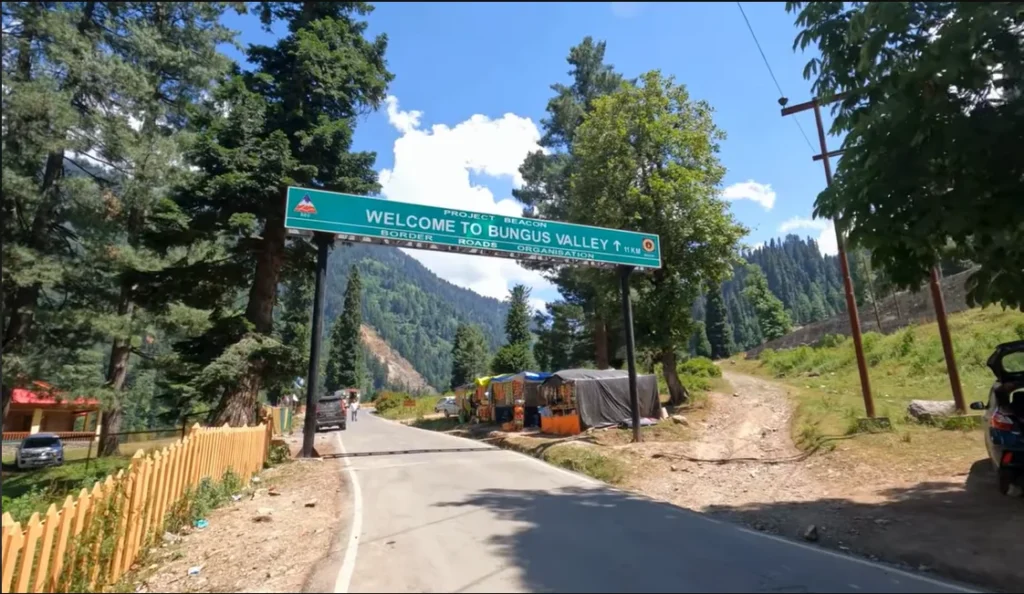
Quick overview of Bangus valley
- Distance & Travel Time: Bangus Valley is located approximately 130 kilometers from Srinagar. It takes around 4 to 5 hours to reach the valley by road, depending on traffic and weather conditions.
- Main Travel Routes:
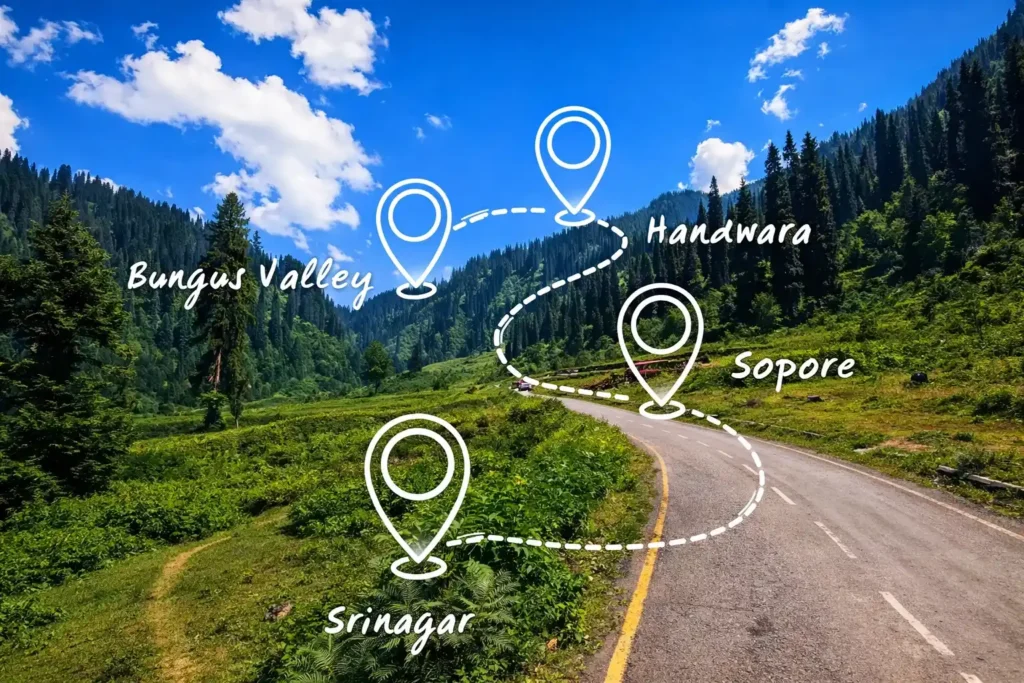
Route A (Via Handwara): This is now the preferred tourist route via Mawer/Reshwari. It provides direct access to Bodh Bangus.
Route B (Via Kupwara): This goes through Chowkibal and is the traditional path to Lokut Bangus. It is often used by trekkers and those visiting the border-side areas. - Bangus valley is located near the Line of Control (LOC) in nornth Kashmir’s Kupwara district
- It consists of two bowl shaped valleys known as Lokut Bangus (small Bangus) and Bodh Bangus (Big Bangus)
- In the east it is surrounded by Rajwar and Mawar Mountains and in the west by shamasbury and dajlungun and in north with karnah and chowkibal
- The low lying mountains of bangus valley is covered with dense forests with lush green meadows presents a serene environment.
- The valley is traversed by approximately 14 tributaries, including the Roshan Kul, Tilwan Kul and Douda Kul streams, which merge to form one of the headwaters of the Kamil River. The river eventually joins the Lolab stream, contributing to the formation of the Pohru River.
How to Reach Bangus Valley
Bangus valley is accessible via two main routes: 42 km from Kupwara and 29 km from Handwara.
Route 1: via Handwara-Rajwar Road (Recommended)
Distance: 128 kilometers from Srinagar, 72 Kilometers to Handwara, 30 Kilometers from Handwara to Bangus Valley
This is the latest developed route with relatively plin roads and minimal steep slopes up to Wadder Payeen. The route passes through Zachaldara ,which serves as a tehsil offering food and accommodation.
To reach Bangus Valley via this route, you can take a shared cab from the General Bus Stand in Srinagar to Handwara which will cost you around Rs. 100 and then hire another sharing cab from the Kohinoor Sumo Stand in Handwara (Rs.300 for Pick and Drop per person). For a more comfortable and personalized experience you can book our Kashmir cab service. The journey takes approximately 2.5 to 3 hours to reach Bangus Valley.
Route 2: via Handwara-Reshwari-Mawar
Distance: 29 kilometers from Handwara
Road connectivity via this route was completed in June 2022. The route winds through forests and military posts, offering scenic landscapes.
The road starts from Handwara town and proceeds toward Mawar Valley, using Reshwari as a base camp before heading to Bangus Valley. The road condition has improved compared to previous years; however, it can become muddy during rainfall. The route is currently undergoing construction to further improve connectivity.
At Reshwari, there are JKTDC tourist huts and a trout fish farm.
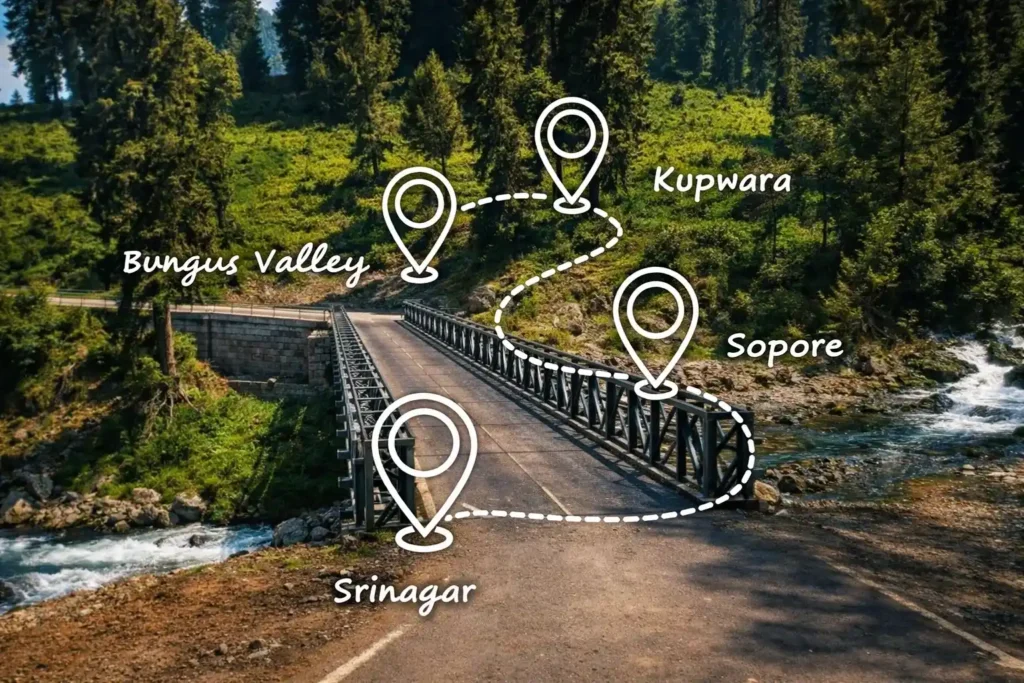
Route 3: Via Kupwara–Chowkibal
Distance from Srinagar: Approximately 130 km
Travel Time: 4 to 5 hours by road
Another access point to Bangus Valley is via Chowkibal and the T-Pee Post. This route is exceptionally scenic and connects Kupwara to Bangus Valley through Chowkibal and Drangyari. The stretch from Kupwara town to Bangus Valley is approximately 40–42 kilometers.
The road condition is generally good and accessible for light vehicles during the summer season; however, a 4×4 vehicle is recommended, especially after rainfall or in rough patches.
No special permit is required to visit Bangus Valley, but visitors may need to register at the Chowkibal/Drangyari checkpoint for security purposes. No entry is allowed after 5 pm.
By Air
The nearest airport is Sheikh-ul-Alam International Airport, Srinagar, located approximately 90–100 kilometers from Kupwara. The airport is well connected to major Indian cities, including Delhi, Mumbai, Bangalore and Kolkata. From the airport, you can hire a direct taxi to Kupwara or Handwara.
By Train
The nearest railway station is Sopore Railway Station, located about 64 kilometers from Kupwara. From the station, local taxis and buses are available to reach Kupwara. You can also book a private cab from the railway station to Kupwara for a more comfortable journey.
What Makes Bangus Valley Special?
Bangus Valley stretches across nearly 300 square kilometers, making it one of the largest meadow ecosystems in Asia. The main meadow is called “Bada Bangus,” and a smaller section is known as “Chota Bangus.”
Bod Bangus (Big Bangus): The principal valley features a large, elliptical bowl stretching from east to west. It is surrounded by the Rajwar and Mawar mountains to the east, the Shamasbari and Dajlungun peaks to the west, and the Kazinag Range to the south.
Lokut Bangus (Small Bangus): A smaller, equally beautiful valley located on the northeastern side, offering quieter exploration opportunities.
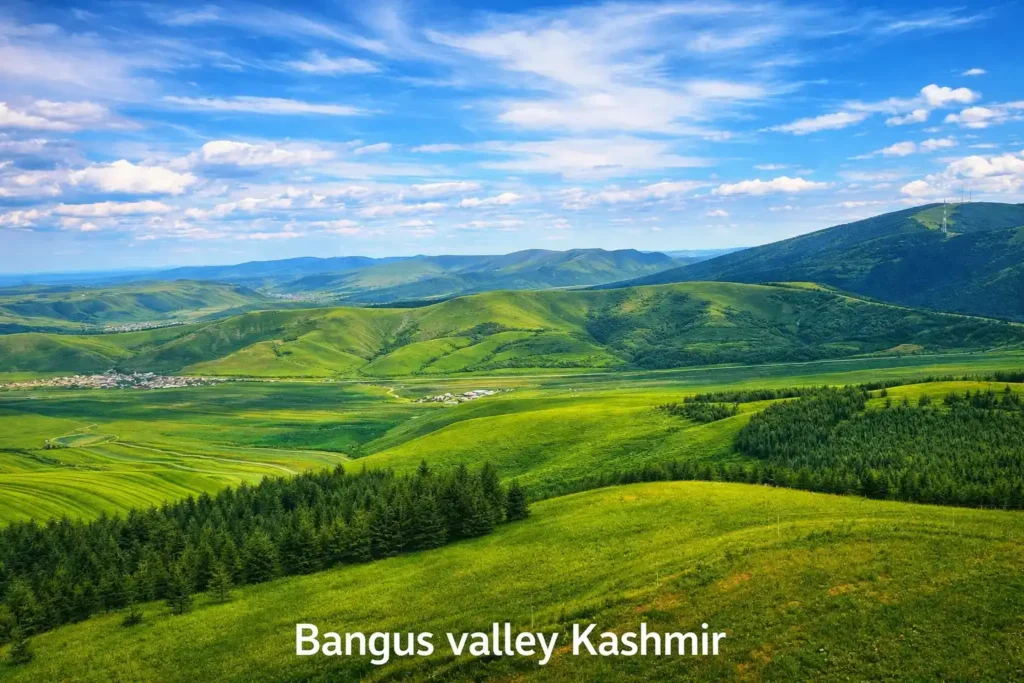
Unlike popular destinations such as Gulmarg or Pahalgam, Bangus Valley remains relatively unexplored.
There are:
- No commercial hotels inside the valley
- Limited mobile connectivity
- Minimal tourism infrastructure
The valley is surrounded by dense coniferous forests and forms part of a protected ecological zone. Wildlife species found in the broader region include:
- Himalayan black bear
- Musk deer
- Snow leopard (rare sightings)
- Various alpine birds
Best Time to Visit Bangus Valley
The best time to visit Bangus Valley is during the summer months from June to September, when the weather remains pleasant and ideal for sightseeing. During this period, daytime temperatures range between 20°C and 30°C making it comfortable for outdoor activities and camping. The snow melts, revealing vast green meadows, clear streams and panoramic mountain views.
Summer is also the peak tourist season in Bangus Valley, as the annual Bangus Tourist Mela is usually organized during this time. Visitors can enjoy horse riding, trekking, hiking, nature photography and family picnics. Road accessibility is significantly better in summer compared to winter, making travel smoother for light vehicles.
Also check best time to visit Kashmir
Activities to Do in Bangus Valley
Bangus Valley offers a range of activities, including camping, trekking, horse riding and more. Below is a list of the top things to do in Bangus Valley.
1. Trekking and Hiking
The valley is a trekker paradise with multiple trails ranging from easy meadows walks to challenging mountains ascents. Popular treks include.
- Lashar Mountain Trek: A popular trek offering panoramic views and unique alpine flowers. The climb takes several hours but rewards trekkers with stunning vistas.
- Bidrun Top Trek: A favorite among experienced trekkers, this 1-kilometer steep trail from the Behak area offers spectacular mountain views.
- Bangus to Lolab Valley Trek: A moderate, multi-day trek connecting two beautiful valleys through dense forests and mountain streams.
- Dori Sar Lake Trek: A short trek to this high-altitude lake located near Bangus Valley.
Check other trekking routes in Kashmir
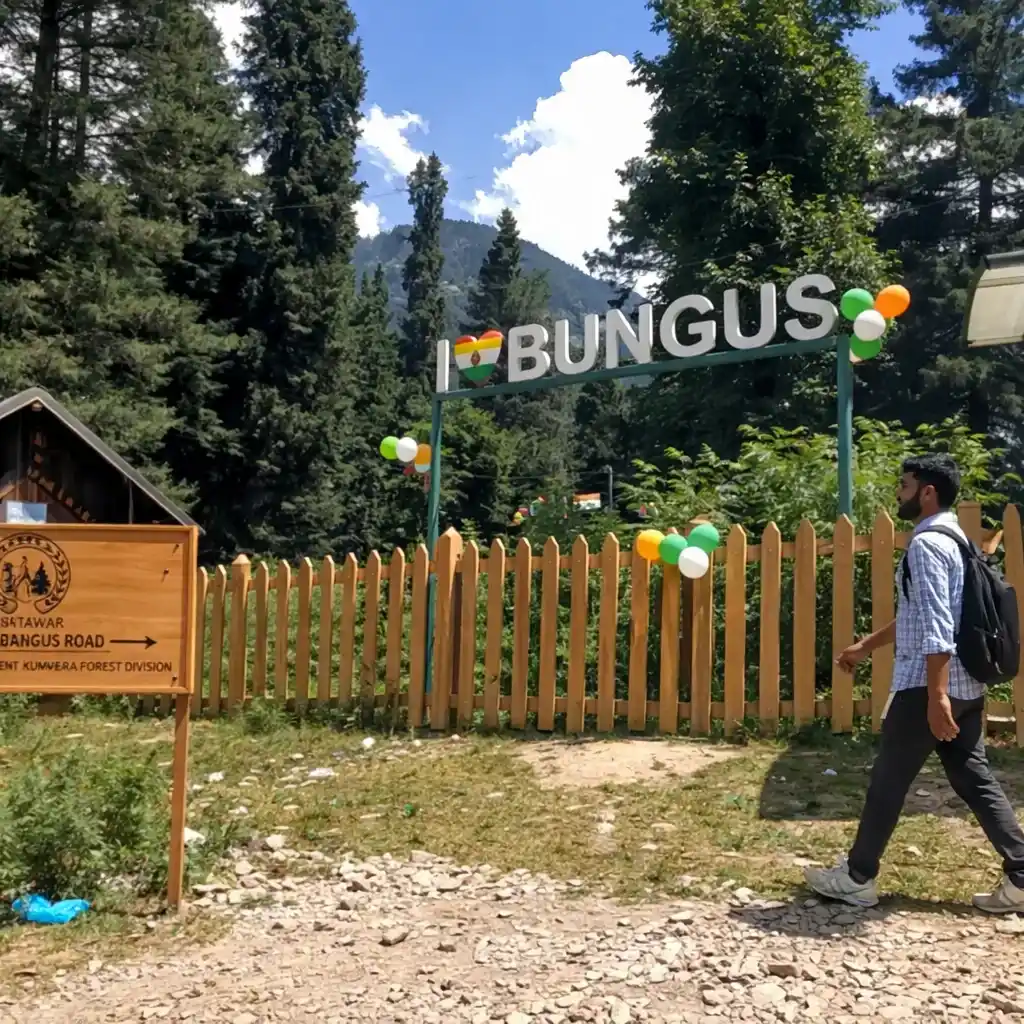
2. Camping Under the Stars
There are no luxury hotels in Bangus Valley camping is the only way to truly experience its untouched beauty. Setting up a tent in the vast meadows of Bod Bangus is an unforgettable experience. With almost zero light pollution, the valley offers some of the best stargazing opportunities in Kashmir, where the Milky Way is often clearly visible on cloudless nights.
Several local operators provide camping equipment, meals, and guided support. The most popular camping spots are in the main Bod Bangus meadow, where you can pitch your tent beside crystal-clear streams, surrounded by panoramic mountain views.
As night falls, visitors often gather around a traditional bonfire, enjoying warm Kashmiri tea, local food, and storytelling under the open sky. The combination of cool mountain air, crackling firewood, and a sky full of stars makes camping in Bangus Valley a raw and memorable Himalayan experience.
3. Wildlife Spotting and Photography
Bangus Valley is a promising destination for wildlife enthusiasts and nature photographers. The region is home to several Himalayan species and early mornings or dusk offer the best chances for wildlife sightings. Visitors may encounter rare birds, grazing herds, and with luck, other native mountain fauna in their natural habitat.
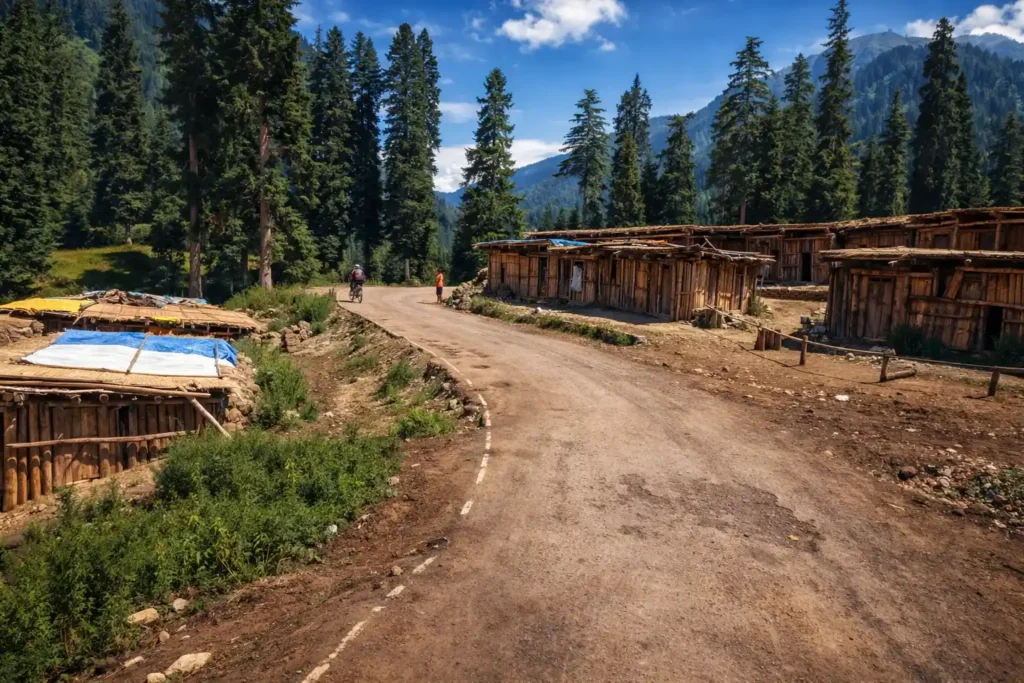
The valley is equally rewarding for landscape photography. Expansive wildflower meadows, dramatic mountain backdrops, crystal clear streams, grazing livestock and traditional nomadic settlements create endless photo opportunities throughout the day.
4. Trout Fishing
The streams of Bangus Valley are home to trout and other freshwater fish. These crystal clear waters fed by glaciers provide a suitable habitat for trout. In addition to trout, anglers may also find mahseer in some freshwater stretches.
5. Horse Riding
You can explore the expansive meadows of Bangus Valley on horseback, a traditional and scenic way to experience the landscape. Horse rides are arranged by local handlers allowing visitors to cover larger areas of the valley comfortably while enjoying panoramic mountain views and open grasslands.
5. Cultural Interactions
Meet the Gujjar and Bakarwal communities, semi-nomadic tribes who have inhabited these meadows for generations. They graze their livestock in the valley and continue to follow traditional pastoral lifestyles. Respectful interactions with these communities can offer valuable insight into their culture, customs and deep connection with nature.
6. Bangus Tourist Mela
The Bangus Mela is an annual festival held in Bangus Valley, usually around the month of August. The event showcases the region’s local culture and traditions while offering visitors a memorable cultural experience. The festival features a variety of stalls, including traditional Kashmiri cuisine, handicrafts, cultural performances, health camps and locally made products from Bangus and nearby areas.
To learn more about the festivals celebrated in Kashmir, explore our Festivals in Kashmir guide.
Accommodation Options in Bangus Valley
Bangus Valley remains largely undeveloped for mass tourism, so accommodation options are limited and there are no permanent structure in Bangus valley. Visitors should plan accordingly.
Camping (Most Popular):
Camping is the best way to experience Bangus Valley. Local providers offer tents, sleeping bags and basic camping equipment. You can also bring your own tent for an overnight stay. Camping allows you to wake up to panoramic mountain views and enjoy the valley’s natural tranquility.
Forest Huts in Reshwari:
Located about 15 kilometers before the main valley, Reshwari has a JKTDC (Jammu and Kashmir Tourism Development Corporation) guest house and basic forest huts offering simple accommodation facilities.
Check JKTDC Huts availability here
Guest Houses in Kupwara/Handwara:
For those preferring more conventional lodging, staying in Kupwara or Handwara and taking a day trip to Bangus Valley is a practical option. These towns have several small hotels and guest houses with standard amenities.
Lolab Valley Stay:
Some travelers choose to stay in nearby Lolab Valley, which offers better accommodation facilities, and visit Bangus Valley as a day excursion.
Essential Travel Information for Visitors Planning a Visit to Bangus Valley
Permits and Permissions
Due to its proximity to the Line of Control (LoC) visitors may be required to register at designated security checkpoints. Registration is typically done at Mawar (via the Handwara route) or Chowkibal (via the Kupwara route).
During the peak summer season (June to September) special permits are generally not required for domestic tourists however, security protocols may change depending on local conditions. In winter or during sensitive periods, additional restrictions may apply.
Travelers are advised to check the latest regulations with the District Magistrate’s office in Kupwara or connect with a local tour and travel agency Travel My Kashmir.
What to Pack for Bangus Valley
- Warm clothing (temperatures drop significantly at night, even in summer)
- Sturdy trekking shoes or hiking boots
- Rain gear and waterproof clothing
- Sunglasses, sunscreen, and a hat for sun protection
- Camping equipment (if not arranged through a tour operator)
- A first aid kit with essential medicines
- Sufficient cash (ATMs and card facilities are unavailable)
- Water bottles and light snacks
- A power bank for electronic devices
Connectivity and Communication
Mobile network coverage in Bangus Valley is extremely limited or completely non-existent. While weak signals may be available at certain elevated points, reliable connectivity cannot be expected. Mobile internet services generally do not function inside the valley.
Visitors are strongly advised to inform family and friends before entering the area and to make necessary arrangements in advance. Due to poor connectivity, online payments, navigation apps and emergency communication may not be dependable.
Although this lack of network access may be inconvenient, it also contributes to the valley’s pristine and peaceful atmosphere.
For complete details on mobile network coverage in Kashmir, refer to our Which SIM to Use in Kashmir guide.
Food and Supplies
Infrastructure in Bangus Valley is minimal. During the peak tourist season, a few small tea stalls (chai tapris) operate in the area, serving traditional Kashmiri nun chai and simple snacks such as makki ki roti.
However, travelers should not rely on these limited options. It is strongly recommended to carry sufficient food and drinking water, especially if planning to camp overnight. Visitors should stock up on essential provisions in Handwara, Kupwara or Qalamabad before entering the valley, as shops and medical stores are unavailable inside Bangus Valley.
Nearby Attractions
While Bangus Valley offers plenty to explore, visitors can also consider these nearby attractions:
Lolab Valley:
Known for its picturesque landscapes, dense forests, and apple orchards, Lolab Valley has relatively better tourism infrastructure. It is located a short distance from Bangus Valley and makes for a comfortable day excursion or overnight stay.
Seemab Valley:
A charming region rich in biodiversity, featuring rolling hills, lush greenery and peaceful surroundings ideal for nature lovers.
Kalaroos:
A scenic stop en route to Bangus Valley, Kalaroos is famous for its ancient Satbaran Caves and panoramic mountain views.
Chandigam:
Another picturesque location in Kupwara district, known for its natural beauty and serene environment.
Sample 3-Day Itinerary for Bangus Valley
Here is a suggested itinerary to help you experience Bangus Valley efficiently:
Day 1: Journey to Bangus Valley
- Depart Srinagar at 6:00 AM via the Handwara route
- Stop at Qalamabad for supplies, water, and cash
- Arrive at Bangus Valley by midday
- Set up camp in Bod Bangus
- Explore the meadow and relax by the stream
- Sunset, dinner, and stargazing
Day 2: Trekking Day
- Start early for the Lashar Mountain trek (6:00 AM)
- Reach the peak and enjoy panoramic views
- Return to camp by afternoon
- Evening bonfire and local cuisine
Day 3: Leisure & Return
- Short morning walk and wildlife photography
- Visit a local chai stall for nun chai
- Pack up and depart for Srinagar
- Arrive by evening
Plan Your Bangus Valley Trip with Travel My Kashmir
Explore Bangus Valley with experienced local guidance, reliable transport and carefully arranged stays. From solo travelers seeking solitude to adventure enthusiasts and photographers chasing raw Himalayan landscapes, we ensure a smooth and well-coordinated journey.
With on-ground support and trusted service partners, you can focus on the experience while we handle the logistics.
Talk to a Kashmir travel expert & customize your solo trip today
Call now: +91-9796466052
Website: Travel My Kashmir
FAQs: Bangus Valley Kupwara
What is the Bangus Valley famous for?
It is famous for its massive alpine meadows, untouched coniferous forests, and high-altitude biodiversity. It is often called Kashmir’s “hidden gem” because it remains free from commercial crowds.
How far is Bangus Valley from Srinagar?
The actual driving distance is approximately 128 to 150 km, depending on the route (Handwara or Chowkibal).
What’s the best time to visit Bangus Valley?
The best time to visit Bangus Valley is from May to September when the meadows are lush green and weather is pleasant.
What is Kupwara to Bangus Valley distance?
The distance from Kupwara to Bangus Valley is around 42 km, taking about 2–3 hours by road.
Bangus Valley is located in which district?
Bangus Valley is located in the Kupwara district of Jammu and Kashmir, India.
Where is Bangus Valley located?
Bangus Valley is located in North Kashmir, near the Line of Control (LoC) in Handwara, Kupwara district.
Are there any entry permits required for Bangus?
Yes. Because it is a border-sensitive area near the LoC, you must carry a valid Government ID (Aadhar/Passport). While formal “permits” have been eased for domestic tourists, you must still check in at Army checkpoints along the way.
What is the altitude of Bangus Valley?
The valley sits at an elevation of approximately 10,000 feet (3,000 meters) above sea level.
Is there mobile network connectivity in the valley?
Very limited. You might get intermittent BSNL signals near the entry points, but inside the main meadows (Bodh Bangus), there is usually no mobile network.
Are there hotels or restaurants inside the valley?
No. Bangus is a protected Ecotourism Zone. There are no permanent hotels or shops. Visitors typically stay in homestays in Reshwari or bring their own camping gear.
Can you visit Bangus Valley in winter?
No, the valley is generally inaccessible from November to March due to heavy snowfall and the closure of mountain passes.
Can we stay overnight in Bangus Valley?
Camping is possible, but there are limited accommodation facilities. Most travelers stay in Kupwara or Handwara.
How to reach Bangus Valley from Srinagar?
You can reach via Sopore → Kupwara → Chowkibal by taxi or private vehicle.