
Wular Lake - The largest freshwater lake in India
Wular Lake is a vast freshwater lake in Bandipora district of North Kashmir about 60 km from Srinagar. It is largest freshwater lake in India and the second largest in all of Asia, a Ramsar wetland of international importance and a major part of Kashmir’s natural flood-management system. Fed primarily by the Jhelum River, Wular’s water level and surface area change significantly with the seasons.
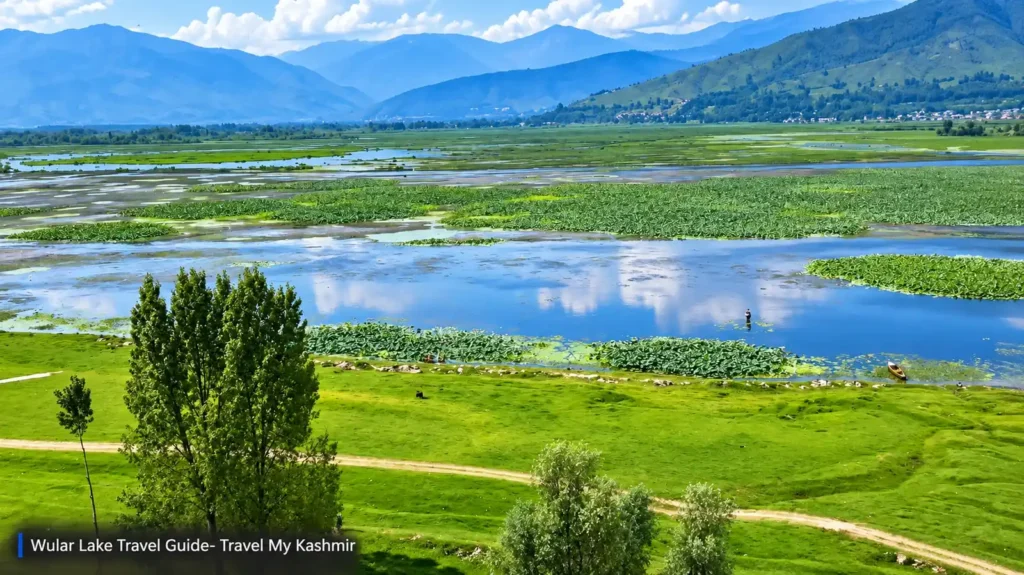
Dal Lake is Kashmir’s jewel and Wular is its ocean. Unlike the landscaped gardens and houseboats of Dal, Wular is a working wetland surrounded by fishing villages, marshes and agricultural land. Its extensive waters and surrounding habitats also make it an important birdwatching site, particularly for migratory and wetland birds.
Quick Overview of Wular Lake
- Location: Bandipora district, North Kashmir about 60 km from Srinagar.
- Ramsar status: Wular Lake is a Ramsar Wetland of International Importance.
- River connection: The Jhelum River flows into and out of Wular Lake making it an important part of the valley’s river and flood-management system.
- Best for: Birdwatching, boating, photography, nature and experiencing rural North Kashmir.
- Tourist character: Wular is a natural working wetland rather than a landscaped tourist attraction like Dal Lake.
- Wildlife: The lake and surrounding wetlands provide habitat for resident and migratory waterbirds.
- Best time to visit: Generally spring through autumn with conditions varying according to weather, water levels and bird migration.
- Nearest major town: Bandipora, which serves as the main base for exploring the Wular area.
What to See and Do at Wular Lake
Visit Watlab viewpoint: Watlab is located near the shrine of Baba Shukruddin and is one of the best known viewpoints overlooking Wular Lake. From the hillside, you can see the lake’s broad expanse with the mountains of North Kashmir forming the backdrop. It is particularly attractive around sunset when visibility is good.
Take a local boat ride: A boat trip is one of the best ways to experience Wular’s enormous scale. Local fishing communities use boats on the lake and its shoreline and visitors may be able to arrange rides locally depending on the season and current boating availability. Confirm the boat, route, duration and price locally before setting out. Book Shikara ride in Wular Lake here.
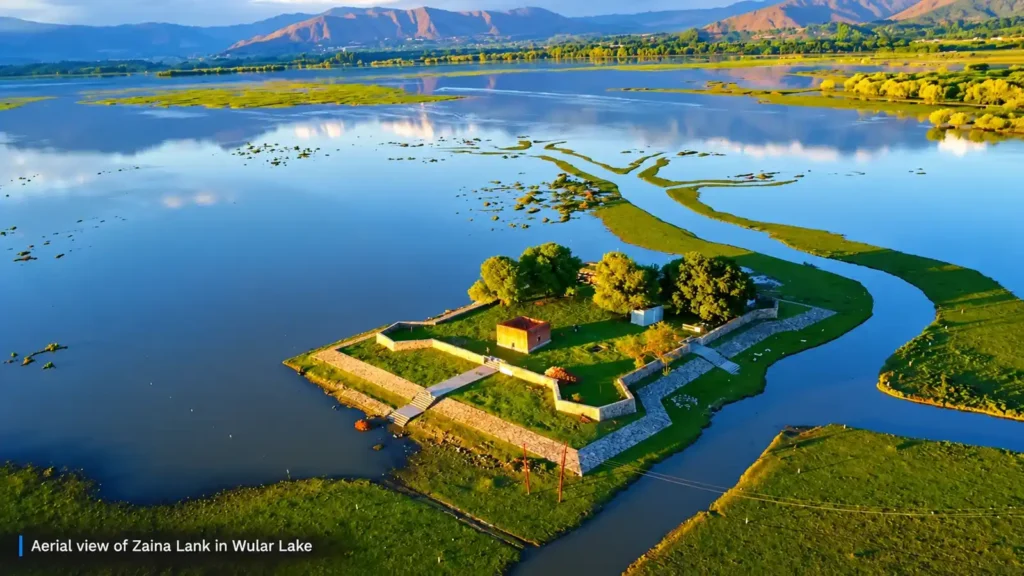
See Zaina Lank: Zaina Lank is a historic man made island in Wular Lake associated with Sultan Zain-ul-Abidin (Budshah), who ruled Kashmir in the 15th century. The island is part of Wular’s historical landscape, although access by boat can depend on current lake conditions and local arrangements.
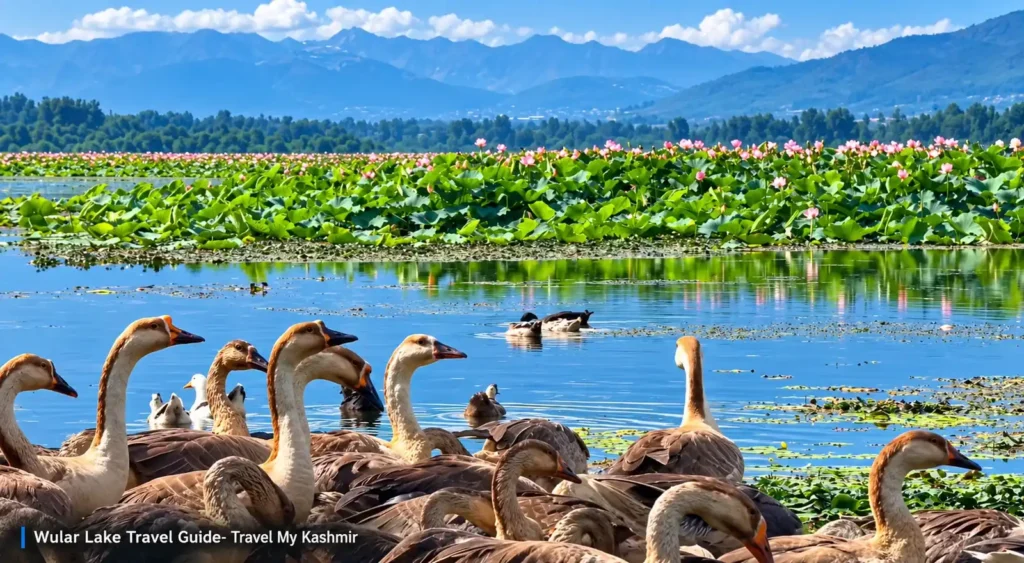
Go birdwatching: Wular Lake and its surrounding marshes are important habitats for resident and migratory waterbirds, including coots, pochards, teals, and other species. Winter is particularly interesting for birdwatchers, when migratory waterfowl can be seen around the lake and its wetlands. Bring binoculars and allow extra time to explore the quieter shoreline areas.
See the traditional water chestnut harvest. In autumn, local communities harvest water chestnuts, locally known as gaer, from the lake’s shallow waters. The harvest is an important traditional livelihood around Wular and offers visitors a glimpse of the lake as a working wetland rather than simply a sightseeing destination.
Drive along the Wular shoreline. The road towards Bandipora and onward to Gurez provides opportunities to see different parts of the Wular landscape. If you are travelling towards Gurez, Watlab and suitable shoreline viewpoints can be incorporated as stops depending on your route and available time. See our Gurez Valley tour packages.
Best Time to Visit Wular Lake
The best time to visit Wular Lake depends on what you want to see. April to June offers lush scenery, high water levels and clear views towards the surrounding mountains, while September and October are good for the water-chestnut harvest and autumn landscapes. November to February is the main season for migratory waterbirds making it the most interesting period for birdwatching.
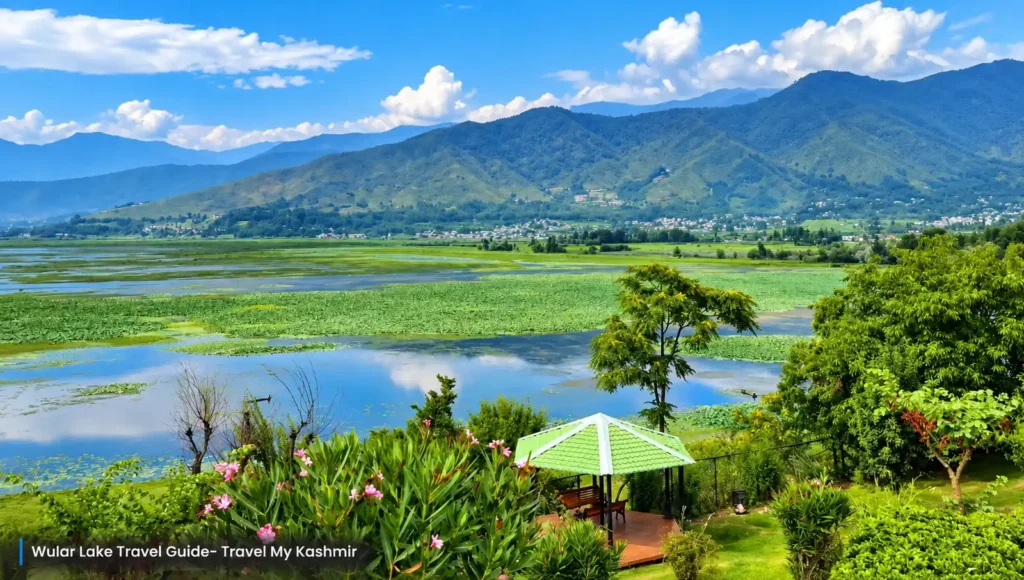
- April–June: The lake is surrounded by fresh green vegetation with higher water levels and snow often visible on the higher mountains. Mornings generally offer clearer views.
- September–October: The landscape takes on autumn colours, fishing activity continues, and local communities harvest water chestnuts (gaer) from the lake.
- November–February: Wular’s wetlands attract migratory waterbirds making winter particularly suitable for birdwatching and wildlife photography. Cold, misty conditions can also create a very different atmosphere around the lake.
For photography and sightseeing, early morning and late afternoon are generally better than summer afternoons, when haze can reduce visibility. Weather, water levels and bird activity vary from year to year, so conditions can differ between visits.
How to Reach Wular Lake
Wular Lake has several access points so travel time depends on whether you are visiting Watlab, the eastern shoreline or the Bandipora side.
By Air
The nearest airport is Sheikh-ul-Alam International Airport (Srinagar Airport). Watlab is roughly 60–65 km from Srinagar Airport and usually takes around 2 hours or more by road depending on traffic and the route. A private cab is the most convenient option for reaching Wular and exploring its viewpoints.
By Train
The nearest railway station to Wular Lake is Sopore railway station. From the railway station, you will need a taxi or other local transport to reach the lake.
By Road
Road travel is the easiest way to reach Wular Lake from Srinagar. For Watlab, the usual route is:
Srinagar → Pattan → Sangrama → Sopore → Watlab → Wular Lake
The journey is roughly 60 km and takes about 1.5–2 hours, depending on the exact starting point, traffic and road conditions.
You can hire a private cab in Kashmir from Srinagar or arrange local transport in Sopore/Bandipora. If you are planning a full-day north Kashmir excursion, Wular can also be combined with Manasbal Lake and other nearby attractions.
How Long Do You Need at Wular Lake?
Allow at least 2–3 hours for a focused visit to Wular Lake or half a day if you want to explore Watlab spend time by the shoreline and take photographs. If boating is available and weather conditions are suitable allow additional time for the experience.
For travellers coming from Srinagar, Wular works well as part of a half-day or full-day North Kashmir excursion. Combining Watlab with nearby Manasbal Lake makes better use of the journey than travelling to Wular only for a short photo stop.
If you are travelling onwards towards Bandipora or Gurez, Wular can also be incorporated into the route rather than treated as a separate Srinagar day trip.
Is Wular Lake Safe to Visit?
Wular Lake is generally safe to visit but it is best to travel with a local driver who knows the access points and can make your Wular Lake trip more comfortable and convenient.
Stay at established viewpoints and designated shore areas and do not enter a boat unless it is suitable for passengers and the operator provides appropriate safety arrangements.
Wular Lake From a Local Perspective
Wular is different from most of the places visitors see on a typical Kashmir itinerary. It is not a polished tourist attraction with a fixed sightseeing circuit. It is a huge working wetland where fishing, farming and village life continue around the lake. That is what makes the experience worthwhile.
For first-time visitors from Srinagar, we generally recommend approaching Wular through Watlab, because the elevated viewpoint gives a much better sense of the lake’s enormous scale before you go down towards the shoreline.
Don’t rush through Wular as a 20-minute photo stop. Give yourself time to watch the changing light, observe local activity and where available and properly arranged, experience the lake from a boat.
Our advice: Treat Wular as a nature and landscape experience rather than expecting another Dal Lake. If you prefer quiet places, photography, birdwatching and seeing a more working side of Kashmir, it deserves the extra time.
Things to Know Before Visiting Wular Lake
Wular Lake is a large natural wetland rather than a fully developed tourist attraction, so a little preparation makes the visit easier.
- Facilities are limited: Don’t expect restaurants, shops or public facilities around every shoreline access point. Carry drinking water and basic snacks.
- Boating is not guaranteed: Local boating arrangements can vary by location, season and weather. Confirm availability, price and safety arrangements before setting out.
- Carry protection from the weather: Sunglasses, sunscreen and a light jacket are useful because conditions around the open lake can change quickly.
- Take binoculars for birdwatching: Winter visitors in particular should carry binoculars if birdlife is a priority.
- Allow extra time for photography: The lake is enormous and the experience is more about the landscape than ticking off a single attraction.
- Respect local communities: Fishing and other traditional activities continue around Wular. Give boats, fishing equipment and private areas a respectful distance.
- Don’t litter: Wular is an important wetland ecosystem. Carry your waste back with you, particularly when visiting quieter shoreline areas.
Wular Lake vs Dal Lake: What's the Difference?
Dal Lake and Wular Lake offer very different experiences. Dal is a central part of Srinagar’s tourism landscape, while Wular is a much larger natural wetland surrounded by rural landscapes and fishing communities.
Dal Lake is best known for shikaras, houseboats, floating markets, Mughal gardens and its location within Srinagar. It is easy to include in a city sightseeing itinerary.
Wular Lake is better suited to travellers interested in expansive landscapes, birdwatching, photography, fishing communities and a quieter side of Kashmir. Watlab provides one of the best ways to appreciate the lake’s enormous scale.
If you have time for both, there is no need to choose between them. Dal gives you Kashmir’s classic lake tourism experience; Wular shows you the valley’s larger, wilder wetland landscape.
Frequently Asked Questions About Wular Lake
Is Wular Lake the largest freshwater lake in India?
Yes, Wular Lake is the largest freshwater lakes in India and among the largest in Asia. Its surface area changes considerably with seasonal water levels, so rankings and published area figures vary depending on the measurement and season. It is safer to describe Wular as one of India’s largest rather than claim a fixed national ranking.
Where is Wular Lake located?
Wular Lake is located in Bandipora district of North Kashmir about 60 km from Srinagar depending on the access point. Watlab is one of the best-known places for visitors to view the lake.
What is Wular Lake famous for?
Wular is famous for its enormous freshwater expanse, Ramsar wetland status, migratory birdlife, fishing communities and traditional water-chestnut harvesting. Unlike Dal Lake, Wular remains a largely natural and working wetland.
What is Watlab?
Watlab is a hillside viewpoint overlooking Wular Lake, near the shrine of Baba Shukruddin. It provides a broad panoramic view across the lake and surrounding mountains and is one of the most popular places to experience Wular from above.
Can you go boating on Wular Lake?
Boating may be possible through local operators or fishing communities at some parts of Wular, but arrangements are informal and can vary by season, weather and location. Wular does not have the extensive shikara infrastructure found on Dal Lake, so visitors should confirm availability, price and safety arrangements locally before going onto the water.
Why is Wular Lake important?
Wular is an internationally important Ramsar wetland and plays an important role in the Jhelum River system and Kashmir Valley’s flood regulation. The lake and surrounding wetlands also support fisheries, traditional water-chestnut harvesting and important populations of resident and migratory waterbirds.
What is the best time to visit Wular Lake?
The best time depends on what you want to experience. April to June is good for green landscapes and higher water levels, September and October offer autumn scenery and the water-chestnut harvest, while November to February is particularly interesting for migratory birds and winter birdwatching.
How far is Wular Lake from Srinagar?
Wular Lake is roughly 60 km from Srinagar, depending on which part of the lake you visit. Watlab generally takes around 1.5–2 hours by road, although traffic, weather and road conditions can affect the journey.
How do you reach Wular Lake from Srinagar?
For Watlab, a commonly used route is Srinagar → Pattan → Sangrama → Sopore → Watlab → Wular Lake. A private taxi is the most convenient option for visitors who want to stop at viewpoints and explore the surrounding area.
How long do you need at Wular Lake?
Allow at least 2–3 hours for a focused visit. A half-day is better if you want time for Watlab, shoreline stops, photography or boating where available. Wular can also be combined with Manasbal Lake for a full-day excursion from Srinagar.
Is Wular Lake worth visiting?
Wular is worth visiting if you want to experience the quieter, more natural side of Kashmir. It is particularly rewarding for landscape photography, birdwatching and seeing traditional lakeside livelihoods. If you are expecting houseboats, floating markets and regular shikara rides, Dal Lake is the more appropriate experience; Wular offers something distinctly different.
Travel My Kashmir runs Wular Manasbal day trips and Watlab stops on all our Gurez routes. J&K Tourism-registered, since 2000. Call +91-9796466052.